

In the agricultural landscape of Haramaya woreda in the East Hararghe Zone, the cultivation of vegetables plays a pivotal role in the livelihoods of local farmers. Among these vegetables, carrot and shallot seed production has emerged as a promising avenue for income generation and economic empowerment.
The small landholding size, typical of the area necessitates a focus on high-value crops, making vegetables a vital cash crop alongside khat. However, despite the potential benefits, the vegetable sector faces a myriad of challenges. These include, among others,, limited varietal diversity, access to quality seed, price fluctuations, and a lack of knowledge and practices in seed production.
To address these challenges and harness the opportunities, an intervention was designed by RAISE-FS and Haramaya University to facilitate carrot and shallot seed production at the grassroots level. The intervention aimed to equip small-scale growers with the technical know-how, market linkages, and quality seeds to enable them to produce and supply seeds locally.
The intervention, initiated in 2022, focused on building the capacity of farmers who underwent comprehensive training in both the theoretical and practical aspects of seed production. The aim of this capacity-building initiative was to empower the farmers with the essential skills required to independently engage in seed production in the future for the stated vegetable crops.
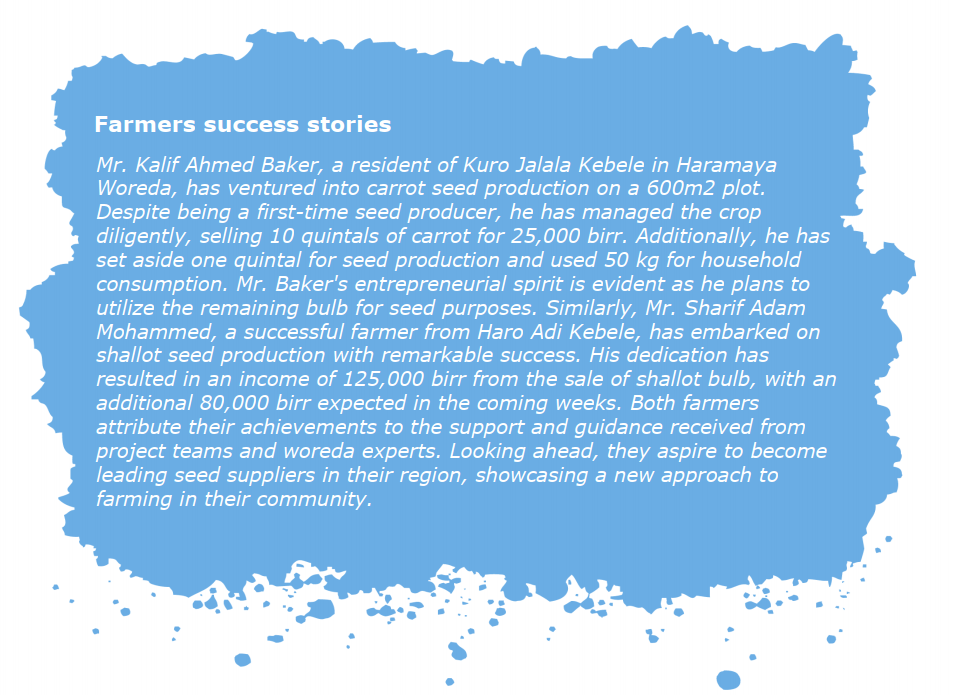
As the intervention progressed, success stories began to emerge. Kalif Ahmed Baker, a young farmer from Kuro Jalala kebele, demonstrated remarkable dedication to carrot seed production. His proactive approach and diligent management resulted in a successful harvest, enabling him to sell a substantial quantity of carrots and reserve a portion for seed production. Similarly, Sharif Adam Mohammed from Haro Adi kebele achieved significant success in shallot seed production, utilizing his harvest for both market supply and future seed production.
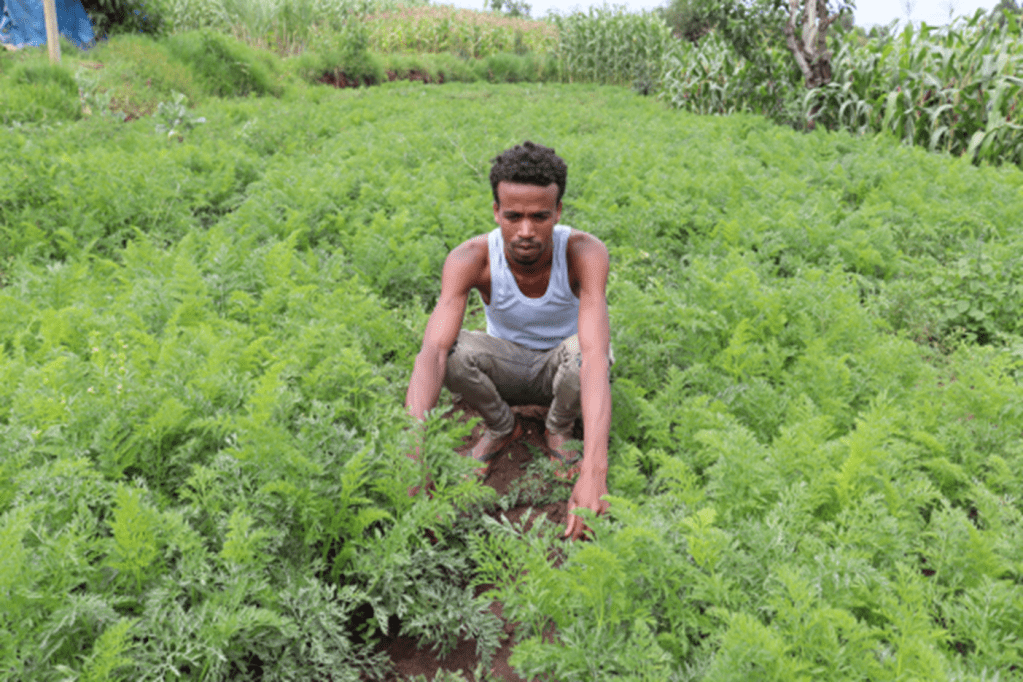
These success stories underscore the potential of vegetable seed production to uplift the economic status of small-scale farmers in Haramaya woreda. Furthermore, they highlight the impact of targeted interventions and capacity-building efforts in empowering individuals to pursue sustainable agricultural practices.
Looking ahead, the project aims to establish linkages between farmers and seed suppliers, as well as engage with stakeholders to institutionalize seed production and ensure sustainable market access for farmers.
The strides made in promoting carrot and shallot seed production in Haramaya woreda serve as a testament to the transformative power of targeted interventions in agriculture. By harnessing the potential of high-value crops and equipping farmers with the necessary knowledge and resources, sustainable agricultural practices can be fostered, leading to improved livelihoods and economic resilience within the community.
As these initiatives continue to unfold, it is evident that the cultivation of vegetable seeds has the potential to not only generate income but also contribute to the food system transformation efforts in the region. Through collaborative efforts and continued support, the vision of empowering small-scale growers to become self-reliant seed producers can be realized, paving the way for a more prosperous agricultural landscape in Haramaya woreda. To scale the demonstrated evidence in in other areas, there will be a follow-up activity related to documentation of the experiences along with the required manuals of seed production, and engagement with relevant stakeholders, especially the MoA, Regional BoA and other relevant stakeholders.
 raise-fs.org