

Orphan crops, also known as neglected or underutilized crops, have historically been overshadowed by staple crops like wheat, rice, and maize. However, these lesser-known crops offer significant potential for improving agricultural resilience, nutrition, and promoting crop diversification. Amaranths, commonly known as amaranth, is a standout among these orphan crops due to its versatility and resilience. Recognizing this potential, the RAISE-FS project, in partnership with its implementing partners, has been promoting amaranth as an alternative vegetable crop to increase the availability of safe and nutritious food and enhance food security.
In Sire woreda, the Melkassa Agricultural Research Centre (MARC) and the RAISE-FS project have introduced amaranth as a new vegetable crop with a focus on addressing nutritional deficiencies and improving agricultural sustainability through year-round home garden production and consumption. Known for its high nutritional value, amaranth has been promoted to enhance food security in the area.
Since its introduction in 2022, the cultivation of the crop has gained increasing acceptance among local farmers, largely due to a series of training sessions and cooking demonstrations organized by MARC and RAISE-FS. These efforts have not only taught farmers how to cultivate and harvest this new crop but have also introduced them to its nutritional benefits and potential as a staple vegetable. Consequently, this promotion and demonstration of Amaranthus as one of the nutrient dense vegetable crops has garnered the attention of farmers, agricultural and nutrition experts and other kebele and woreda level stakeholders which see its potential in addressing both immediate nutritional needs and long-term agricultural sustainability.
One notable aspect of the introduction process was the cooking demonstrations, where farmers were shown how to incorporate Amaranthus into their daily meals. Recipes like steam-cooked Amaranthus leaves served with traditional foods such as injera and bread were presented, and many participants, tasting the vegetable for the first time, found it to be flavourful. These demonstrations played a pivotal role in overcoming initial scepticism and encouraging the adoption of Amaranthus in local diets. As a result, Amaranthus has not only diversified crop production in Sire woreda but has also significantly improved food availability. Its high content of iron, calcium, vitamin C, and protein makes it a vital addition to the local diet, helping to combat malnutrition in the woreda.
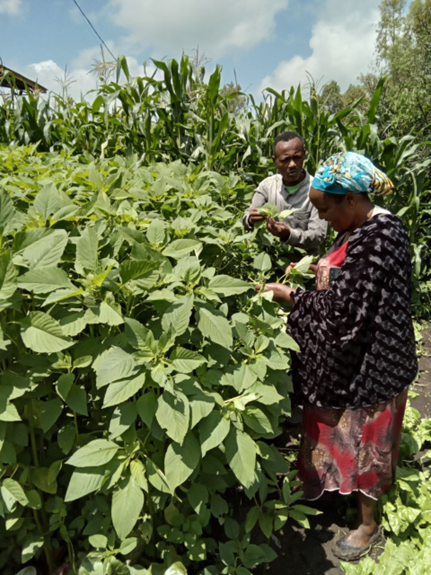

Beyond its nutritional advantages, Amaranthus also potentially presents economic opportunities for farmers in Sire woreda. As consumer demand increases and market linkages are established, the cultivation of Amaranthus could potentially open new income streams for farmers, further incentivizing its production. By promoting the consumption of Amaranthus and developing markets for this nutrient-dense crop, the economic potential of the crop can be fully realized.
Tsehay Bekele, a farmer from Gasela Checha kebele in Sire woreda, eagerly shared her journey of change after receiving support from the MARC on home gardening. “Before this, I only grew Ethiopian kale in my garden,” she explained. “I knew how to cultivate it, and it was something familiar to me. The MARC team of experts taught us about growing nutrient-rich vegetables, and that’s when I first heard about Amaranthus.” She mentioned that it was exciting to see how quickly these new vegetables could be harvested. I was amazed at how vigorously they grew. Amaranthus, though, really caught my attention. Not only does it cook fast, but it tastes delicious—almost like eggs! I couldn’t believe how productive it was.”
The introduction of Amaranthus as a vegetable crop in Sire woreda is a significant step toward improving the nutritional status of the community and promoting the sustainability of local agricultural practices. Supporting the cultivation and consumption of Amaranthus can thus play a vital role in building more resilient, nutritious, and sustainable food systems in the area.
 raise-fs.org