
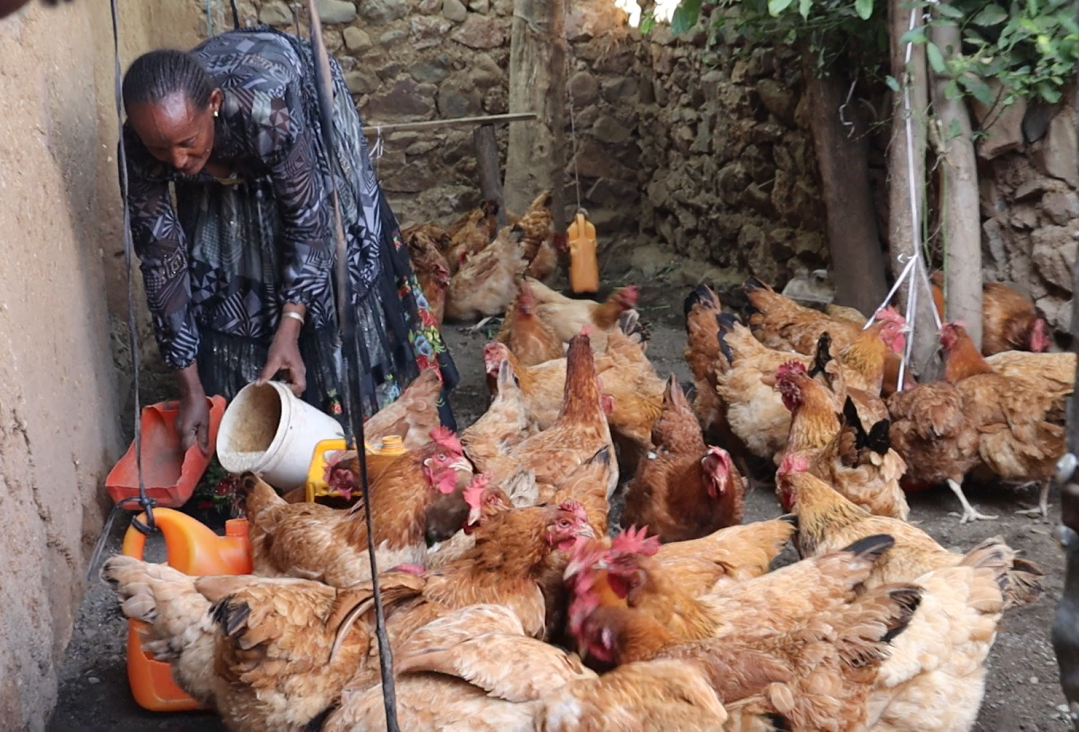
“Despite challenges, the small business model is demonstrating promising results, with farmers benefiting from both household consumption and selling eggs to generate income.”
Ademe Miheretu
Twenty youth and women farmers in Zequala woreda are making strides in their small-scale business model, thanks to an initiative led by RAISE-FS in partnership with the Sequota Dry Land Agricultural Research Center (SDLARC). The initiative aimed at job creation, empowerment of women and youth and contributing to overall food and nutrition security.
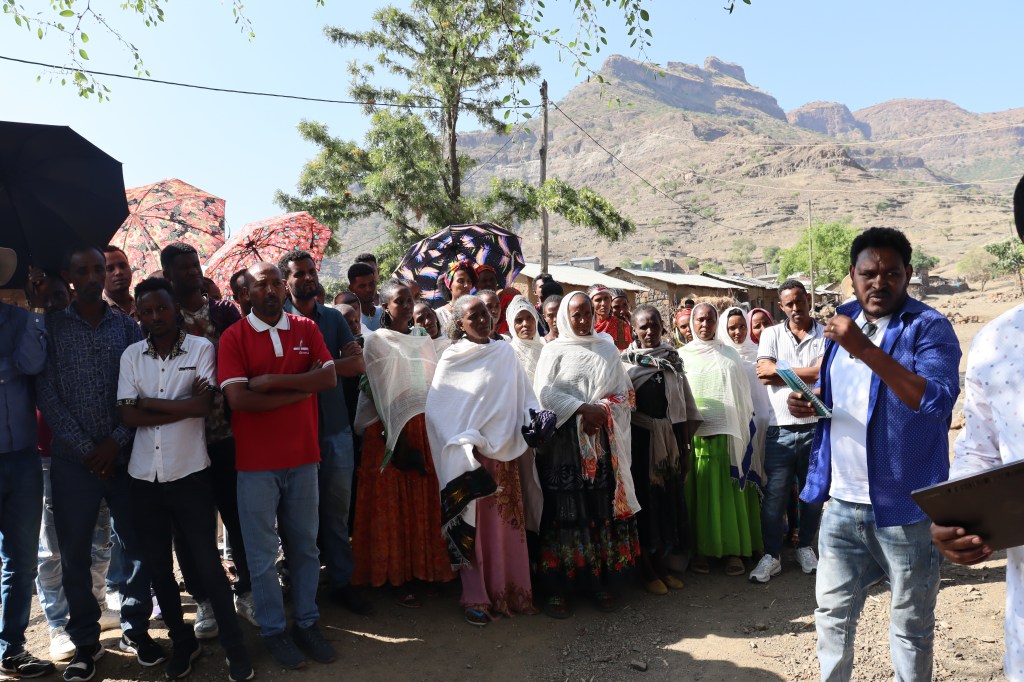
To showcase the success of this small-scale poultry business model, Sequota DL ARC in partnership with RAISE-FS organised a field day on the 6th of November 2024. Stakeholders from the zone, Zequala woreda, and kebeles attended the event, visiting three thriving poultry production sites operated by local entrepreneurs. The field day allowed participants to witness the progress and potential of small-scale poultry farming in the area.
During site visits, participants gathered to discuss the progress achieved thus far, the challenges encountered, and the way forward. Participants appreciated the collaborative efforts of various stakeholders, including Sequota DL ARC, RuSACCOs, livestock agency, FSRP, cooperative promotion offices, and other stakeholders.
Challenges discussed included the lengthy process of arranging credit modalities, difficulties in sourcing the needed chicken varieties, the initial loss of chickens due to reptile attacks and most notably, the high price of feed. Despite these challenges, the small business model is demonstrating promising results, with farmers benefiting from both household consumption and selling eggs to generate income.
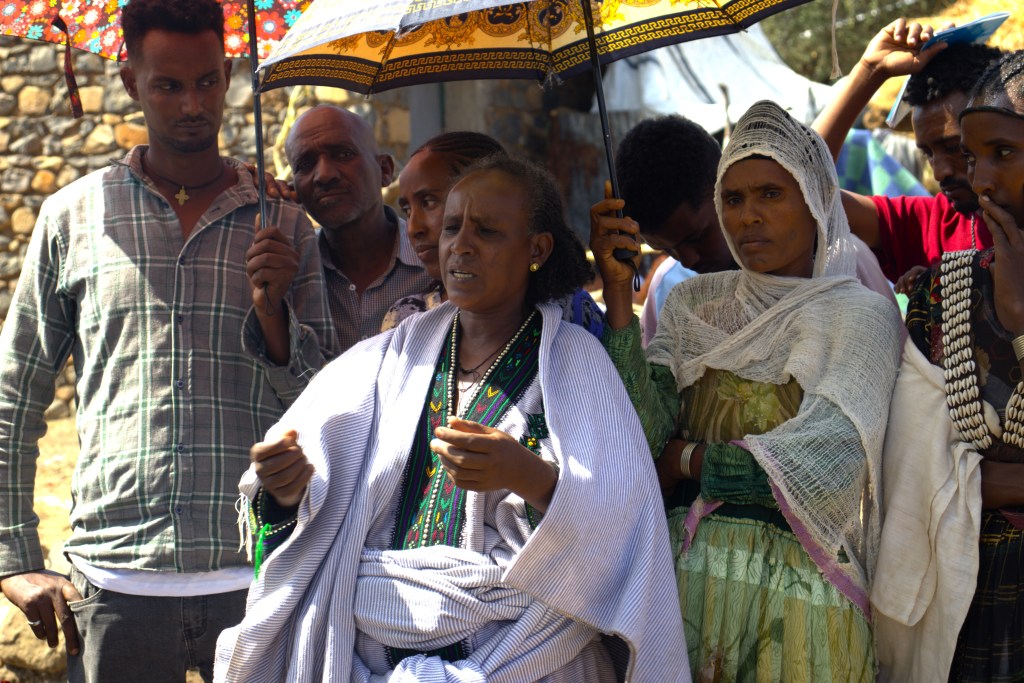
Fetle Ayele, a women entrepreneur in poultry production, shared her initial doubts about starting the poultry business. She was initially discouraged by others who did not get convinced to start the business by taking credit, and she also found the work very burdensome at the beginning.She said: “Poultry production is a full-day job and was very tiresome, especially before the chickens started laying eggs. But now I see good progress. I feed eggs to my kids, sell and use the income to buy other goods.”
Debashu Kahsay, a young farmer, also shared that he benefited from poultry production, collecting up to 200 eggs per week. However, he mentioned market challenges, stating, “I often have to wander from place to place, and sometimes I am forced to sell eggs at a low price of 6-8 ETB for an egg.”
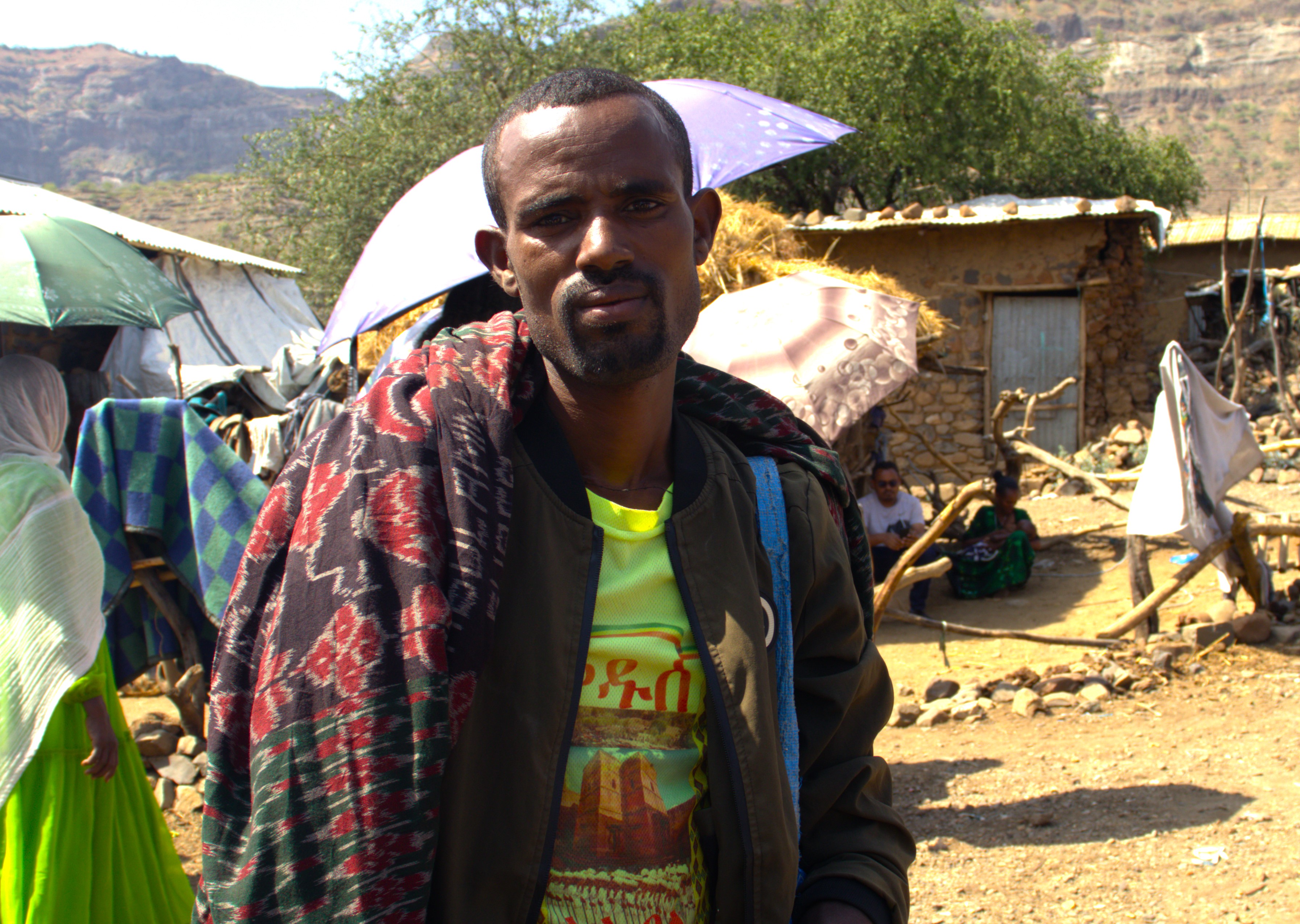
Similarly, Debashu Kahsay, a young farmer, emphasized the benefits he has reaped from poultry production while also shedding light on the market challenges that he faces. He stated, “I often have to wander from place to place, and sometimes I am forced to sell eggs at a low price of 6-8 ETB for an egg.”
Fantayetu Kase from the zone administration office commended the remarkable progress witnessed in the two kebeles and noted the shift in farmers’ attitudes towards self-improvement rather than relying solely on aid.
Looking ahead, Fantayehu further emphasised the importance of sustainability and scaling: “The major challenge is ensuring sustainability and scaling up successful projects. Projects demonstrate good practices, which need to be integrated into the government structure. Achieving this requires stronger collaboration and special attention from relevant stakeholders in the woreda.” She also said that market linkage needs to be created in the woreda.
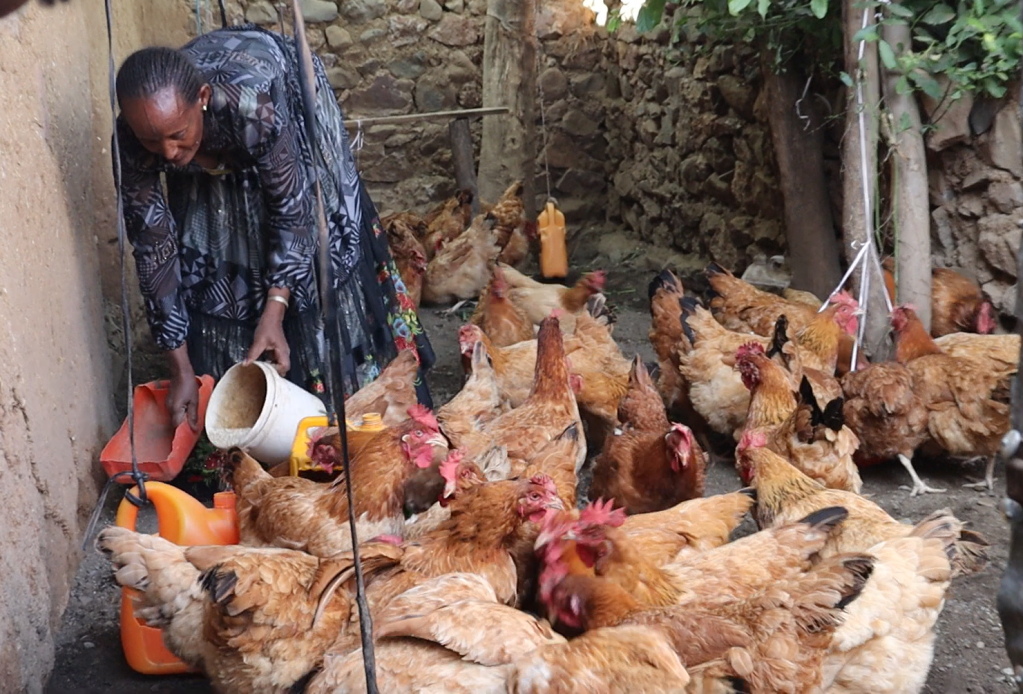
The small-scale poultry business model was initiated last year as a collaborative effort between RAISE-FS and the Sequota DL ARC. The two arranged credit modality for participating farmers, utilizing a revolving fund from the two RuSACCOs in the kebeles. During the discussions, it was emphasized that stakeholders at the woreda must work collaboratively to sustain the credit system by revolving the funds to other farmers.
 raise-fs.org