
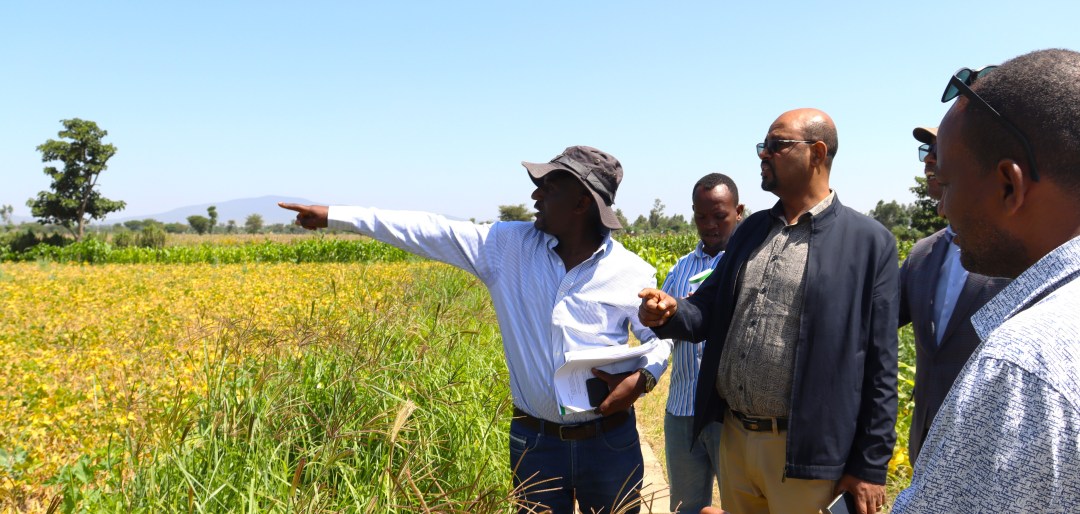
Hawassa University, in partnership with the SWR Ethiopia RAISE-FS project, organized a field visit to Hawassa Zuria woreda with the aim of promoting the soybean innovation tested and validated by the university on a wider scale. The event also provided a platform for key stakeholders to engage in discussions on strategic issues on the scaling and sustainability of soybean innovation.
Tafese Mateos (PhD), Vice President for Research and Technology Transfer of Hawassa University, officially inaugurated the event with an opening speech. Tafesse highlighted the university’s initiatives aligned with the Sustainable Development Goals (SDGs) to address hunger and contribute to the sustainable development of the agriculture sector. He emphasized the pivotal role of the SWR Ethiopia RAISE-FS project, formerly known as the BENEFIT partnership, in transforming the local food system in the Sidama region and at the national level.
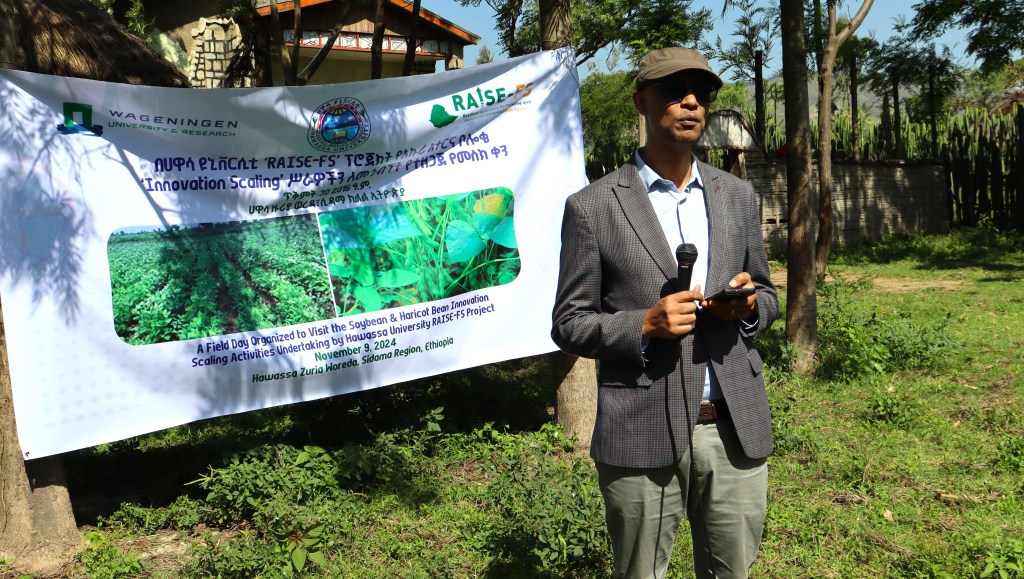
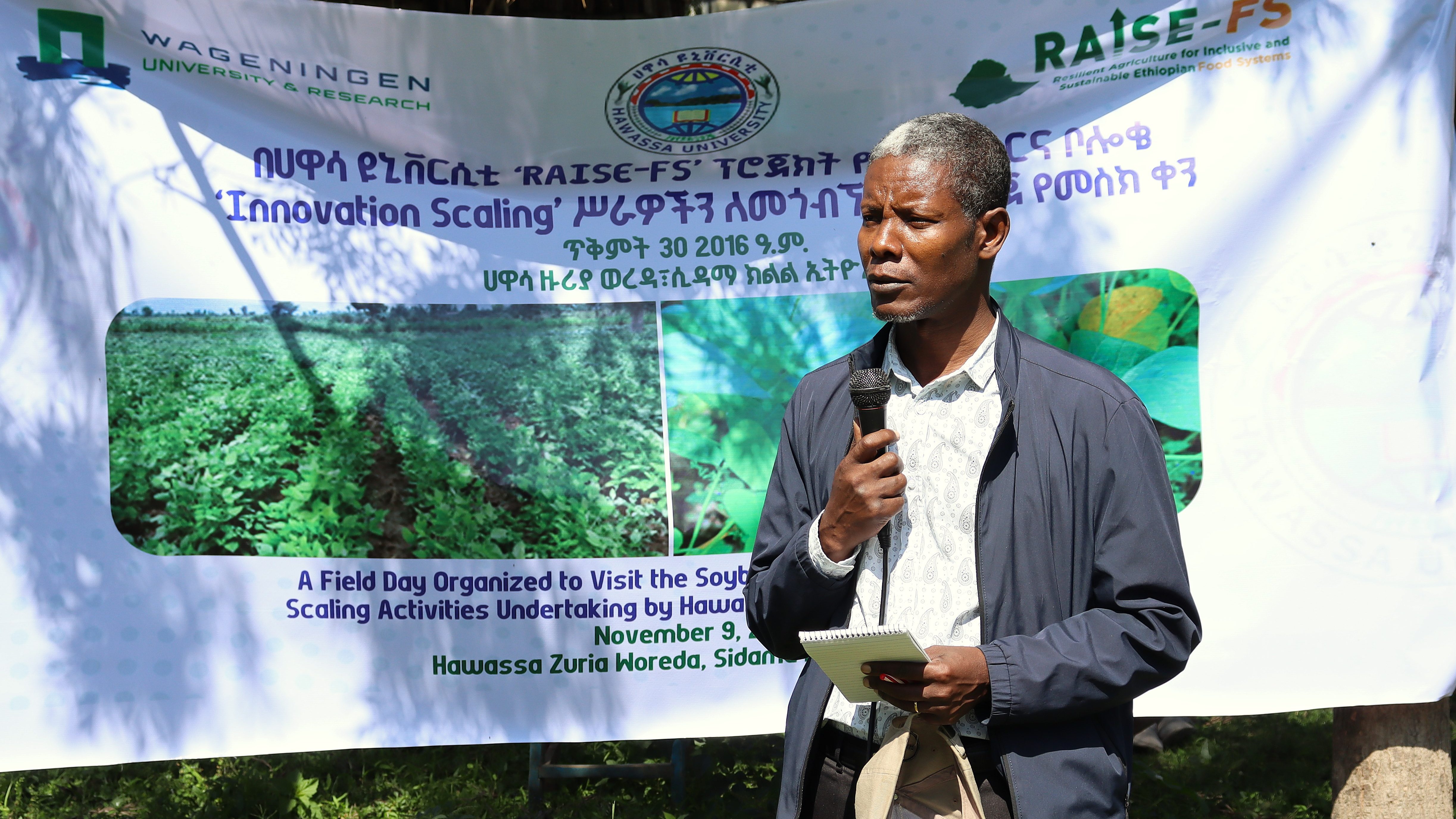
Agdew Bekele (PhD), the team lead at the SWR Ethiopia South Liaison office, provided an overview of the SWR Ethiopia and RAISE-FS project. He emphasized that the project adopts a Research for Food System Transformation approach and collaborates with knowledge institutes such as Hawassa University. The aim is to drive positive change in the food system through research and strategic partnerships.

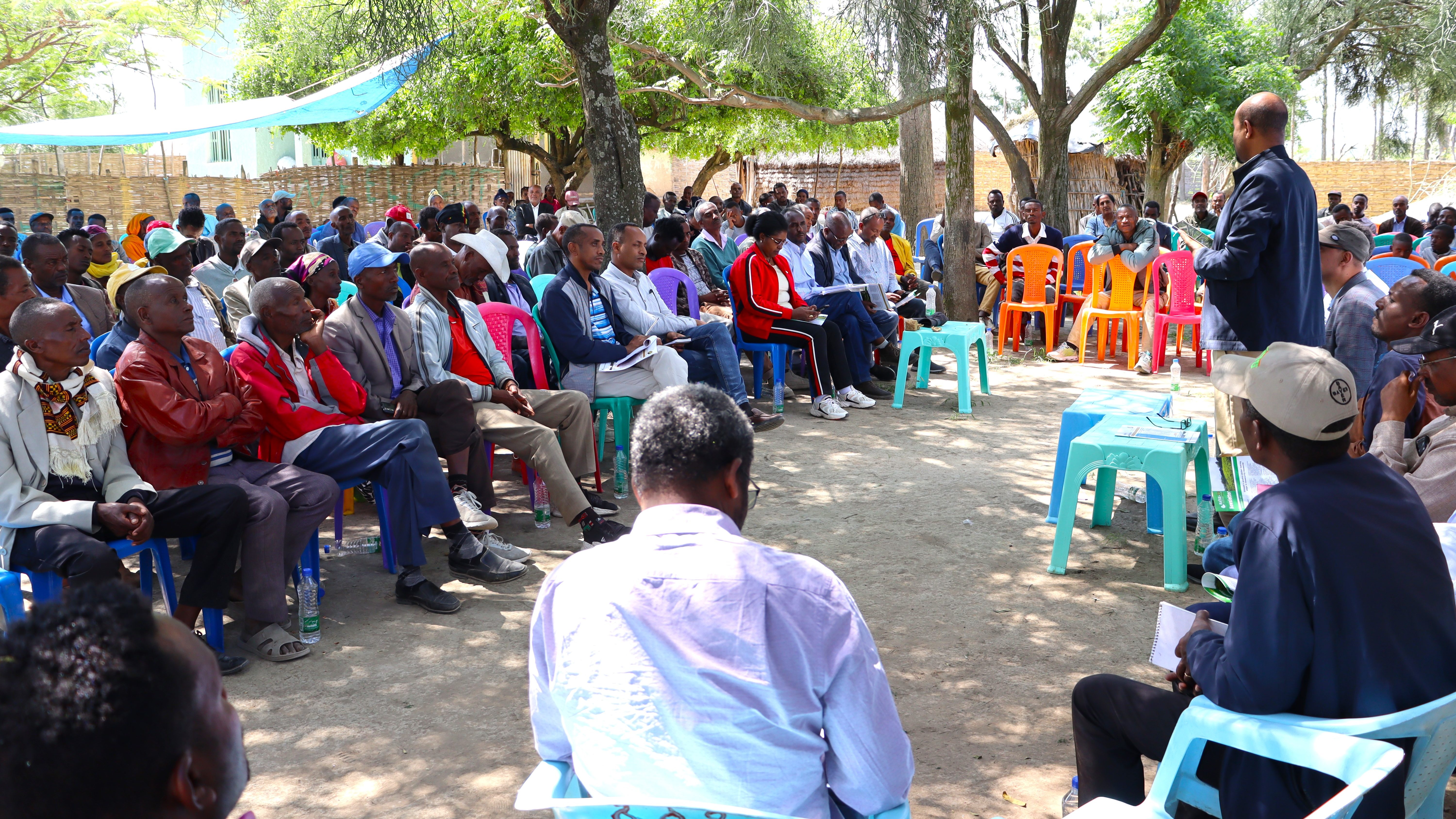
During the visit, participants had the opportunity to observe the soybean fields and engage in discussions regarding the future prospects for scaling up the soybean innovation. Tewodrose Ayalew (PhD), the RAISE-FS project focal person at HU, has noted that soybean was introduced in the Hawassa Zuria some time ago, but its expansion was impeded by various factors. With the support of RAISE FS, there has been a revitalization in soybean cultivation, recognizing its significant potential to transform the local food system. However, challenges related to the availability of improved seeds and establishing market linkages for wider scale-out and sustainable soybean production were noted. The participant farmers expressed their appreciation for the scaling of the soybean innovation and emphasized its role in diversifying their farming systems, while also underscoring the need for support in market linkage. The participants deliberated on strategies to overcome these challenges and identified relevant stakeholders to take the lead in addressing them.
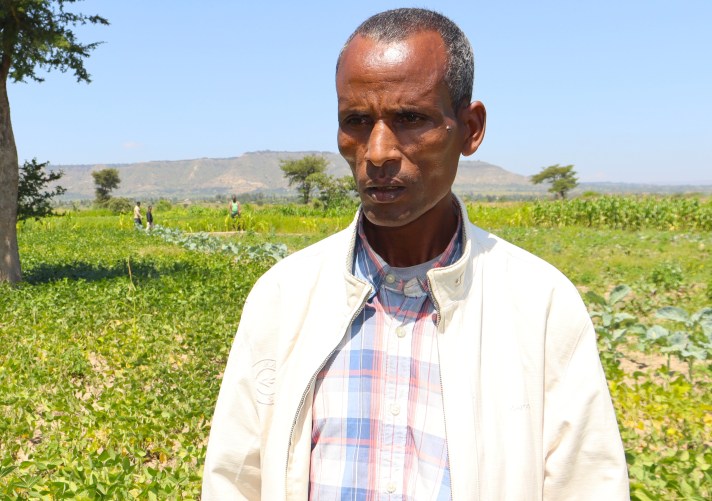
Firew Eyota, a participant farmer in the scaling out program, expressed his gratitude to Hawassa University for introducing six soybean varieties last year. From these varieties, Firew and his colleagues carefully selected their preferred variety, which they are currently multiplying. “I am pleased that the soybean variety we chose is now available to us. I have planted it across a quarter hectare and anticipate a good yield,” said Firew. While he plans to use a portion of the harvest for household consumption, he has concerns about the market for the remaining produce.
Petros Markos, marketing manager of Yirgalem Integrated Agro-Industrial Park, expressed optimism about the initiative and its potential to meet industry demands, highlighting the need for larger volumes of soybean produce. Furthermore, he suggested establishing market linkages with agro-processing enterprises such as Dararo Animal Feed Processing Plc to support soybean-producing farmers. The head of Dararo Animal Feed Processing Plc confirmed to work with soybean-producing farmers on a contract basis to buy currently produced grains from farmers.
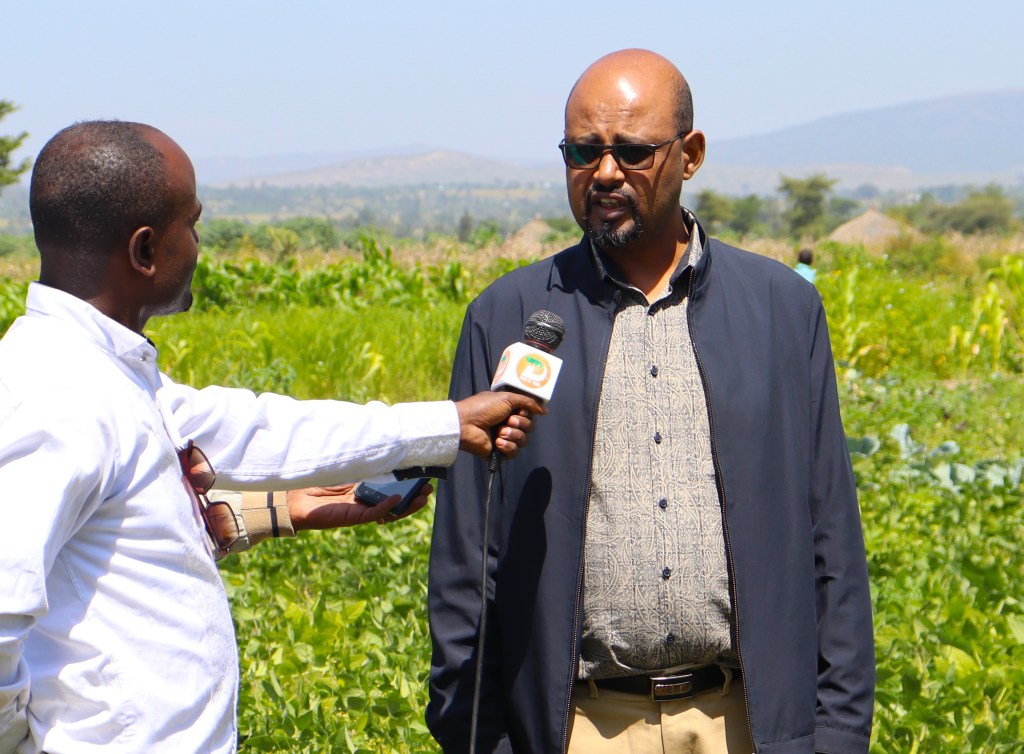

In his concluding remarks, Cherotaw Ayele (PhD), President of Hawassa University, acknowledged the challenges brought forth by the participants and assured that follow-up discussions and actions would be undertaken to address them. He stressed the importance of each stakeholder fulfilling their responsibilities and expressed gratitude for the support received from the SWR Ethiopia RAISE-FS project. Cherotaw reaffirmed the university’s commitment to ensuring that the innovations tested and validated with the project’s support reach their intended targets.
 raise-fs.org