
Kofale woreda, is one of the areas with abundant natural resources and production potential in the Oromia region of the West Arsi zone. However, the areas face a paradox of nutrition insecurity despite the availability of diverse and nutritious food crops. Many reasons can be attributed to this, but the knowledge gap in preparing balanced meals often leads to the underutilization of these resources, impacting community health and well-being.
In response, the Kulumsa Agricultural Research Center (KARC), in collaboration with the SWR Ethiopia RAISE-FS project and the Kofale woreda Agricultural Office, promoted year-round production of nutritionally dense crop types on selected farm household home gardens. To encourage farm households, consume what they produce in their home gardens, they organized a food preparation and recipe demonstration event.
The event began with blessings from local leaders, followed by expert discussions on the nutritional value of vegetables, hygiene practices during food preparation, and the importance of light cooking to retain nutrients. The primary objective was to educate the community on preparing balanced, nutrient-rich meals using locally available ingredients. Through practical demonstrations, participants were taught how to maximize the nutritional value of home-grown vegetables and improve their dietary practices for better health outcomes.
A variety of food groups—including cereals, pulses, fruits, leafy greens, vegetables, milk, and oils—were incorporated into the demonstrations to promote diet diversity. The demonstration allowed participants to learn different recipe preparation from the home garden crops. Experts emphasized techniques to preserve and enhance nutrient content, empowering attendees to improve their dietary habits. The program was guided by Ethiopia’s Food-Based Dietary Guidelines, which advocate for diverse food consumption, including at least four food groups per meal and six throughout the day.
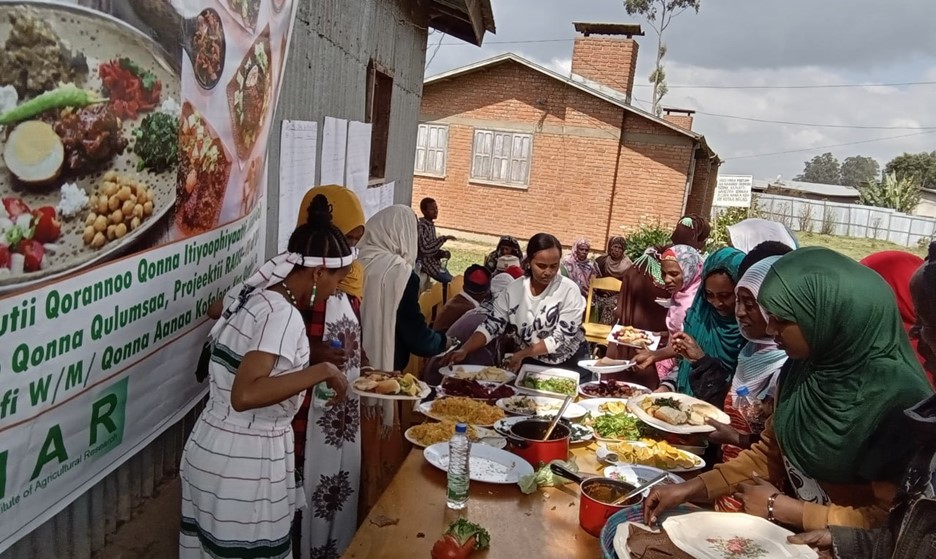
The event also shed light on the economic and awareness barriers that have hindered diet diversity in the community. Before participating in the demonstration, many of them confessed that they were unaware of the nutritional value of their produce and often sold nutrient-rich crops to purchase less nutritious alternatives. Through this initiative, they reflected that they have learned to consume their produce and sell surplus produce to buy high-value commodities to enhance their diets.
Farmers were recognized for their efforts and encouraged to apply the lessons learned at their home to improve their family dietary diversity. Accordingly, many of the participants vowed to try and adopt the cooking techniques and hygienic practices that they have seen to ensure safe and healthy meals for their families.
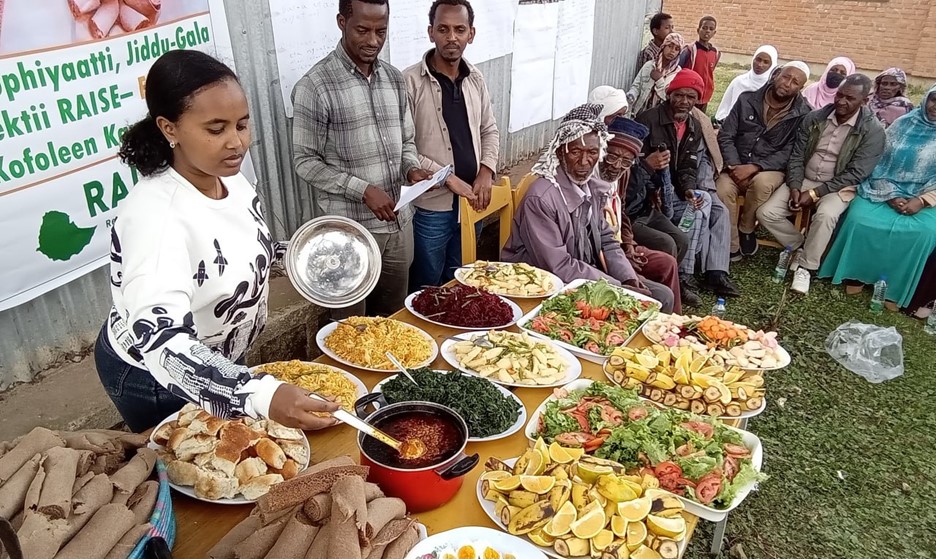
The demonstrations were held across four kebeles, namely Kofele 01, Kofele 02, Germama, and Koma Mamo, within the Kofele woreda. These events brought together a total of 123 participants, comprising 69 men and 54 women. The participants included home garden host farmers, development agents, woreda experts, and kebele administrators.
Based on the participants’ reflections, the demonstration was successful. The collaborative effort between Kulumsa ARC, RAISE-FS project, the woreda office of agriculture, farmers, experts, and local leaders highlights the potential to foster healthier eating habits and transform local food systems.
 raise-fs.org