
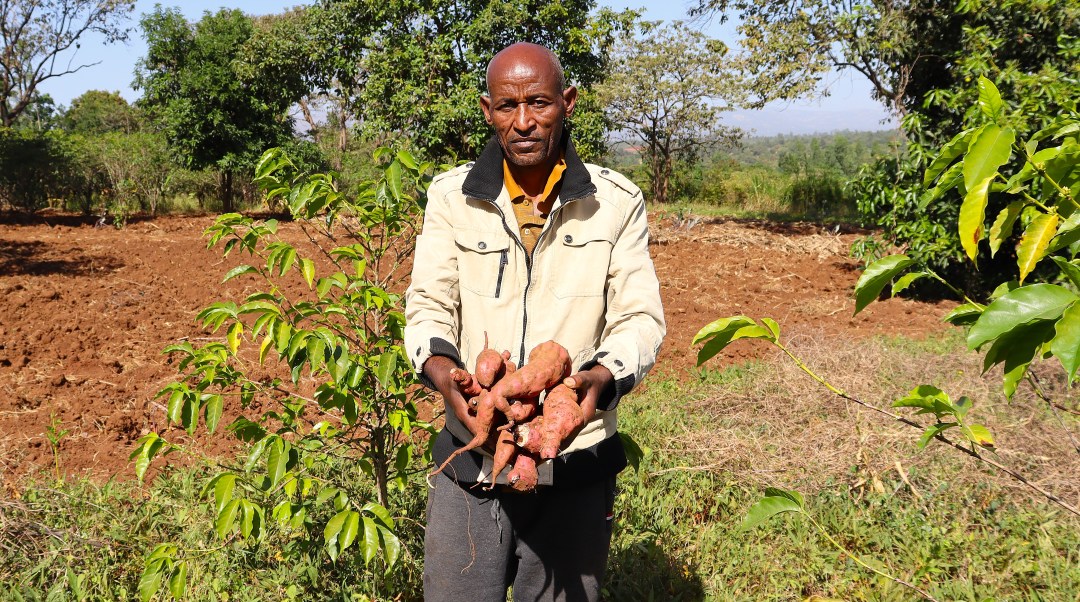
Areka Agricultural Research Centre, in collaboration with the SWR Ethiopia RAISE-FS project, organized a field visit to showcase the promising results of faba bean and Orange Fleshed Sweet Potato innovation packages. The event was held at Zaba and Fara Ocha kebeles in Boloso Bombe woreda and brought together farmers, agricultural experts, and researchers to share experiences and strategize a wider scale out of the technologies.
The technologies have been tested and validated for two years. Those technologies preferred by farmers were promoted for wider scaling. The faba bean technology package was scaled out on fifty-three farmers at Zaba kebele. Similarly, the Areka ARC has been working to scale out OFSP cultivation to enhance productivity and diet diversity among local farmers at Fara Ocha kebele. It aimed to raise awareness, show the advantages of these technologies, and generate demand for the technologies.
Genene Gezehegn (PhD), Centre Manager of Areka ARC, opened the occasion by highlighting the collaborative research efforts between the centre and the SWR Ethiopia RAISE-FS project. He emphasized that the centre is committed to ensuring wider expansion and application of the identified technology packages to transform the local food system. Genene underscored that the project might not be there for long, so scaling out these technologies and engaging all relevant stakeholders in the area is important to ensure a meaningful impact. “The faba bean and OFSP technologies are showing promising results,” Genene said. “Our commitment is to bring all stakeholders on board to scale out these innovations and transform the local food system for sustainable agricultural development.”
Participants were taken on a field visit to demonstration clustered fields at Zaba kebele, where farmers were showcasing the faba bean technology package. Host farmers and researchers explained the implementation process, pointing out technical support and lessons learned. Farmers shared experiences gained from the comparative advantages created by the adoption of the new faba bean variety and its associated production practices.


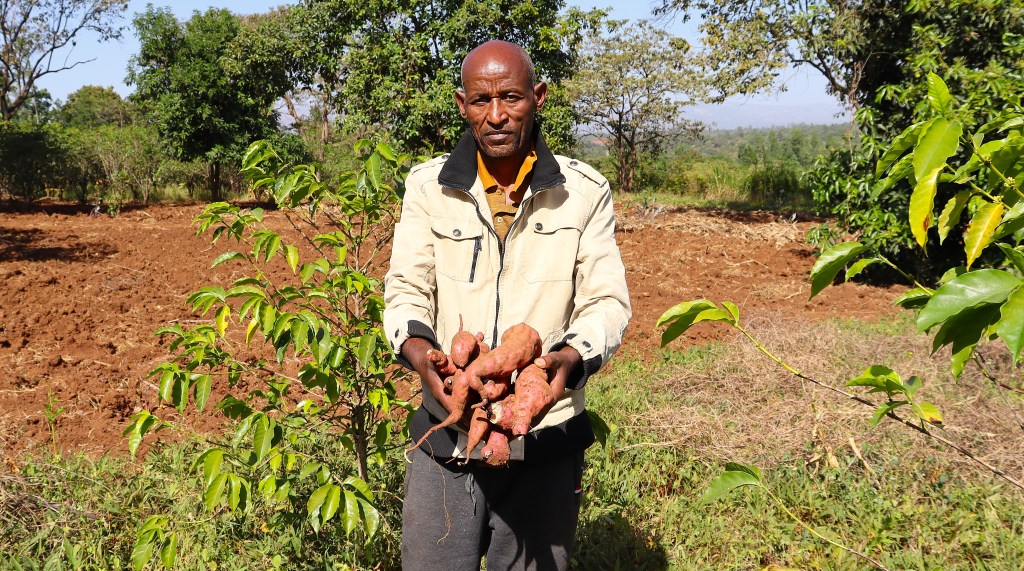
In the afternoon, participants visited an OFSP field in Fara Ocha kebele. Alemayehu Aliso, a host farmer, shared his journey with the OFSP technology package. He explained how he came across the innovation, applied it on his farm, and benefited from its cultivation. His testimony underscored the potential of OFSP to improve not only productivity but also nutritional outcomes for local communities.
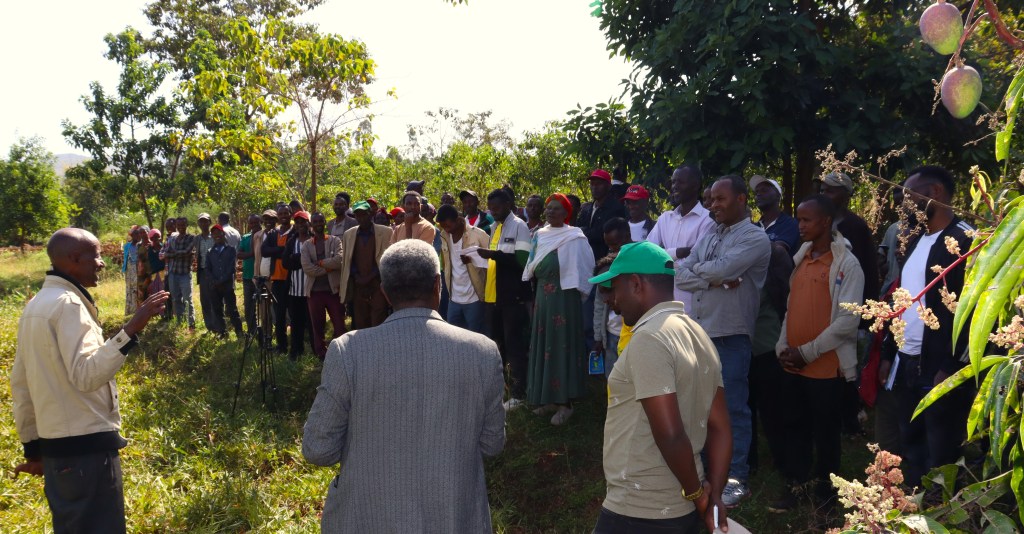
Following the field visits, participants discussed on how to scale out these technologies. Farmers were very pleased with the results observed but expressed concern about accessing improved varieties. The stakeholders admitted to this challenge and urged the need to maintain and circulate the already available improved varieties with non-host farmers in the community. In order to address these issues, it was left to the local stakeholders to ensure that the seeds harvested were preserved in good quality and exchanged among farmers for sustainability. It also emerged in discussions that collaboration among farmers, researchers, and agricultural experts should be strengthened to bring change to the local food system.
Agdew Bekele (PhD), the South Liaison Office Team Lead for RAISE-FS Ethiopia, provided an insightful overview of the project during the gathering. He commended the participant farmers for their unwavering commitment and hard work, which are instrumental to the success of the initiative. Agdew emphasized that the project will continue its effort in close collaboration with relevant stakeholders to ensure that the introduced technologies have a long-lasting and transformative impact on the local food system.
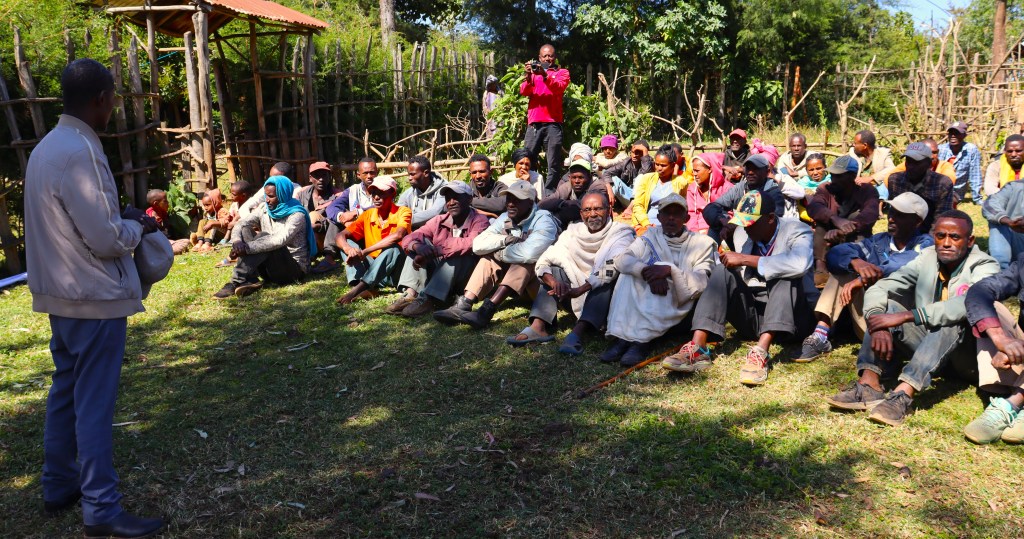
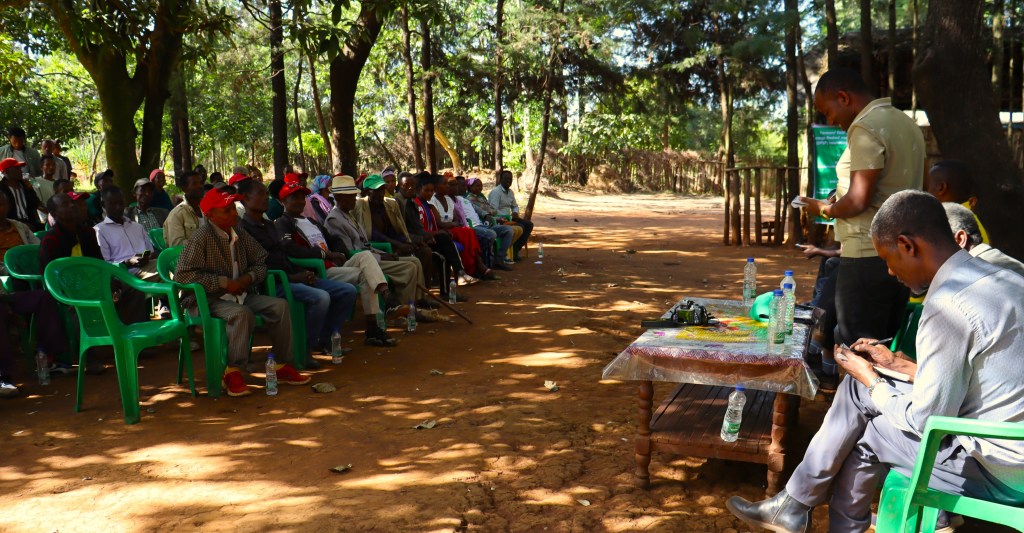
In his concluding remarks, Mr. Tamiru Malako, Deputy Head of the Wolaita Zone Agriculture Department, extended his gratitude to Areka Agricultural Research Centre and the RAISE-FS project for their joint efforts in identifying and promoting innovative agricultural technologies. He highlighted the importance of farmer-to-farmer exchange of available faba bean seed and OFSP cuttings to overcome the challenges discussed during the event. Mr Tamiru assured participants that the agriculture department would actively take its responsibility for addressing these issues and would also ensure that other stakeholders do their part.
This field visit was successful in promoting the technologies and creating space for local stakeholders to discuss strategic issues. In bringing together diverse stakeholders, the event encouraged sharing of knowledge and strategizing solutions to common problems. With sustained commitment and collaboration, these technologies are believed to contribute to increased productivity, better nutrition, and a brighter future for farming communities in Boloso Bombe and similar areas.
 raise-fs.org