
The RAISEFS project is making strides in promoting healthier diets and sustainable livelihoods across Central Ethiopia, Oromia, and Tigray regions. By implementing the Ethiopian Food-Based Dietary Guidelines (FBDGs) one key message at a time, this initiative is creating a ripple effect of positive change. The six key messages—dietary diversity, legume consumption, fruits and vegetables, animal-source foods, dairy consumption, nuts and oil seeds, water, and salt intake—are at the heart of this transformative journey.
Field visit highlights: progress and achievement
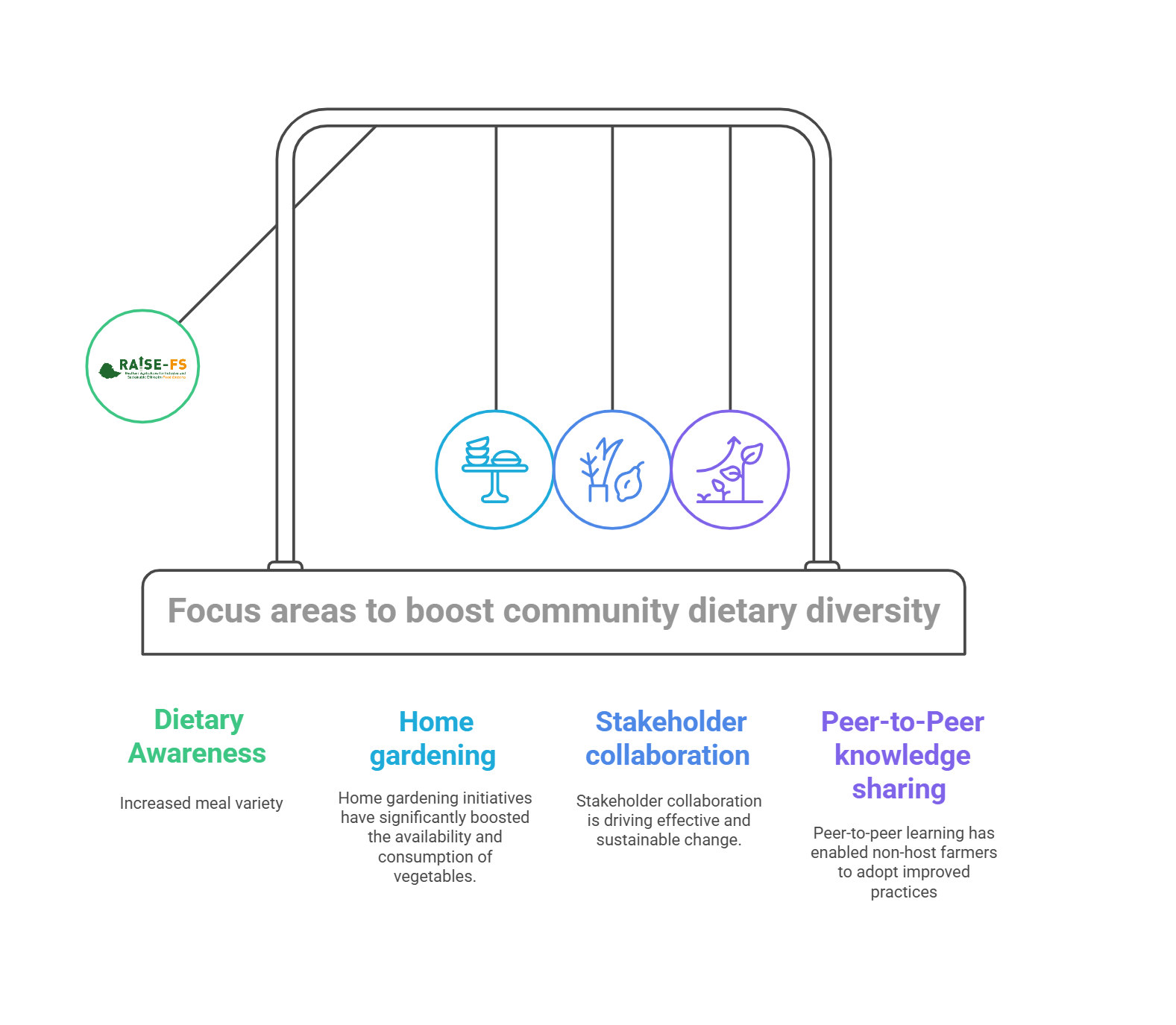
1. Dietary diversity awareness gains momentum
Farmers are increasingly recognizing the importance of balanced meals. Many now aim to include at least four food groups per meal and six food groups daily. This shift is fostering healthier eating habits within communities.
2. Home gardening revolutionizes vegetable access
Home gardening initiatives have significantly boosted the availability and consumption of vegetables. Farmers are growing diverse varieties and incorporating them into their daily diets, enhancing both nutrition and food security.
3. Stakeholder collaboration strengthens implementation
Researchers, health professionals, and agricultural experts at the woreda and kebele levels are working together seamlessly to implement the dietary guidelines. This collaboration is driving effective and sustainable change.
4. Peer-to-Peer knowledge sharing expands impact
The benefits of RAISEFS interventions are spreading beyond host farmers. Peer-to-peer learning has enabled non-host farmers to adopt improved practices, amplifying the project’s reach and impact.
5. Poultry farming brings hope to vulnerable women
In Tigray, widowed women affected by recent conflicts are supported through poultry farming initiatives. While egg production has not yet commenced, this intervention holds promise for improving both diets and livelihoods in the near future.

Breaking Barriers: Gender empowerment in action
RAISEFS is fostering gender equity through targeted training, education, and cooking demonstrations. Men and women are increasingly collaborating on decisions related to income allocation and healthy diets. Cooking demonstrations remain largely led by women, but joint participation is on the rise—a step toward more inclusive community dynamics.
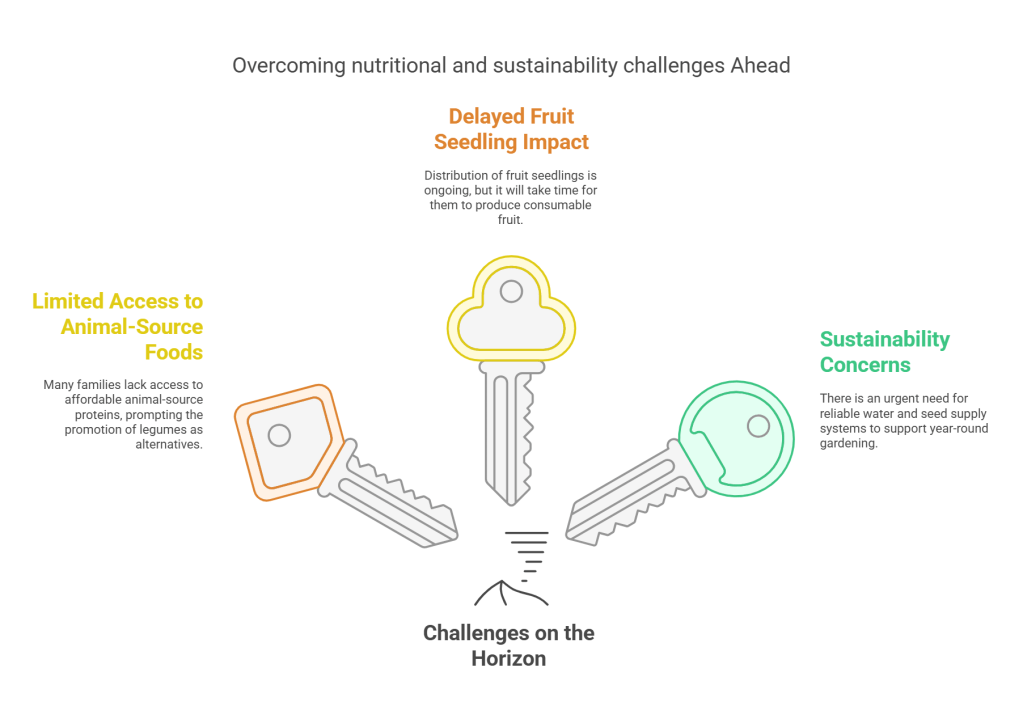
Challenges on the Horizon
Limited access to animal-source foods: Many families still struggle to afford or access animal-source proteins. To bridge this gap, legumes are being promoted as an alternative protein source.
Fruit seedling impact delayed: While fruit seedlings have been distributed, it will take time to yield consumable produce.
Sustainability concerns: Reliable water and seed supply systems are urgently needed to ensure year-round home gardening production.
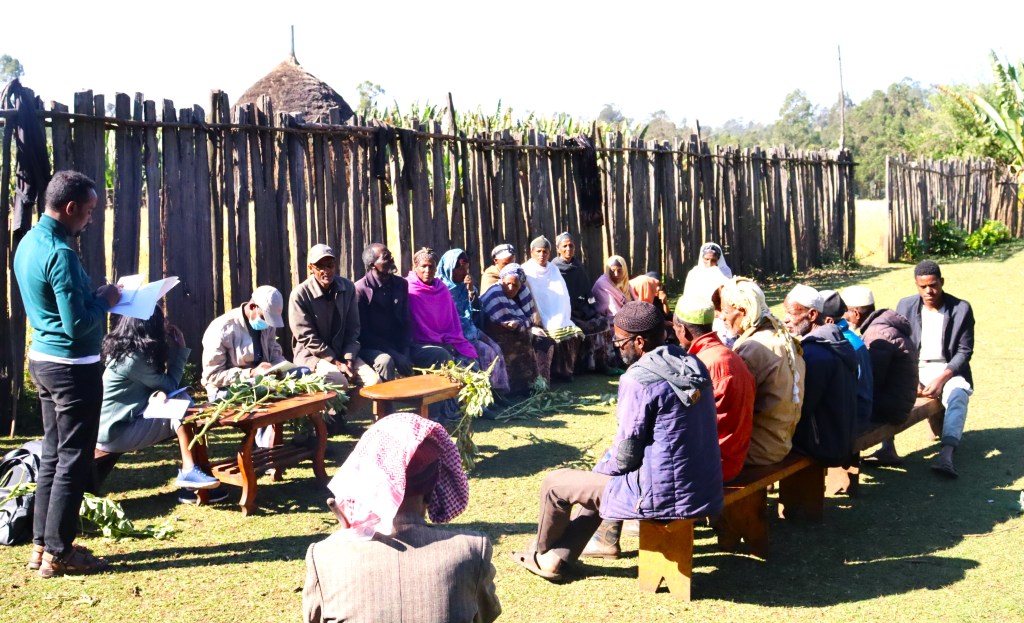
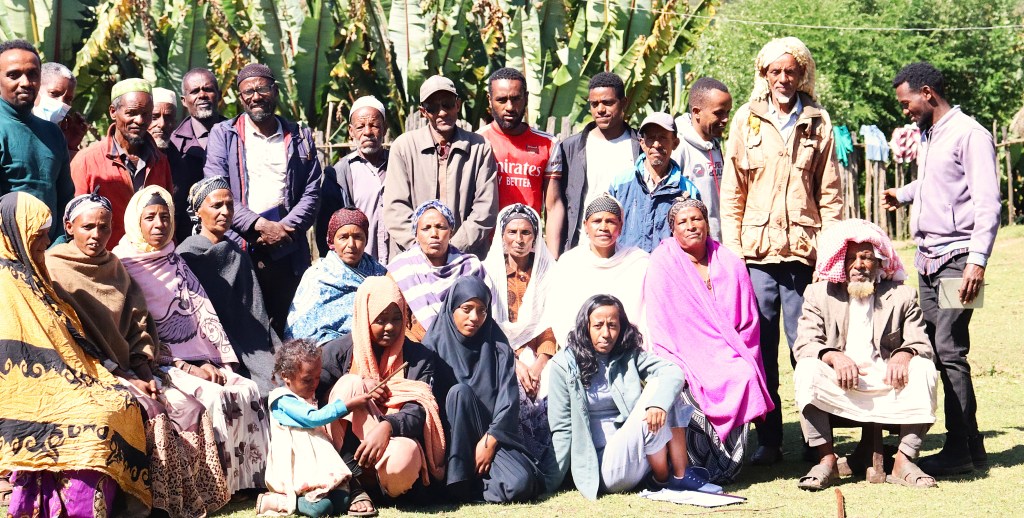
What’s next, RAISEFS envisions a transformative future by 2025, focusing on scaling its impactful initiatives to foster healthier communities in Ethiopia. Key strategies include consistent follow-ups and backstopping, repeated training sessions to reinforce dietary practices, expanded cooking demonstrations to reach more households, and strengthened collaboration with government entities to amplify these best practices. More than a dietary intervention, RAISEFS represents a movement toward sustainable livelihoods and community empowerment, driving meaningful change and paving the way for a healthier, brighter future.
 raise-fs.org