

In an effort to enhance food safety in Ethiopia, the “Governance from Farm to Fork for Food Safety” blended course has successfully concluded its three-month journey on May 16, 2025. This program, co-organized by Wageningen Social & Economic Research and the SWR Ethiopia RAISE-FS project, brought together 39 participants from diverse sectors, including national and regional government agencies, academia, research institutions, and the private sector. Their shared mission? To fortify Ethiopia’s food safety control system and foster collaboration across the food value chain.
The course included face-to-face session held from May, 12–16, 2025, at the Swiss Inn Nexus Hotel in Addis Ababa. The course was officially opened by higher government officials from the key institutions.
Dr. Dawit Alemu, Wageningen Research Ethiopia Country Representative and RAISE-FS Project Manager, emphasized the project’s role in building capacity and promoting a national agenda for food safety. He highlighted that safeguarding food safety requires the collective efforts of all stakeholders.

Dr. Wonldale Habtamu, Deputy Director General of EAA and Head of NPPO, addressed the complex dynamics of the Ethiopian food system. He identified food safety, quality, and traceability as priority concerns and highlighted the critical roles of governance training, private sector engagement, and trust-building in ensuring success in these areas.
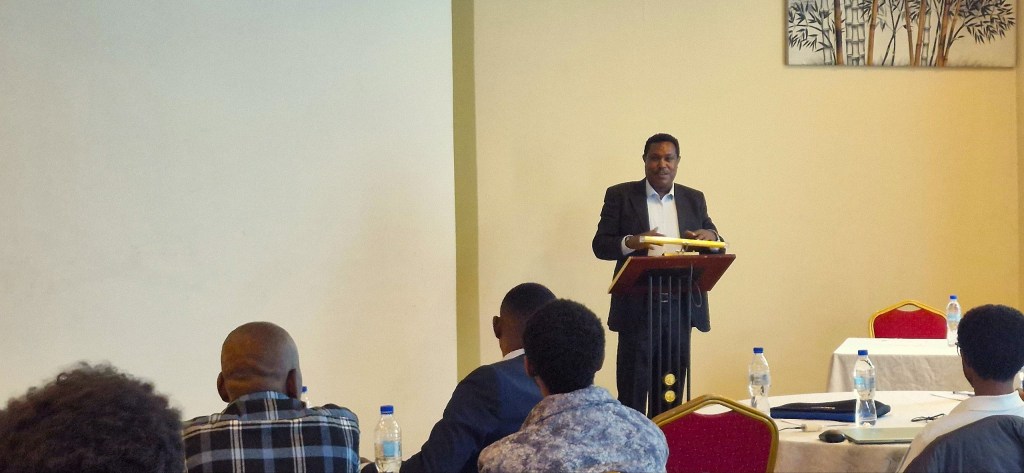
Similarly, Mr. Negash Sime, the Deputy Director General of the EFDA, emphasized the significance of the National Food Safety Master Plan and the adoption of farm-to-fork strategies in ensuring food safety. He underscored the critical role of collaboration among stakeholders, particularly research institutions, academic organizations, and private sector entities, in advancing food safety initiatives. Mr. Negash further highlighted that the reduction of foodborne diseases and the protection of public health are collective responsibilities, necessitating the active engagement and coordinated efforts of all participants within the food value chain.
The course wasn’t just about theory—it was a hands-on experience designed to deliver real impact. Participants crafted actionable plans to enhance food safety systems and embarked on field visits to government institutions and private sector players excelling in food safety practices. These visits offered to participants invaluable experiential knowledge.
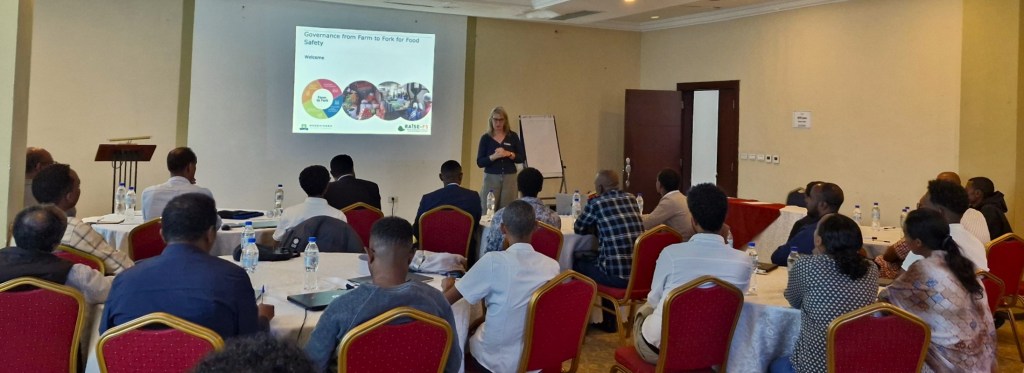

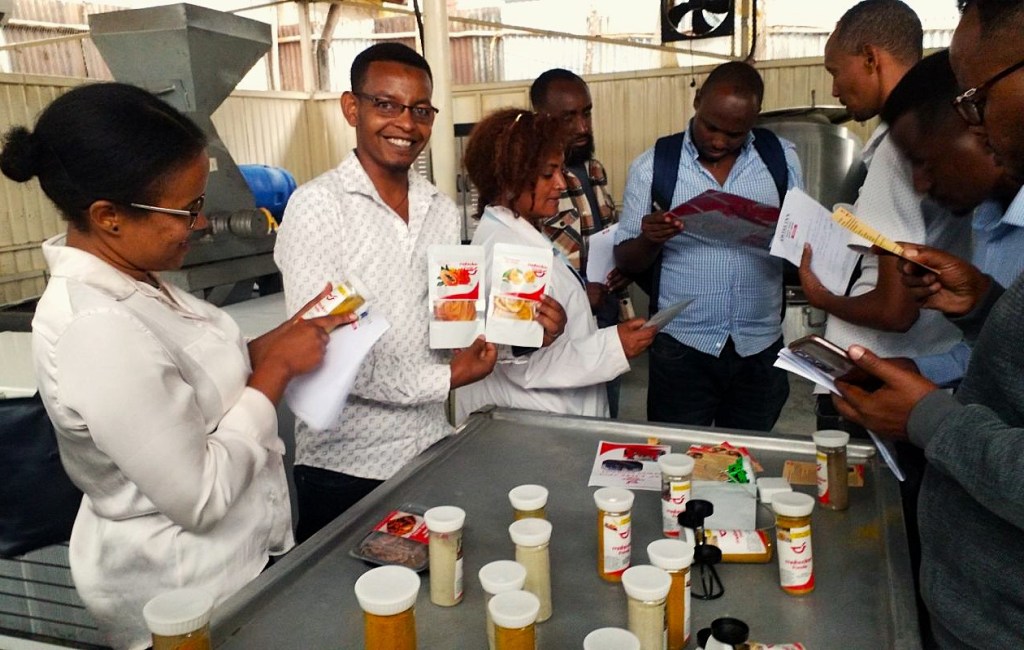
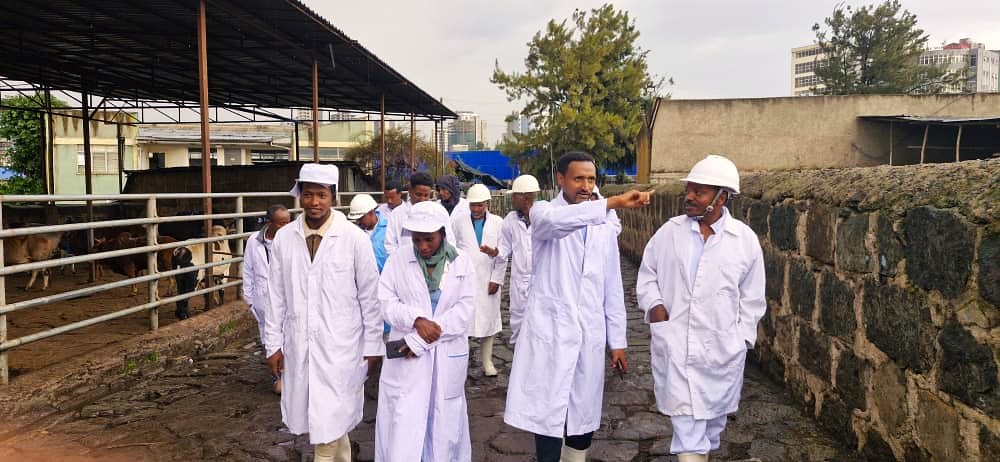
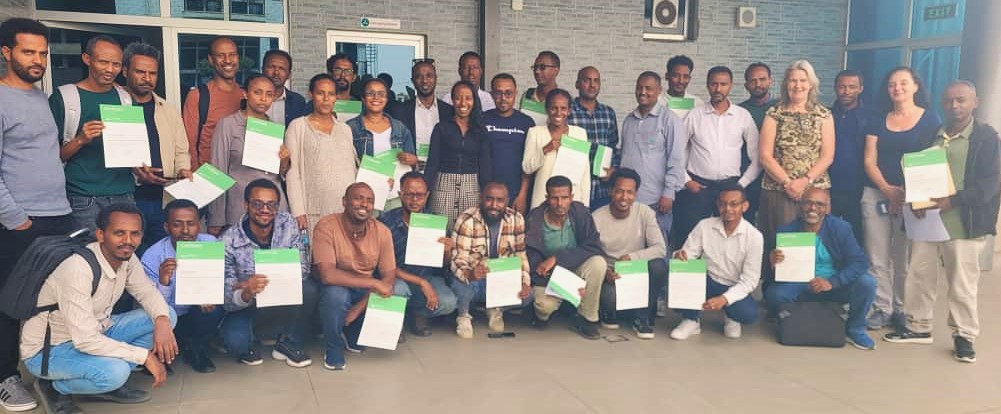
As the program wrapped up, participants celebrated their achievements with certificates in hand and newfound knowledge in their minds. The feedback was overwhelmingly positive participants praised the experiential training approach, insightful field visits, and opportunities to learn innovative strategies for improving food safety governance. Their feedback shows this training has laid a strong foundation towards enhancing food safety governance in Ethiopia.
 raise-fs.org