

Efficient agricultural planning and informed decision making are key elements for sustainability and resilience of agricultural production. To support this process Innovation Recommendation Mapping (IRM) was developed by Wageningen University & Research and experts from Ethiopia. IRM allows users to generate maps that show in which locations ‘best fit innovations’ can be scaled and what is needed to scale the innovations. SWR Ethiopia RAISE-FS project, in partnership with the Central Ethiopia Agricultural Research Institute based at Worabie Agricultural Research Centre, has leveraged IRM to introduce a transformative intercropping technique: maize-common bean inter-cropping. This method has been identified as a “best-fit” innovation for Silti woreda, an area where mono-cropping is traditionally the dominant farming practice. However, a shift is underway, and this new approach is proving to be a game-changer for farmers in the woreda.
From piloting maize-common bean inter-cropping to scaling
Intercropping, the practice of growing two crops together on the same plot at the same growing period, was largely unfamiliar to farmers in Silti woreda. Recognizing the potential advantage of this technique, the SWR Ethiopia RAISE-FS project partnered with Worabie Agricultural Research Centre to develop an Innovation Recommendation Mapping (IRM). The IRM identified maize-common bean inter-cropping as an effective method to intensify resource use, improve land efficiency, and increase yields.
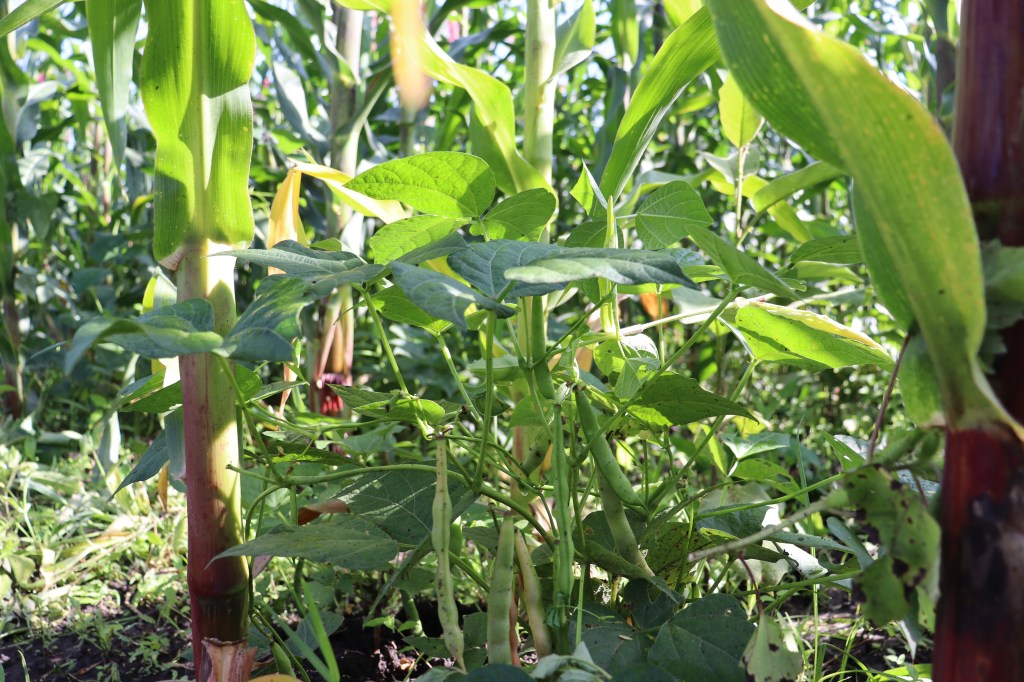

The pilot project began two years before with 25 farmers across five kebeles, including 17 men and 8 women. The results were remarkable: farmers who applied inter-cropping achieved higher productivity compared to mono-cropping. For example, while maize grown alone yielded about 60 quintals per hectare and common bean alone yielded about 19 quintals, inter-cropping produced more than 60 quintals of maize and an additional 12 quintals of common bean per hectare.
Field visit and farmers reflection
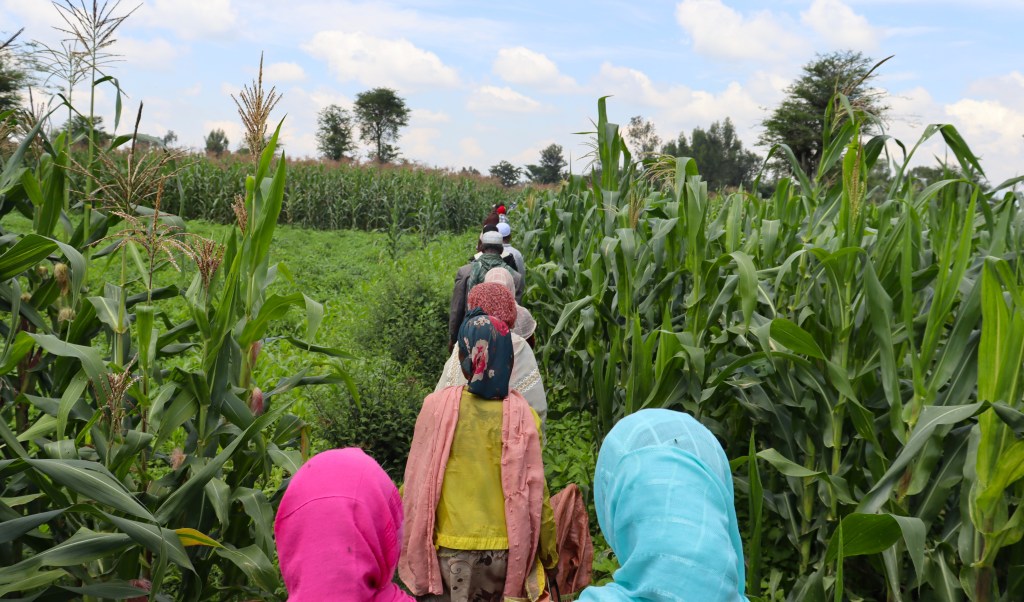
To promote the technique further, Worabie Agricultural Research Centre organized a field visit, showcasing the benefits of maize-common bean inter-cropping. Host farmers shared their experiences, highlighting how the practice transformed their farming outcomes. Zeinu Sahlo, a farmer from Dubena Bati kebele, expressed his enthusiasm:
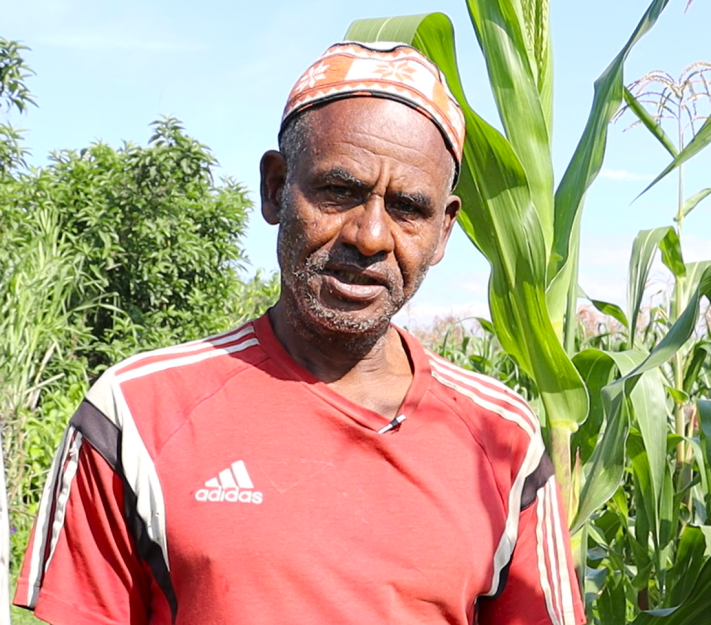
“The inter-cropping benefited me a lot in increasing my productivity, food availability, and improving soil fertility. The common bean grows in spaces otherwise left unused where weeds would grow. It’s an additional yield benefit we get by making better use of our land.“
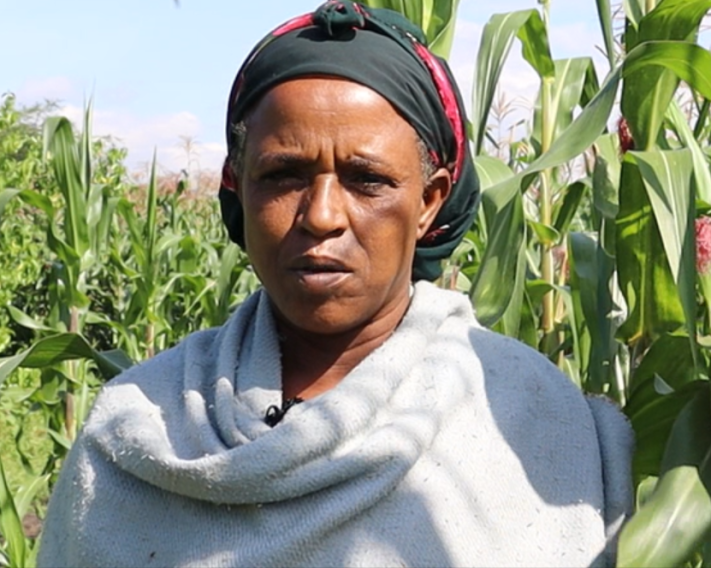
Zeinu’s wife, Amina Muzein, also praised the technique for addressing food shortages during peak times. She explained how their family harvests and consumes the common bean before it fully matures, providing nutritious meals for their children. Their story resonated with other farmers, many of whom expressed interest in adopting the method on a larger scale.
Overcoming challenges for wider scaling
Thanks to collaborative efforts, the maize-common bean inter-cropping technique is being scaled up across Silti woreda. Muktar Mustafa, a development agent in Dubena Bati kebele, reported that farmers initially reluctant to adopt the practice are now convinced of its benefits. The pilot project involved 25 farmers from five kebeles, with diverse representation including youth and women. Following its success, now being scaled up on 120 farmers with RAISE-FS project support, with further scaling underway in four additional kebeles by woreda office of agriculture.
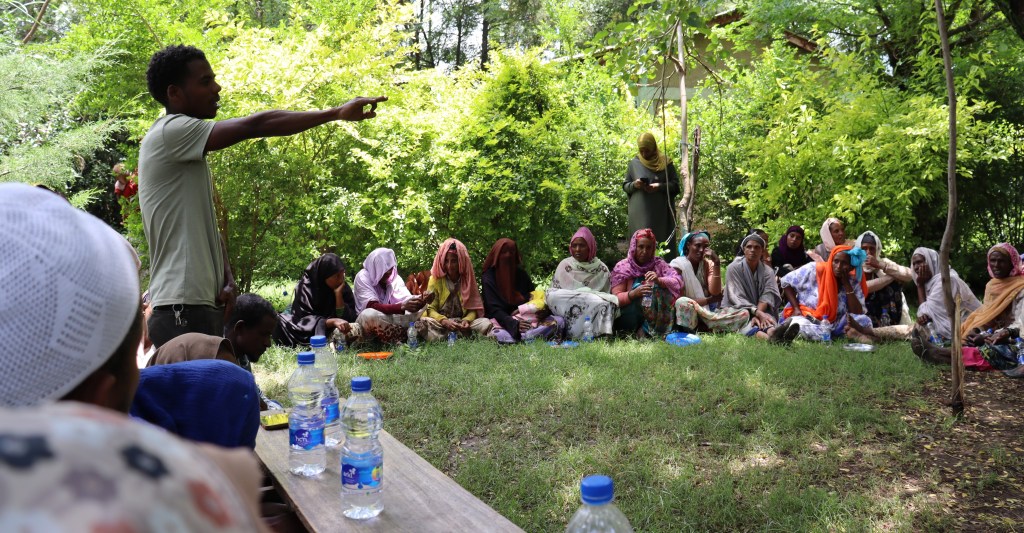
Despite the promising results, farmers face challenges in scaling up inter-cropping due to seed shortages. To tackle the seed shortage, established woreda level stakeholder platform discussed the problem. The platform has given the assignment to Edget Seed Producer Cooperative Union to produce and distribute the seed demanded by farmers. The multi-stakeholder platform was facilitated by Worabie Agricultural Research Centre. Representatives from various offices including woreda office of agriculture, women affairs, health services, and cooperative unions have signed a memorandum of understanding detailing roles and responsibilities of each stakeholder organizations.
Benefits farmers reaping by applying the inter-cropping technique
Farmers who adopted maize-common bean inter-cropping have reported significant improvements in their household diets. The common bean is not only nutritious but also beloved by children for its taste. Beyond dietary benefits, the technique reduces weed pressure on maize crops and enhances soil fertility. Non-host farmers have observed these advantages firsthand and expressed admiration for the results achieved by host farmers.
The economic advantage is equally compelling. By utilizing previously unused spaces between maize rows, farmers gain an additional yield from common beans without compromising maize production. This inter-cropping approach maximizes land use efficiency and boosts economic returns, a critical benefit in areas where farmland is scarce.
Looking ahead for sustaining innovation
During concluding remarks at the field day, Dr. Agdew Bekele, RAISE-FS Hawassa liaison office lead, and Dr. Mulugeta Diro, RAISE-FS project deputy manager, emphasized the importance of stakeholder collaboration as the RAISE-FS project is phasing out. They encouraged farmers and stakeholders to continue their hard work and scaling up this innovative technique for sustainable agricultural growth and transform the food system in the woreda.
The encouraging result obtained by introducing and promoting maize-common bean inter-cropping technique has a huge potential to enhance farmers benefit in Silti woreda. With continued support from stakeholders and farmers’ growing enthusiasm, Silti woreda is paving the way for a brighter future rooted in sustainable agriculture.
 raise-fs.org