
Scaling intercropping of pearl millet with lowland pulses has shown noticeable improvements in smallholder farming systems. This innovation helps to improve food security, soil health, and household income. It provides a promising and transformative pathway for communities in dryland agro-ecological areas like the Waghimra zone, which face climate and resource constraints.
Field day showcases intercropping success
SWR Ethiopia’s RAISE-FS project, in conjunction with the Sequota Dryland Agricultural Research Centre (SDLARC), organised a lively field day in two kebeles of Zequala woreda to showcase the performance of pearl millet intercropped with lowland crops, notably mung bean and haricot bean.
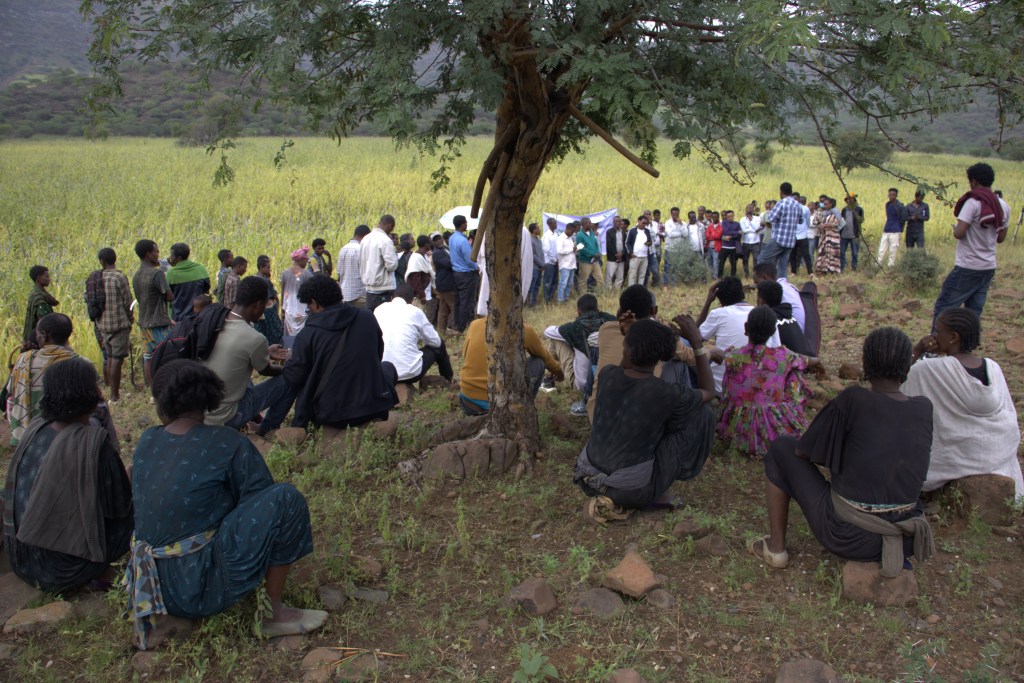
The event, hosted in two kebeles of Zequala woreda, brought together 360 participants, including 268 farmers (of whom 107 women), zonal and woreda-level government officials, agricultural experts, and researchers from Amhara Region Agricultural Research Institute (ARARI) and SDLARC.
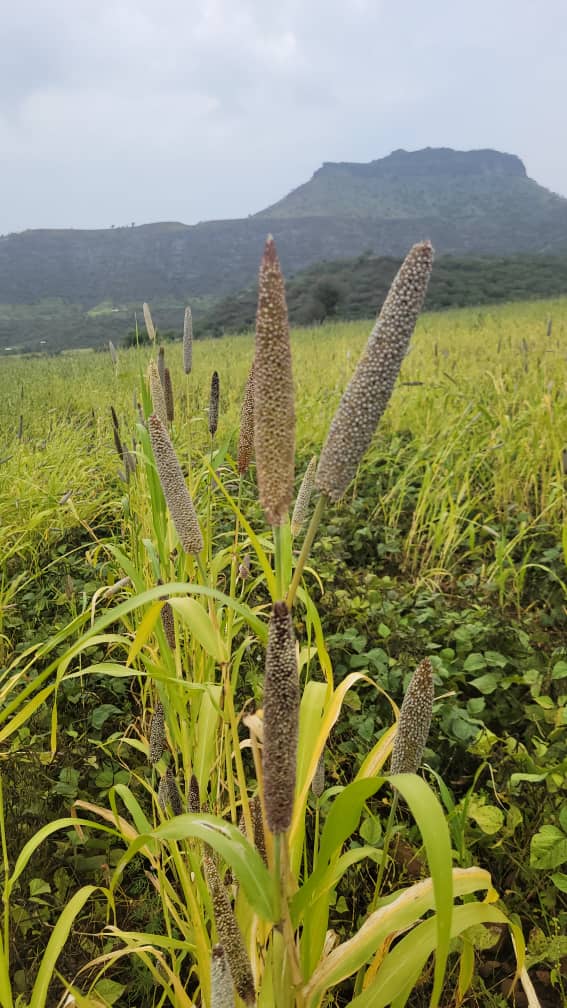
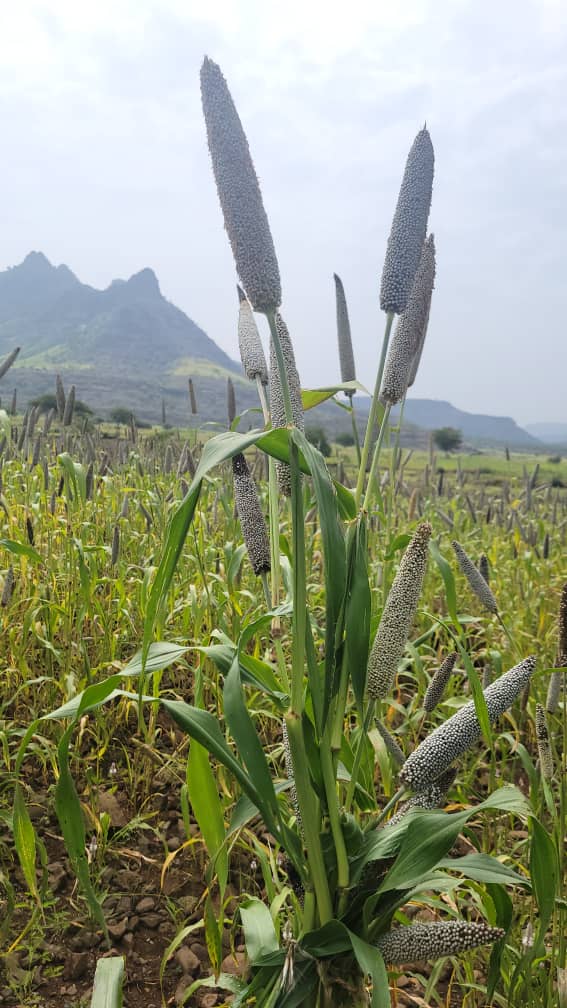
In his opening remarks, Dr. Adane Bahiru, Director of SDLARC, emphasised the dual benefit of intercropping practice: increasing crop productivity and the provision of valuable cattle feed from the pearl millet stalks. He added that, in this season, with the support of the RAISE-FS project, the intercropping practice covered about 80 hectares of land in Zequala and Abergele woredas, making a significant step in scaling this innovation.
Ademe Mihretu, the extension and socio-economics head at SDLARC, reported that intercropping has significantly benefited farmers, with average yields reaching up to 12 quintals of pearl millet and 10 quintals of mung bean per hectare, demonstrating promising results. He then invited participating farmers to reflect and share their experiences and insights.
Farmers’ experience and benefits
Farmers reaffirmed the benefits of the intercropping practice and expressed gratitude for the ongoing support provided by SDLARC researchers and kebele development agents. Jinen Gebre, a farmer from Kebele 01, explained how he overcomes his scepticism by intercropping pearl millet with mung bean on his one hectare of land using cluster farming with his neighbouring fellow farmers, along with input and training. Now that the feed quality has improved, Jinen and other farmers are expecting higher yields at the end of the season.
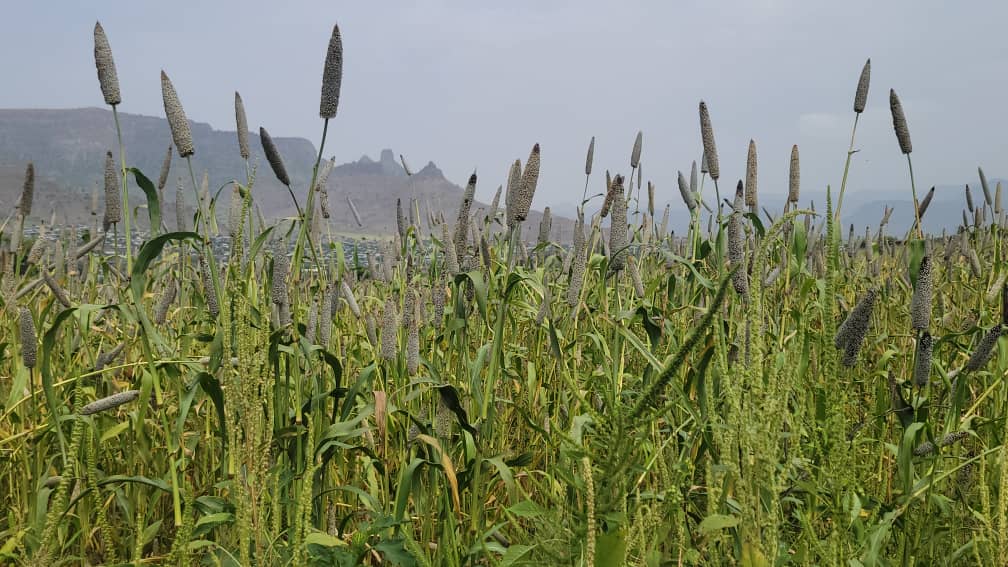
Similarly, Biru Belay, a farmer and priest from kebele 02, discussed his success using the intercropping innovation. He has got great results by using high-quality seeds and fertilisers to intercrop pearl millet with mung beans. He noted that the pearl millet variant is particularly hardy even in the face of minimal rainfall.
The participation of entire households in the farm activities, including women and children for farm operations, kept coming up during the discussions and observations at the field day. Farmers stated that the couple’s approach to training sessions ensured that families collaborated throughout the production process, which increased community involvement and knowledge sharing.
Calls for self-reliance and sustainability
While the field day celebrated the success made in intercropping, it also provided a platform for discussing major challenges and important issues. Mr. Abuu Asefa, extension head of the zonal Agricultural Department, acknowledged the strides made in scaling intercropping but cautioned against dependency on external aid, urging farmers to move toward self-reliance. “While support is vital, it must be used as a stepping stone toward self-reliance and poverty reduction,” he emphasised.
Farmers raised concerns about the rising cost and limited supply of fertilizers. In response, Mrs Fantayetu Kasse, a zone administration speaker, advised farmers not to rely only on inorganic fertilisers but to use sustainable alternatives like compost and natural soil amendments. She pointed out that these methods can improve soil fertility without draining household budgets, which is in line with the broader goal of sustainable agriculture.
A platform for dialogue and collaboration
The field day served as a vital platform to have an important dialogue among farmers, researchers, and government officials, fostering collaboration to tackle challenges and scale innovations. Participants praised the efforts of SDLARC and the RAISE-FS project, urging farmers to build on this momentum to not only not just reap momentary gains but also transform their livelihoods. The event also underscored the importance of working together in partnerships in driving agricultural innovation and resilience.
Thinking about the future
The intercropping practices now taking root in Zequala and Abergele woredas demonstrate how innovative agricultural technologies can empower communities and foster resilience and sustainability in dryland regions. By improving productivity, enhancing soil health, and fostering economic stability, intercropping is paving the way for sustainable farming systems. As these practices continue to scale, they provide a replicable model for other dryland kebeles and woredas dealing with similar challenges, ensuring a resilient and sustainable food-secure future.
 raise-fs.org