
In the southern part of Ethiopia, Silti and Boloso Bombe woredas, which are agriculture-dominated and food-insecure areas, are grappling with the challenges of erratic rainfall, small landholdings, poor soil fertility, and limited farming practices. These woredas, characterized by low dietary diversity, high child malnutrition rates, and limited off-farm income opportunities, have long been reliant on government assistance through the Productive Safety Net Program (PSNP). Both woredas have faced significant nutritional challenges, including reliance on monotonous diets dominated by cereals like maize and seasonal fruits such as banana, mango, and avocado—often grown for the market rather than household consumption. A key innovation to address these challenges was identified to be a location-specific home gardening, which was tested and validated in these woredas.
A tailored approach to specific conditions
Boloso Bombe has been part of the RAISE-FS project since its inception, while Silti woreda has emerged as a scaling area for demonstrated home garden technologies. Through innovative solutions tailored to the unique conditions of each woreda, the project is introducing sustainable practices aimed at improving nutrition and livelihoods through the promotion of sustainable home gardening.
Boloso Bombe: Resilient crops for dry conditions
In Boloso Bombe’s arid lowlands, where water access remains a persistent challenge, papaya and moringa have been identified as key crops to address nutritional deficiencies and adapt to extreme moisture stress. These perennial crops require minimal care once established and offer year-round benefits. Papaya, rich in vitamin C, supports immune health and hydration, while moringa provides a wealth of protein, minerals, and antioxidants that can fortify diets in food-insecure areas.
However, the scaling of this evidence of ensuring food and nutritional security through home gardening using papaya and moringa is expected to be challenged by the sustainability of access to seedlings of these fruits. Thus, strengthening the engagement of relevant stakeholders, mainly the woreda agriculture office, to ensure the sustainability and scaling of the evidence is very crucial, as these crops have the potential to transform Boloso Bombe’s food landscape, ensuring sustainable yields for household consumption even under harsh conditions.
Silti: Diversifying diets with home gardens
Silti woreda has traditionally grown carrots for local markets but rarely for household use. To address this gap and improve dietary diversity, the RAISE-FS project, in collaboration with its partners, introduced home gardening practices. The initiative included agronomic training on vegetable production such as beetroot, lettuce, Swiss chard, and carrots. These crops were selected for their nutritional value and adaptability to local conditions.
It has been observed that farmers have limited knowledge on how to prepare and consume these vegetables. There is an effort by Woreda Agriculture Office and other stakeholders to raise farmers’ awareness and address this problem. However, it was realized that there is a need to do more to ensure the proper consumption of the produce and to enhance household diet diversity in a sustainable manner.
Charting a path to sustainability
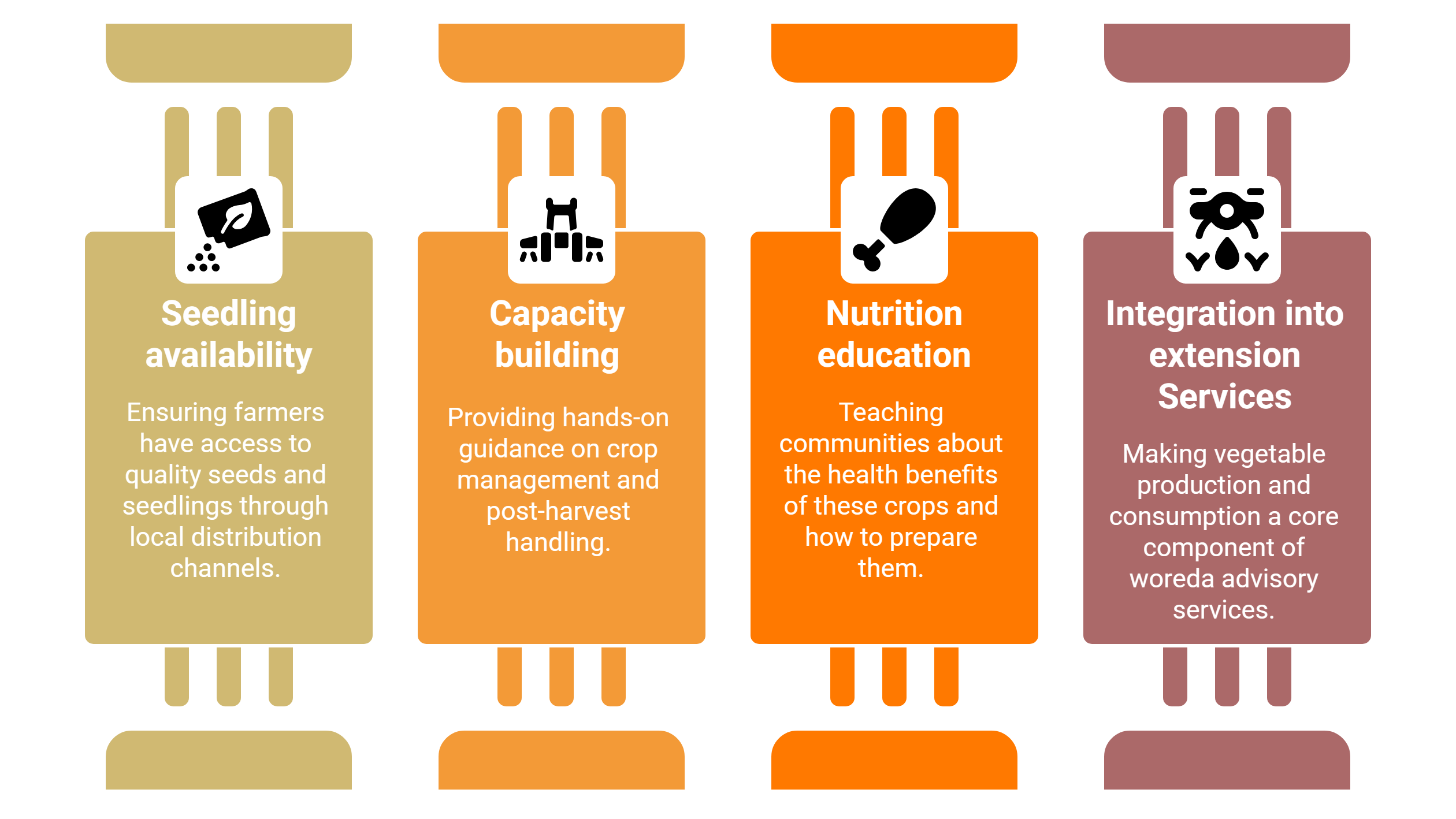
Recognizing the stated needs, the Worabe Agricultural Research Center team led an effort to promote dietary diversity in collaboration with agricultural offices and other stakeholders by considering strategies related to (i) seedling availability, (ii) capacity building, (iii) nutrition education, and (iv) ensuring the integration of the evidence into the mainstream extension service (see ???).
The initiatives in Boloso Bombe and Silti woredas show how targeted interventions can address food and nutritional security challenges in food-insecure areas and beyond. By introducing context-specific innovations that meet farmers’ demand, it is possible to contribute significantly to the transformation of food systems.
 raise-fs.org