
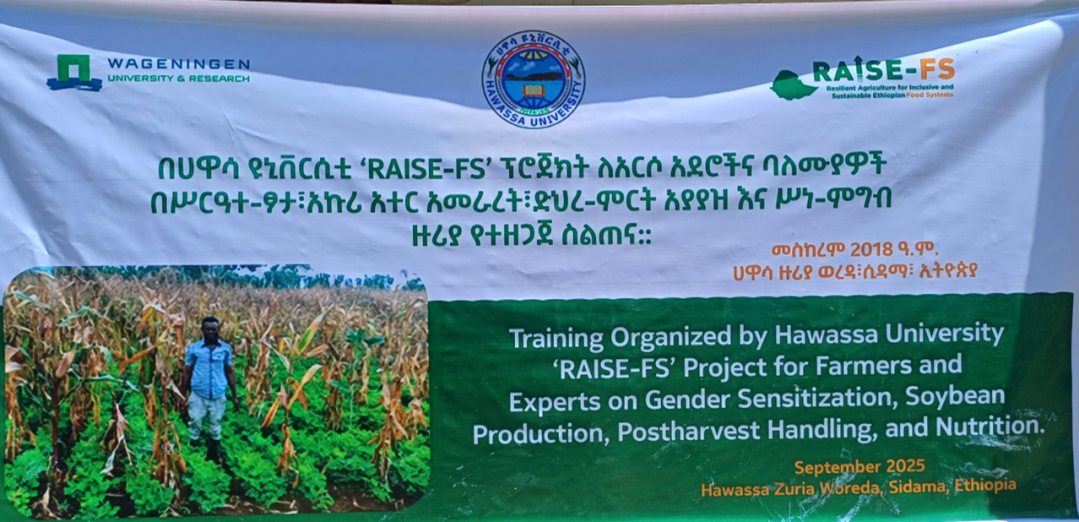
Southern Ethiopia’s Sidama region is fast becoming a hub for soybean production and marketing, offering immense potential for economic growth and improved livelihoods. In line with this promising development, the SWR Ethiopia RAISE-FS project, in partnership with Hawassa University, has been spearheading efforts to scale up soybean innovations over the past four years. A key component of these efforts has been a series of training programs aimed at addressing critical knowledge and skills gaps in soybean production, post-harvest handling, nutrition, and gender inclusivity.
The latest of these training sessions took place on October 6-7, 2025, bringing together a diverse group of 160 participants, including farmers, their spouses, development agents, and woreda experts. The event focused on equipping attendees with practical knowledge on bio-fertilizer use, production management techniques, the nutritional benefits of soybean, and the importance of gender sensitization in farming communities.
Empowering farmers with knowledge and skills
Led by the RAISE-FS team of experts at Hawassa University; Dr. Tewodrose Ayalew, Dr. Mengesha Kebede, Techale Tilet, and Bergene Boshe; the training emphasized the multifaceted benefits of soybean cultivation. Participants were introduced to the role of bio-inoculants in improving soil fertility, reducing production costs, and mitigating the challenges posed by the rising prices and limited accessibility of mineral fertilizers. The experts highlighted how adopting these practices could help farmers transition to more sustainable and cost-efficient farming methods.
In addition to technical agronomy topics, the training addressed the significant nutritional value of soybean as a crop. With its potential to combat malnutrition and support healthier diets, soybean was presented as an essential tool for improving food security in the region.
One of the standout aspects of the training was its focus on gender inclusiveness. Recognizing the critical role women play in agriculture and household decision-making, the program sought to empower women by emphasizing shared responsibilities in farming households. High-value crops like soybean were highlighted as a means to enhance women’s economic participation and improve their livelihoods.

The trainers underscored how gender-sensitive approaches in agriculture could foster stronger partnerships between men and women, ultimately leading to more equitable development outcomes. By promoting shared decision-making and equal access to resources, the program aims to create a more inclusive farming community.
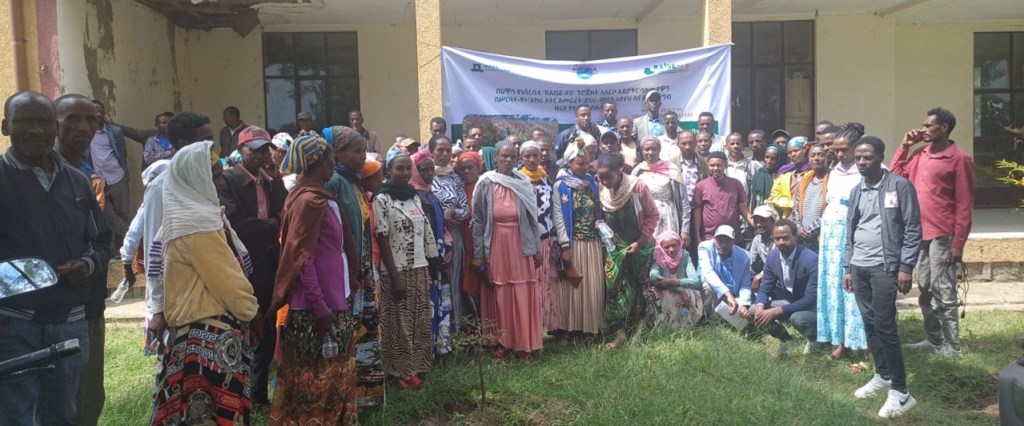
In conclusion, with soybean’s potential to improve soil health, combat malnutrition, and empower women, this crop could be a game-changer for Southern Ethiopia’s agricultural sector. The ongoing commitment of SWR Ethiopia RAISE-FS project in partnership with Hawassa University will continue to strengthen farmers capacity through trainings to help farmers are well-equipped to seize these opportunities and contribute to the region’s growing success story.
 raise-fs.org