
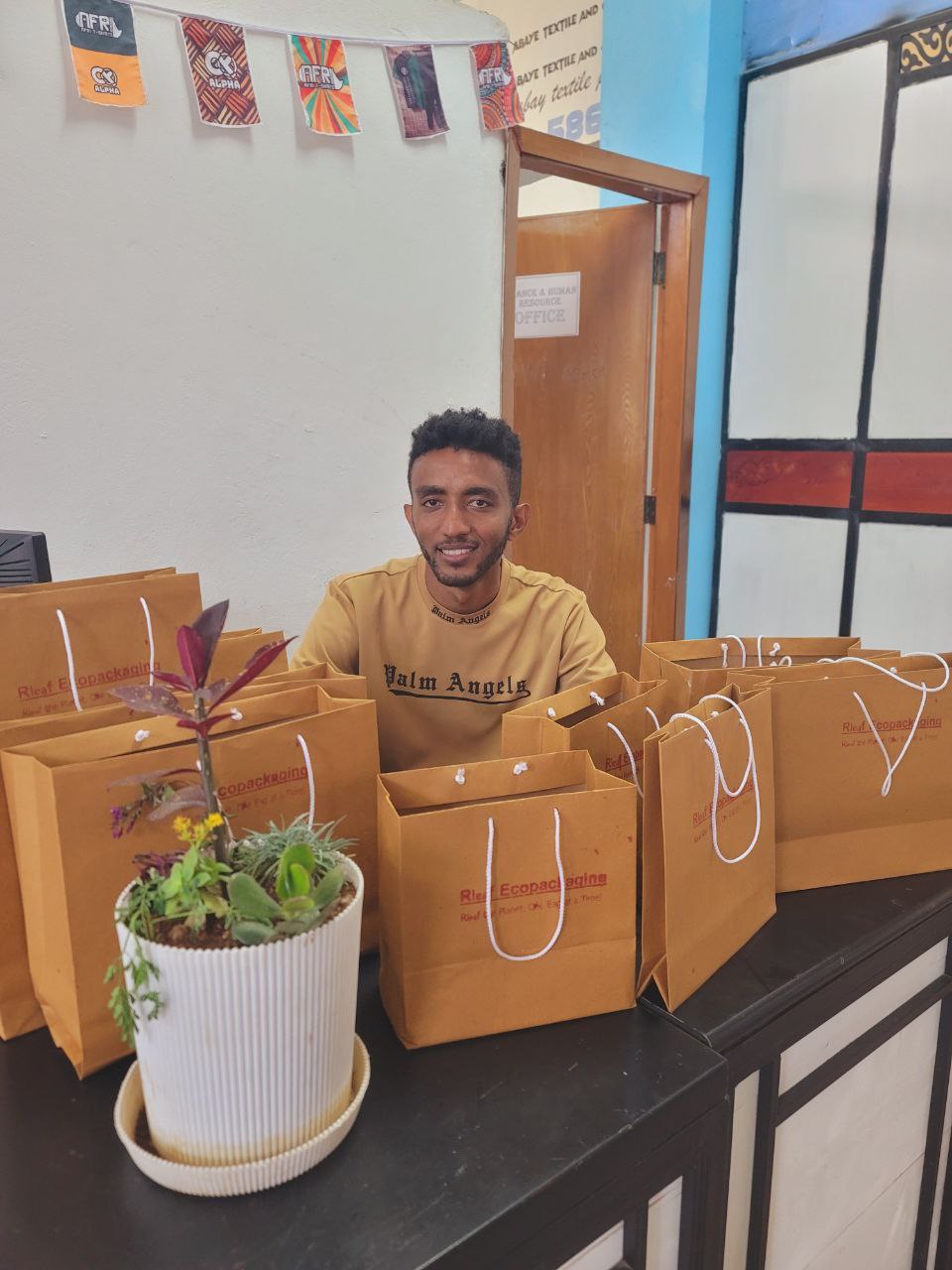
In a world grappling with environmental degradation and the harmful effects of plastic pollution, innovative solutions are the need of the hour. One such inspiring story comes from Ethiopia, where a young innovator, Bereketab Kataro, is turning banana farm waste into eco-friendly paper bags. Bereketab is not only making strides in sustainable development but also creating opportunities for farmers and reducing waste.
The initiative is supported by the Youth Challenge Fund under the SWR Ethiopia RAISE-FS Project, which aims to empower young innovators from Mekelle, Bahir Dar, Hawassa, and Haramaya Universities. The fund supports individuals with expertise in agriculture, agricultural engineering, and environmental sciences by providing financial and technical support to transform innovative ideas into impactful business solutions. Out of 12 awardees, Bereketab Kataro’s project stood out for its ingenuity and potential impact.


The vision behind the innovation
Bereketab Kataro, a graduate in chemical engineering, had a vision to replace traditional plastic bags with environmentally friendly alternatives. His idea is to create paper bags using fibres extracted from banana pseudo-stems; an often-overlooked agricultural byproduct. This innovation addresses two pressing issues: reducing the environmental impact of plastic bags and repurposing banana farm waste, which can otherwise foster disease pathogens.
The Youth Challenge Fund, designed to empower young innovators from Ethiopian universities, recognized the potential of Bereketab’s idea. After rigorous evaluations by experts, he was awarded a grant to kickstart his project. This funding enabled him to purchase small-scale machinery, secure raw materials, and cover operational costs.
The reason behind the innovation
Bereketab’s idea stemmed from his M.Sc. thesis work, where he discovered that the sheath of banana trunks contains 60% cellulose—an essential component for making paper. This percentage is significantly higher than other organic materials he tested, making it an ideal raw material for paper bag production.
The process involves extracting fibre from banana trunks, pulping the fibre, dissolving the pulp, moulding it into sheets, and finally pressing and calendaring it. With the help of machines like pressing machines, fibre decorticators, beaters, screening sieves, calendaring machines, creasing machines, and silk screen printers, Bereketab has successfully completed the testing phase and is now ready to scale up production.
A sustainable business model
The potential for this business is immense, thanks to several key factors:
Resource availability: Banana farming is widespread in southern Ethiopia, particularly in regions like Arbaminch and Wolaita. After harvesting the fruit, farmers are left with banana trunks that would otherwise go to waste. By utilizing these trunks as raw materials, Bereketab’s project not only reduces waste but also provides an additional income stream for farmers.
Market demand: Bereketab strategically targeted cosmetics vendors and supermarkets as his initial market. By promoting sample products and advertising in these shops, he successfully generated demand for his eco-friendly paper bags. This demand has paved the way for full-scale production.
Government support: In June 2025, Ethiopia enacted the “Solid Waste Management and Disposal Proclamation (No. 1383/2025),” which bans the production, importation, distribution, trade, storage, and use of single-use plastic bags nationwide. This legislation aligns perfectly with Bereketab’s business model and creates a favourable environment for his product.
Future prospects: Bereketab has ambitious plans to expand his product line to include notebooks and sanitary napkins made from banana trunk fibres. He is actively seeking partners to support him in scaling up his business and exploring new market channels.
While Bereketab’s journey has been inspiring, it hasn’t been without challenges. For instance, he initially rented a work shed for one year but is now in talks with government offices to secure a more permanent space. Despite these hurdles, Bereketab’s technical expertise and determination have been instrumental in driving his project forward.
The potential for scaling and sustainability
Bereketab Kataro’s innovative approach is a testament to the power of young minds in addressing food systems challenges. By transforming agricultural waste into a valuable resource, his project not only contributes to environmental health but also creates employment opportunities and supports local economies.
This initiative underscores the importance of supporting young innovators with technical capacity and aspiration. Governments and stakeholders must continue to invest in such projects to ensure long-term benefits for employment, economic growth, environmental sustainability, and import substitution.
Bereketab’s story is a shining example of how a young professional with innovative ideas can drive positive change. As his business takes off, it serves as a reminder that with the right support and determination, young entrepreneurs like Bereket can create solutions that benefit both people and the environment.
 raise-fs.org