

The agricultural sector plays a pivotal role in ensuring food security, fostering economic growth, and enhancing livelihoods. Recognizing the critical need for efficient agrologistics in transforming food systems, the project “Advancing Agrologistics for Resilient, Inclusive and Sustainable Food Systems (RAISE-FS LOGIC)” was officially launched with a planning workshop involving key stakeholders. This two-year initiative, funded by the Embassy of the Kingdom of the Netherlands and the European Union, aims to revolutionize agrologistics systems in Ethiopia, with a particular focus on potato, banana, and avocado value chains in Southern Ethiopia.
A collaborative approach to transform agrologistics
The planning workshop brought together relevant stakeholders, including representatives from the Ethiopian Agricultural Authority, Ethiopian Agricultural Transformation Institute, Ethiopian Institute of Agriculture Research, Ethiopian Maritime Authority, SNV, Wageningen University & Research, and Wageningen Research Ethiopia.
The workshop served as a platform to introduce the project’s objectives, solicit feedback from stakeholders, and establish clear expectations regarding roles, responsibilities, and commitments. By fostering dialogue and collaboration, the initiative aims to create a shared vision for improving agrologistics systems that enhance product quality and safety, boost value chain performance, increase supply chain efficiency and transparency, and build resilience to shocks, all while minimizing environmental impact.
Key highlights from the workshop
Dr. Wondale Habitam, Deputy Director of the Ethiopian Agricultural Authority, delivered the opening remarks, emphasizing the timeliness of RAISE-FS LOGIC in addressing critical gaps in Ethiopia’s food systems. He highlighted the strategic importance of agrologistics for the development of the horticulture sector, a priority area for the Ethiopian government. Dr. Wondale also underscored that agrologistics is a key focus area under Ethiopia’s horticulture strategy and plays a central role in the upcoming HortiFlora 2026 Expo.
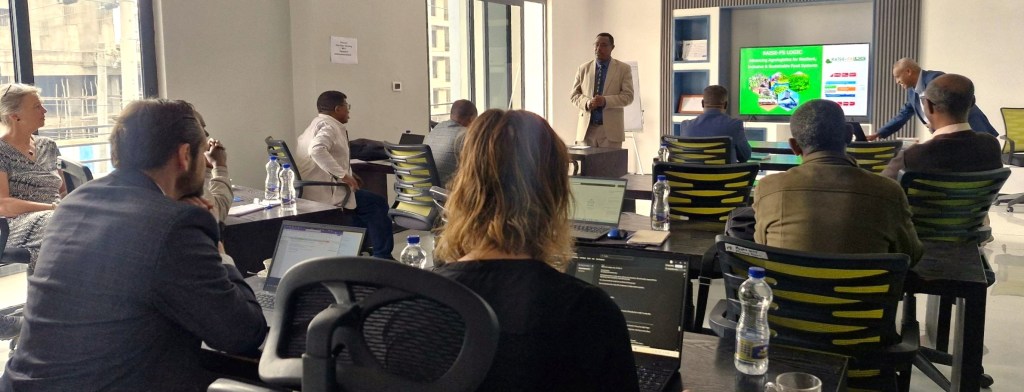
Dr. Dawit Alemu, Country Representative for SWR Ethiopia, welcomed participants and provided an overview of SWR Ethiopia’s mission and ongoing projects. He emphasized the organization’s commitment to generating evidence-based practices and policies that align with Ethiopia’s agricultural transformation agenda.
Project framework and approach
Dr. Irene Koomen, RAISE-FS coordinator from Wageningen University & Research, outlined the objectives of the workshop and presented an overview of the RAISE-FS LOGIC approach. She emphasized the importance of a food-systems perspective in addressing challenges in agrologistics, a critical yet often overlooked component of food systems.

Dr. Akalu Teshome, senior food system advisor at SWR Ethiopia, presented highlights on the relationship between RAISE-FS LOGIC and other RAISE-FS outcomes. He discussed the rationale for selecting specific commodities and regions for intervention, introduced project partners, and outlined planned activities as well as expected outcomes. The presentation also emphasized the project’s goal to showcase scalable innovations that enhance food safety, supply chain transparency, and resilience to shocks.
Stakeholder engagement and commitment
The workshop provided an opportunity for participants to offer valuable insights into potential gaps in planned activities and identify additional stakeholders who could play a crucial role in achieving the project’s objectives. The collaborative discussions underscored a shared commitment among stakeholders to actively participate in implementing RAISE-FS LOGIC.
The planning workshop concluded with a vote of thanks from Dr. Dawit Alemu, who expressed gratitude for the active participation and constructive feedback provided by all attendees. The insights gathered during the workshop will serve as a foundation for refining the project’s strategies and ensuring its successful implementation.
 raise-fs.org