
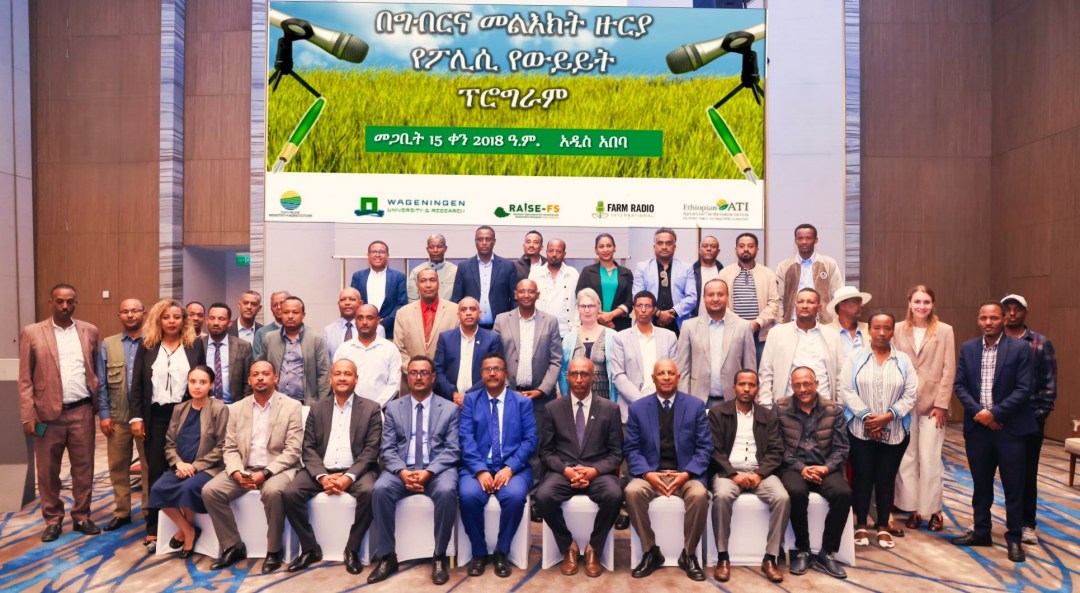
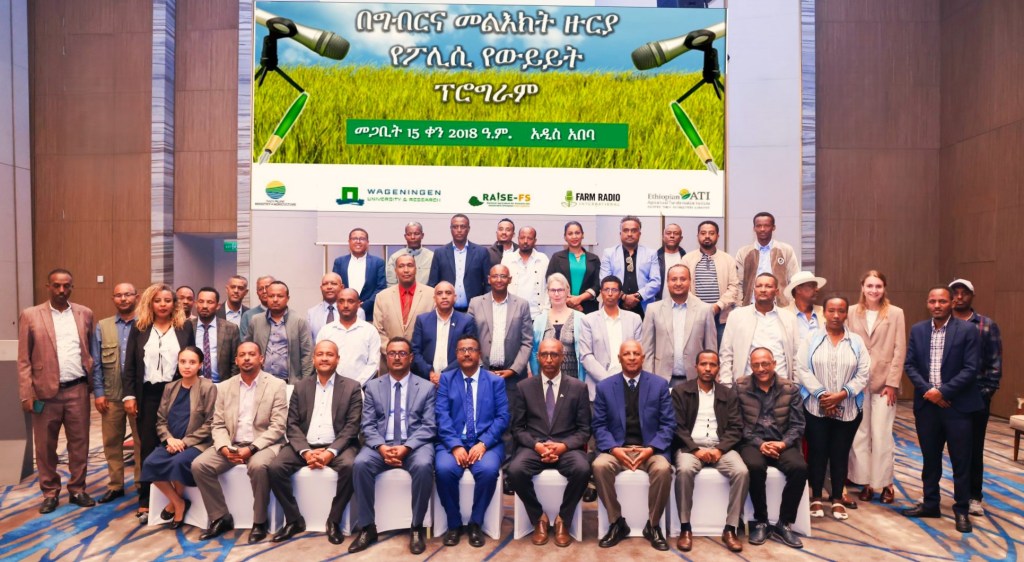
A high-level policy dialogue aimed at improving agricultural messaging in Ethiopia was organized by Wageningen Research (SWR) Ethiopia in collaboration with the Agricultural Transformation Institute (ATI). The event, held in Addis Ababa on 24th of March 2026, brought together policymakers, researchers, farmers, media practitioners, and development partners to discuss the findings of a comprehensive study on the state of agricultural information dissemination through mainstream media (TVs and Radios) in the country.
The study was conducted by SWR Ethiopia under its RAISE-FS project, in partnership with Farm Radio International. In his opening remarks, Dr. Dawit Alemu, SWR Ethiopia’s Country Representative, emphasized that the study aims to assess the current state of agricultural message design and communication, as well as their effectiveness in delivering timely, relevant, and actionable information to farmers. He highlighted that the study also examines the prevailing challenges and opportunities within the system and seeks to propose strategic interventions to address identified gaps and enhance the overall effectiveness of agricultural messaging as a key agricultural extension mechanism. Furthermore, he noted that the purpose of the workshop was to facilitate deliberations on the role of agricultural messaging as a critical component of the national agricultural extension system, and to build consensus on priority actions and next steps for addressing the identified challenges.
Opening remark
In his opening speech, His Excellency Dr. Meles Mekonen, State Minister of the Ministry of Agriculture, emphasized the critical role of agriculture as the backbone of Ethiopia’s economy. He reiterated the government’s commitment to advancing the sector as part of its home-grown economic transformation strategy. Dr. Meles stressed the importance of disseminating scientifically accurate, timely, and user-focused agricultural messages to enhance productivity and growth.
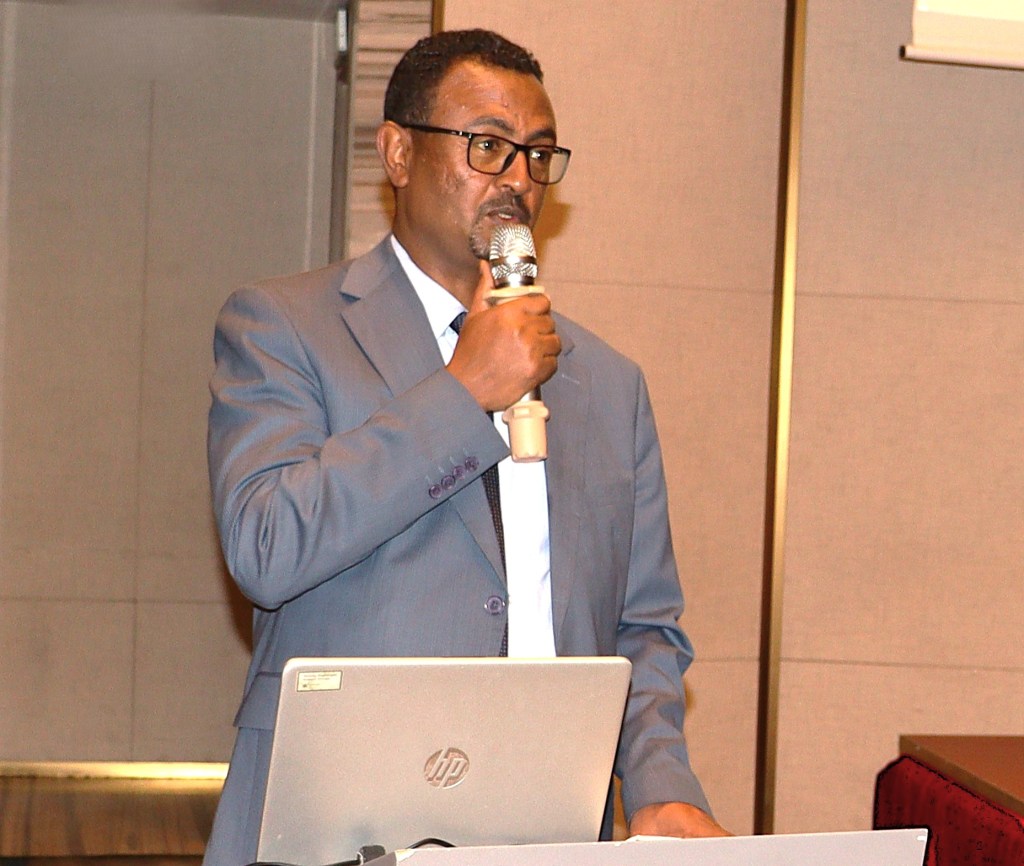
“Developing effective agricultural messaging requires collaboration among all stakeholders,” Dr. Meles said. “The study presented today is timely and underscores the need for structured and research-based communication that addresses farmers’ needs.”
Key findings of the study
Dr. Dawit Alemu presented the major findings of the study. He noted that although Ethiopia has more than 80 media outlets, including radio, television, and community-based services—only a limited number of public and community channels consistently broadcast agricultural programs. Moreover, none of these outlets are dedicated exclusively to agricultural content.
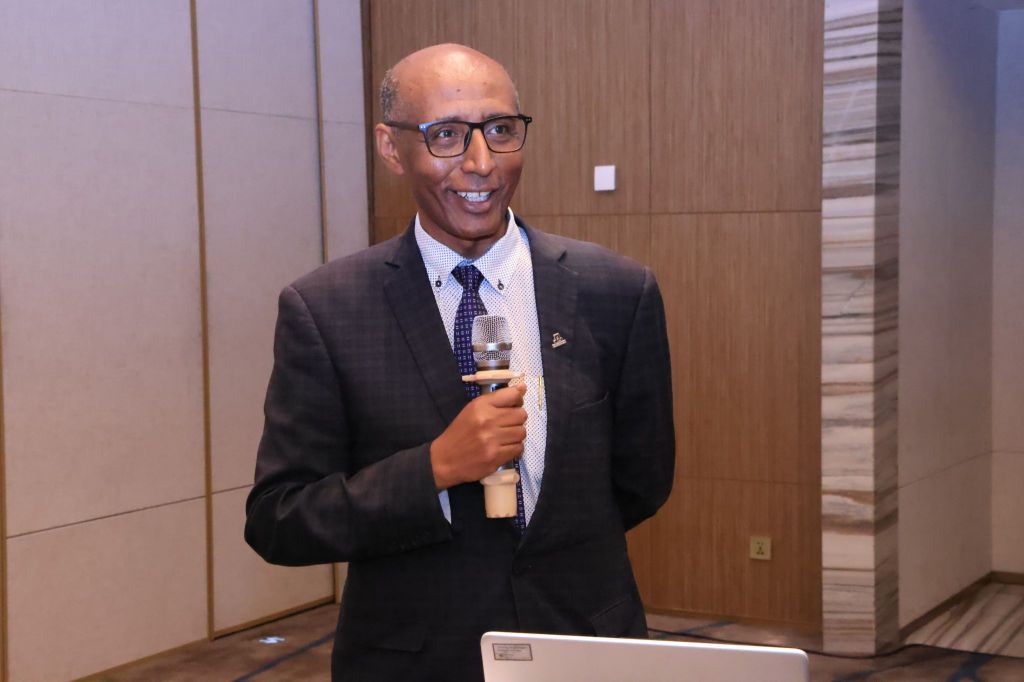
The study identified several systemic challenges related to the governance and dissemination of agricultural messages. These include limited engagement of key stakeholders in setting media agendas, weak coordination among actors, and the absence of structured platforms for aligning efforts. As a result, many agricultural messages are developed using a top-down approach and are insufficiently tailored to the diverse needs of farmers. In addition, there is a lack of robust feedback mechanisms to capture and incorporate input from target audiences.
The findings further indicate that much of the information disseminated through mainstream media is not well aligned with farmers’ actual practices, seasonal activities, or crop calendars. The timing of broadcasts is often incompatible with farmers’ daily work schedules, limiting accessibility and uptake. Furthermore, messages frequently lack context specificity, with inadequate differentiation across agro-ecological zones.
Another critical constraint highlighted by the study is the limited technical capacity of journalists covering agricultural issues. Many lack the subject-matter expertise required to accurately and effectively communicate complex agricultural technologies and practices, thereby reducing the quality and relevance of the information delivered.
Reflections from media experts and farmers
Two panellists provided reflections on the study’s findings. Mr. Biruk Kebede, CEO of NBC TV, acknowledged that agriculture, a vital sector for Ethiopia’s economy and livelihoods, has not received sufficient attention in mainstream media. He noted that existing programs focus primarily on success stories rather than providing farmers with practical guidance on processes and methods. He emphasized the need for more resources and collaboration to develop comprehensive agricultural programs that go beyond success stories.
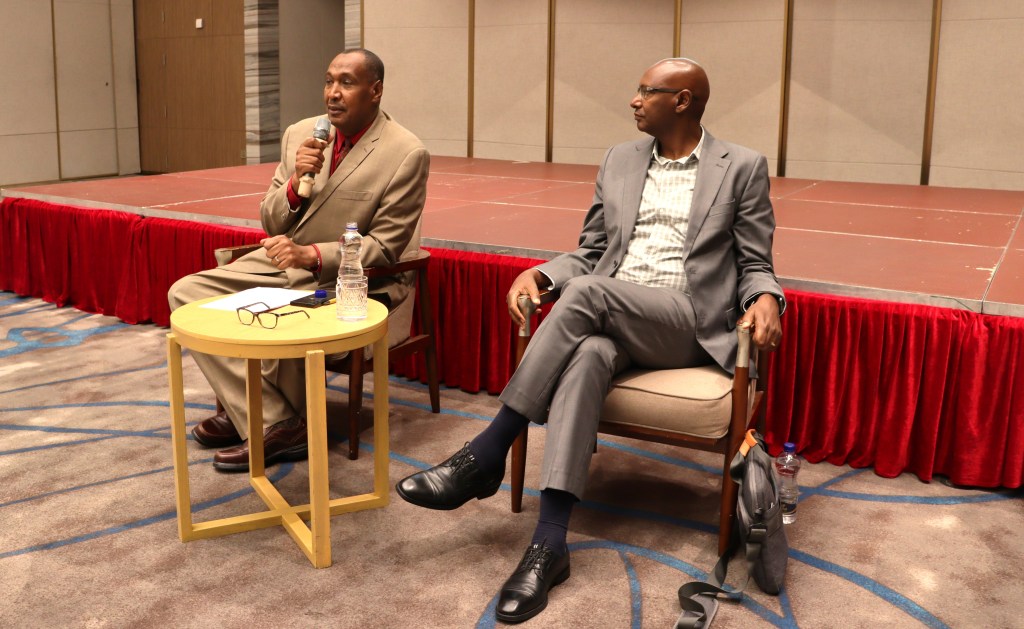
Dr. Getachew Dinku, journalism instructor/lecturer from Addis Ababa University, emphasised that effective agricultural communication requires a blend of technical knowledge, social psychology, and journalism skills. He called for specialized training in agricultural journalism and highlighted the need for stronger collaboration between knowledge institutions, extension services, and media outlets. He stressed the need for specialized training programs in agricultural journalism and suggested revising university journalism curricula to include agriculture-related courses.
Farmers themselves echoed these concerns, emphasizing that much of the information disseminated through mainstream media does not reflect their day-to-day practices or challenges. Mekonen Alemu and Gebrie Dadi, representatives from the Oromia region shared their perspectives, agreeing with the study’s findings while adding their own concerns. They criticized the tendency of journalists to focus solely on so-called “model farmers,” whose experiences may not reflect broader realities. Both farmers expressed a need for accurate, timely information about practical agricultural techniques, such as chemical application methods.
Proposed strategies for improvement
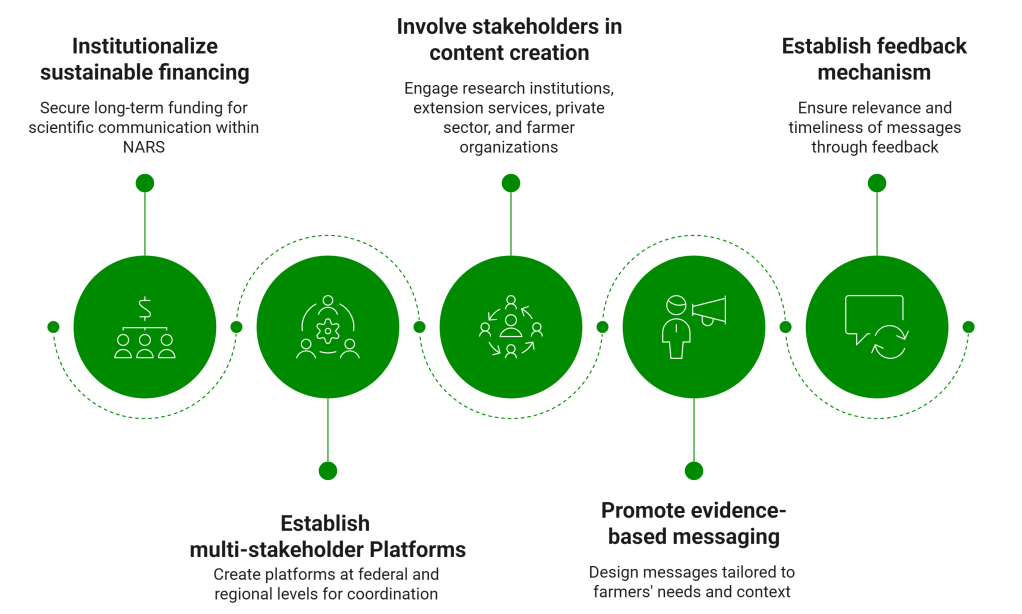
Next steps
The dialogue concluded with actionable recommendations for improving agricultural messaging in Ethiopia though Mainstream media. Dr. Meles Mekonen summarized the discussions and urged stakeholders to strengthen ongoing initiatives while addressing gaps identified in the study. He highlighted efforts such as establishing an agricultural media house in collaboration with ATI as a promising step forward. Dr. Meles emphasized that improving agricultural communication requires collective action from all stakeholders, policymakers, researchers, media practitioners, and farmers alike. He encouraged participants to integrate the study’s recommendations into Ethiopia’s communication policy and to identify short- and long-term action points for follow-up discussions with higher officials. As an immediate step, he directed stakeholders to develop proposals for short-term training programs aimed at enhancing the capacity of existing journalists to effectively report on agricultural contents.
 raise-fs.org