
Gender inequality continues to be a significant issue with far-reaching implications for various aspects of society, including economic participation, access to resources, and overall economic development. These disparities are particularly pronounced within the context of agriculture and food systems, perpetuating cycles of poverty and food insecurity. In response to this challenge, the RAISE-FS project has prioritized the social and economic empowerment of women and youth in food systems as a key outcome of its implementation.
To address gender inequality and social exclusion, the project has adopted the Social Analysis and Action (SAA) approach as a suitable methodology for promoting gender transformation. This approach provides a participatory and contextualized framework for understanding and addressing gender inequalities within communities. Grounded in principles of community engagement and collective action, the SAA facilitates dialogue and reflection on underlying social norms and power dynamics.
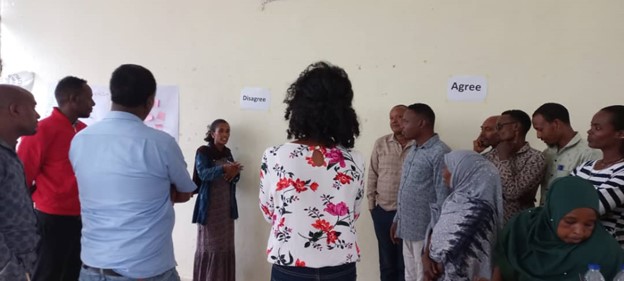
The RAISE-FS project recognized the necessity for significant change and thus undertook a training initiative on Social Analysis and Action (SAA) for stakeholders in the Kersa woreda of the Oromia region, one of the project’s focal areas. This training was conducted in partnership with Haramaya University and the Kersa woreda offices for agriculture, women, and gender affairs, as well as health, from 22nd to 26th of April 2024. Participants from Kersa, Haramaya, and Babile woredas were in attendance. The primary aim of the training was to impart to them the necessary skills to effectively address gender and social norm obstacles and to advocate for transformative changes in gender dynamics within food systems.
The training provided participants with insights into the root causes of gender disparities and social norms, emphasizing the importance of understanding these underlying challenges. Through interactive sessions and demonstrations of SAA tools, participants were able to identify strategies for promoting gender equality within their respective spheres of influence.
The training sparked significant interest among participants, who actively engaged in discussions and exercises, sharing personal examples, and expressing appreciation for the unique and engaging nature of the training. As the training progressed, participants demonstrated increased commitment, showing a strong desire to be catalysts for envisioned change within their communities.
While acknowledging the attention given to gender issues in government sectoral offices in Ethiopia, participants highlighted the need for more effective gender transformative approaches to achieve the envisioned target of bringing about gender transformations at different levels. They emphasized the importance of addressing the root causes of gender inequalities, such as social norms and beliefs. One participant highlighted the need for transformative change, emphasizing that previous approaches to addressing gender inequalities had not been effective in bringing about meaningful transformation. The participant noted that while gender issues have received attention and been mainstreamed in government sectoral offices in Ethiopia, true gender transformation has yet to be achieved due to the lack of appropriate transformative approaches.
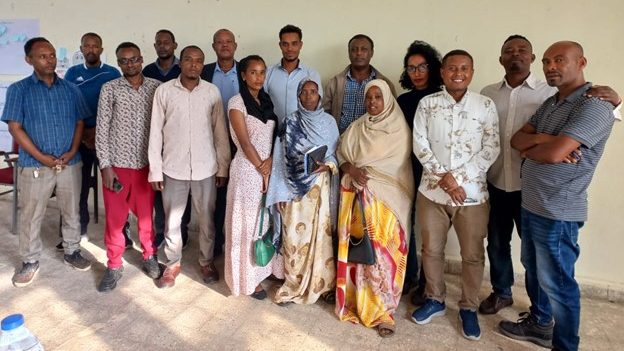
The participants were unanimous in their praise for the training, noting that, despite having attended gender training in the past, this one stood out as truly unique and inspiring. They were particularly impressed by the participatory nature of the training, expressing gratitude for the opportunity to be actively involved. Many believed that the training had the potential to spark transformative changes within food systems and were eager to apply what they had learned in their careers.
The workshop concluded with participants developing action plans and expressing their commitment to implementing SAA community engagement and facilitation within their communities. The event was officially closed with a pledge of support from a representative of the woreda agriculture office, emphasizing the importance of gender and social inclusion for food system transformation and expressing gratitude for their woreda being selected as a pilot area for this initiative.
The RAISE-FS project’s dedication to addressing gender inequality within food systems through the implementation of the SAA approach is a significant step towards fostering inclusive and sustainable agricultural practices. By empowering stakeholders with the tools to challenge existing social norms and promote gender equality, the project is paving the way for meaningful and lasting change within communities. As these efforts continue to gain momentum, it is evident that a collaborative commitment to gender equality is essential for driving positive transformation within agriculture and food systems.
 raise-fs.org