
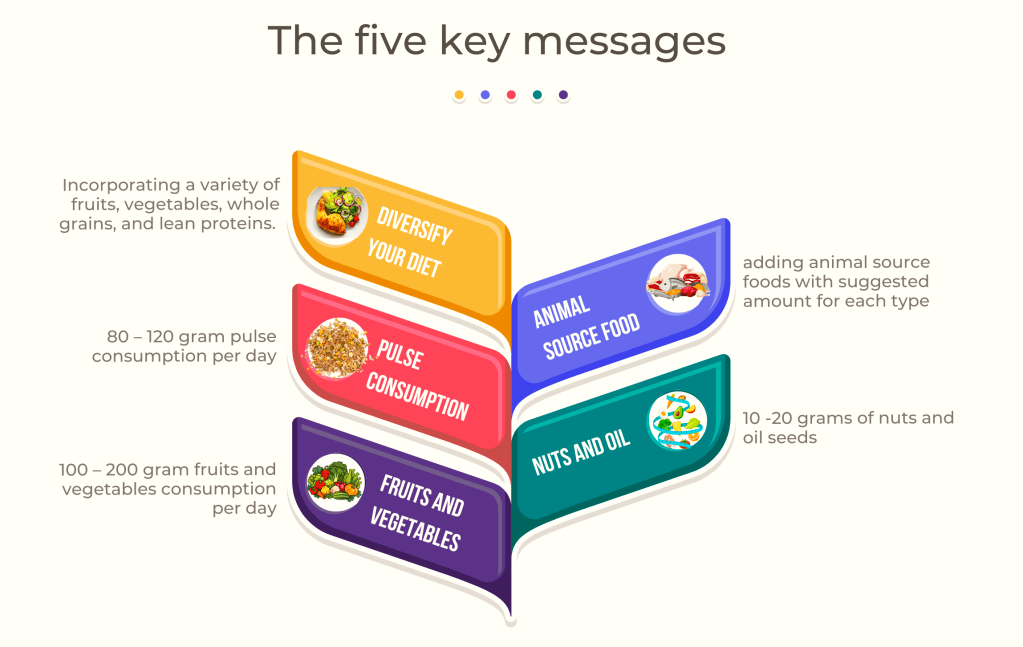
Armed with key messages from the Ethiopian Food-Based Dietary Guidelines, participants are now better equipped to promote dietary diversity, health and well-being within their communities
RAISE-FS is embarking on an action research project aimed at implementing the Ethiopian Food-Based Dietary Guideline (EFBDG) through the piloting of Social Behavioural Change Communication (SBCC) strategies. By promoting the application of the guideline, RAISE-FS seeks to promote healthier eating habits and improve nutritional outcomes in the project area.
To lay the groundwork for this initiative, a comprehensive scoping review of existing SBCC documents developed by both government and non-government organizations was undertaken. This review served as the basis for thoroughly comparing the existing documents with the key messages outlined in the EFBDG. The goal was to identify gaps and develop a tailored SBCC guideline that aligns with the EFBDG and can be effectively implemented in the project area.
A Training of Trainers was conducted at the national level to ensure the successful implementation of the developed SBCC guideline. The training targeted University and Agricultural Research Institute nutrition experts, as well as regional team members and centre representatives. Subsequently, collaborative training efforts were undertaken in different regions, Amhara, Oromia, South, and Tigray, involving various stakeholders.
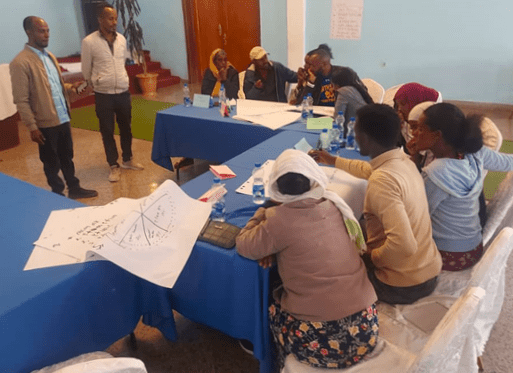
As a follow-up, each region hosted three consecutive days of training, with a total of 46 participants in attendance, including 19 females. The participants comprised of development agents, health extension workers, and representatives from agricultural and health offices, highlighting the comprehensive nature of the EFBDG implementation efforts.
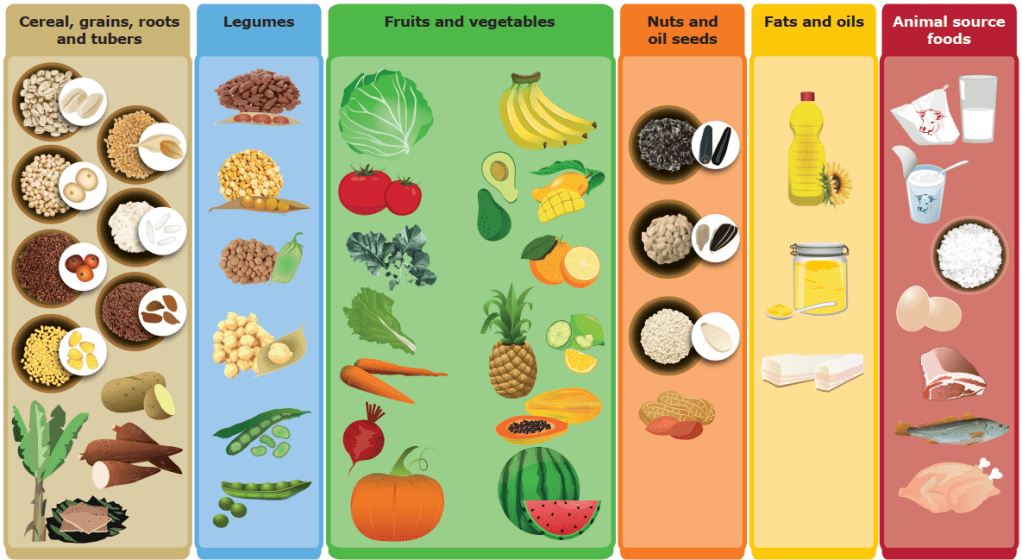
The training sessions covered essential topics such as basic human nutrition, EFBDG key messages, social and behavioural change communication (SBCC) strategies, as well as facilitation skills and adult learning principles. This capacity-building effort seeks to empower local stakeholders with the tools and knowledge needed to effectively deliver the key messages within their communities.
Scaling up an initiative involves a strategic and consistent approach to ensure that key messages are effectively transmitted to the target audience. In this case, the selected key messages will be communicated over six months, with ongoing support from development agents and health extension workers. These individuals will play a crucial role in facilitating the dissemination of information, supported by partner organizations and woreda nutrition experts. The sustained effort to transmit these key messages aims to bring about behavioural change within the community. By consistently reinforcing the messages, the initiative seeks to cultivate a lasting impact on the target audience. This approach recognizes the importance of ongoing engagement and support to achieve meaningful change. In addition to the transmission of key messages, a robust monitoring and evaluation framework will be put in place to track progress and assess the effectiveness of the intervention.
The finalized SBCC guideline will undergo translation into local languages to ensure widespread accessibility and cultural relevance. Furthermore, a strategic initiative to integrate nutrition education with practical interventions, such as home garden and poultry initiatives in specific woredas, is aimed at maximizing the overall impact of the intervention. The pilot action research for implementing EFBDG will be carried out in selected woredas within the RAISE-FS intervention areas.
In conclusion, RAISE-FS’s pioneering approach to implementing the EFBDG through SBCC holds great promise for driving meaningful change in nutritional behaviours and outcomes. By leveraging existing resources, building local capacity, and fostering multi-sectoral collaboration, this initiative seeks to create lasting impact and contribute to improved health and well-being in the project area.
 raise-fs.org