
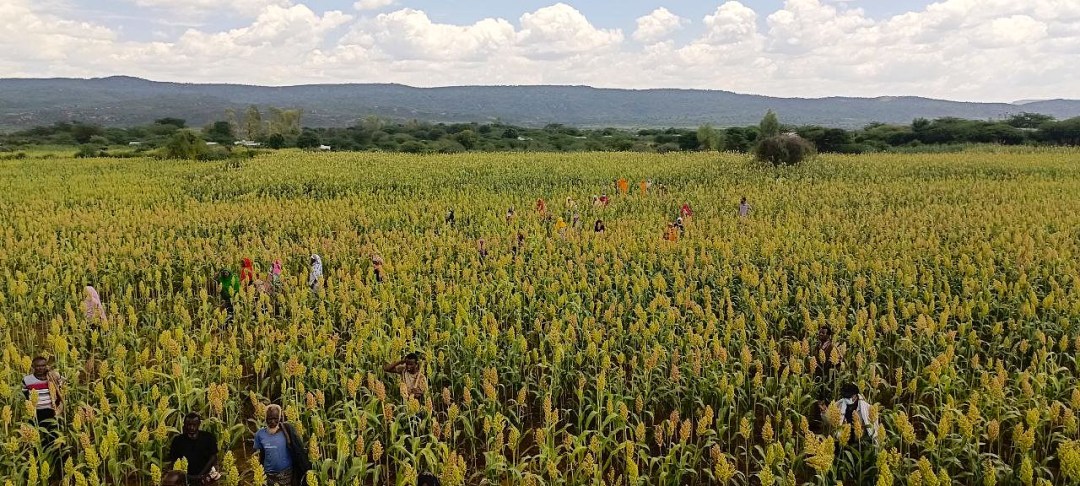
In a recent collaboration between Haramaya University, the RAISE-FS project, and the Babile woreda Agricultural Office, a successful field day was organized in Babile woreda to showcase the benefits of intercropping sorghum with common beans using Integrated Soil Fertility Management (ISFM) practices.
In contrast to the conventional sorghum monoculture commonly practiced in Babile woreda through cluster farming, this intercropping system presents a more sustainable alternative. For years, farmers in the woreda have relied on late-maturing sorghum varieties, which take up to nine months to mature, leaving them vulnerable to terminal moisture stress. These varieties also tend to be low yielding, leading to frequent crop failures and food insecurity. Recognizing these challenges, the three partners introduced the Melkam sorghum variety, which matures faster and performs better under drought conditions. Paired with common beans, this intercropping system offers a solution to the risks associated with climate variability, market fluctuations, and crop failure. It not only provides farmers with an additional nutrient-dense crop but also contribute to improving soil health through nitrogen fixation and serving as a trap crop for striga weed.
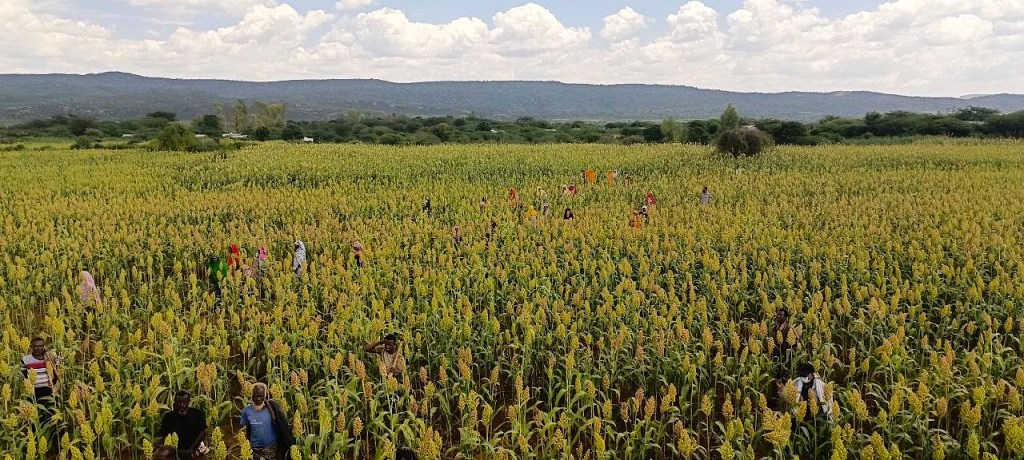
The field day emphasized the long-term sustainability and food diversification benefits of the intercropping system, highlighting its potential to boost productivity and nurture a resilient agricultural system capable of adapting to climate change challenges. Stakeholders discussed strategies to sustain and expand the adoption of this system, including maintaining seed quality, adhering to ISFM practices, and establishing seed-producing cooperatives at the kebele level.
The event brought together local farmers, researchers, and stakeholders, providing a platform for knowledge exchange and practical demonstrations. One of the key outcomes of the event was the insightful discussions that took place, which highlighted the potential for scaling up demonstrated new practices. Participants were particularly impressed by the demonstrated innovation, which showed promising results in increasing productivity, enhancing soil fertility, and boosting farmers resilience. They discussed strategies to sustain and scaling the adoption of this system, including maintaining seed quality, adhering to ISFM practices, and establishing seed-producing cooperatives at the kebele level.
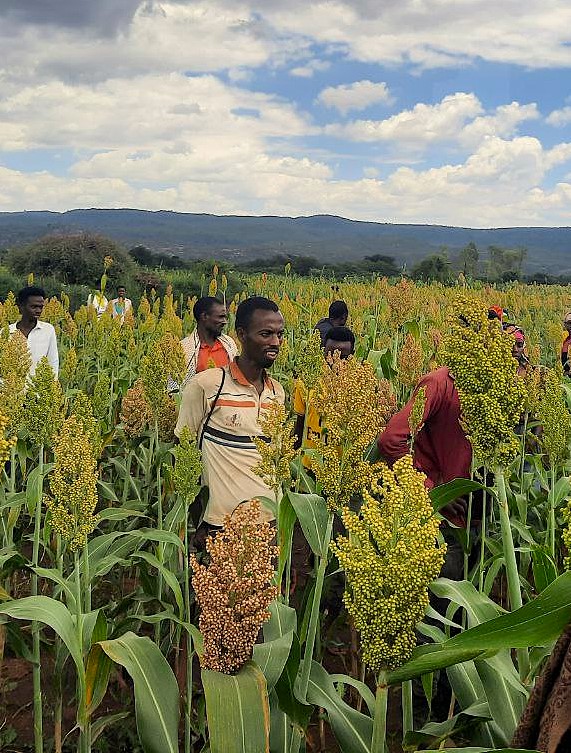
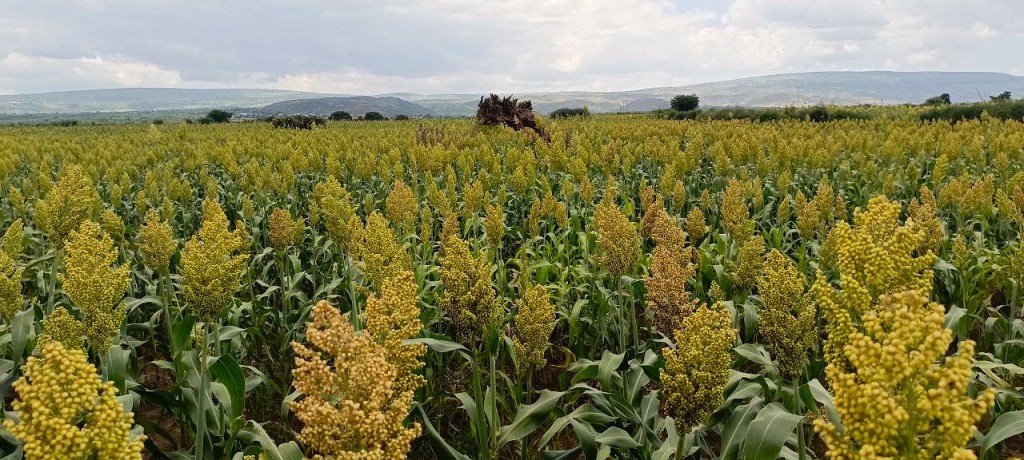
The field day showcased the significant potential of sorghum-common bean intercropping integrated with ISFM practices, offering a promising solution for transforming farming systems in moisture-stressed areas. This innovation presents a viable pathway toward sustainable sorghum production and better food security for smallholder farmers, emphasizing the importance of continued collaboration among stakeholders for its long-term success.


We intercroped beans and wheat and the results are excellent
Soon to intercrop beans and rice
Greetings from Cameroon
LikeLike