
In a concerted effort to revitalize lentil production in Ethiopia’s Ada’a and Gimbichu woredas, recent field days at Keteba kebele and Habru Seftu kebele have underscored significant progress and generated renewed interest among local farmers. The initiative was designed to reestablish lentils as a viable and profitable crop, following a period of disruption in its cultivation.
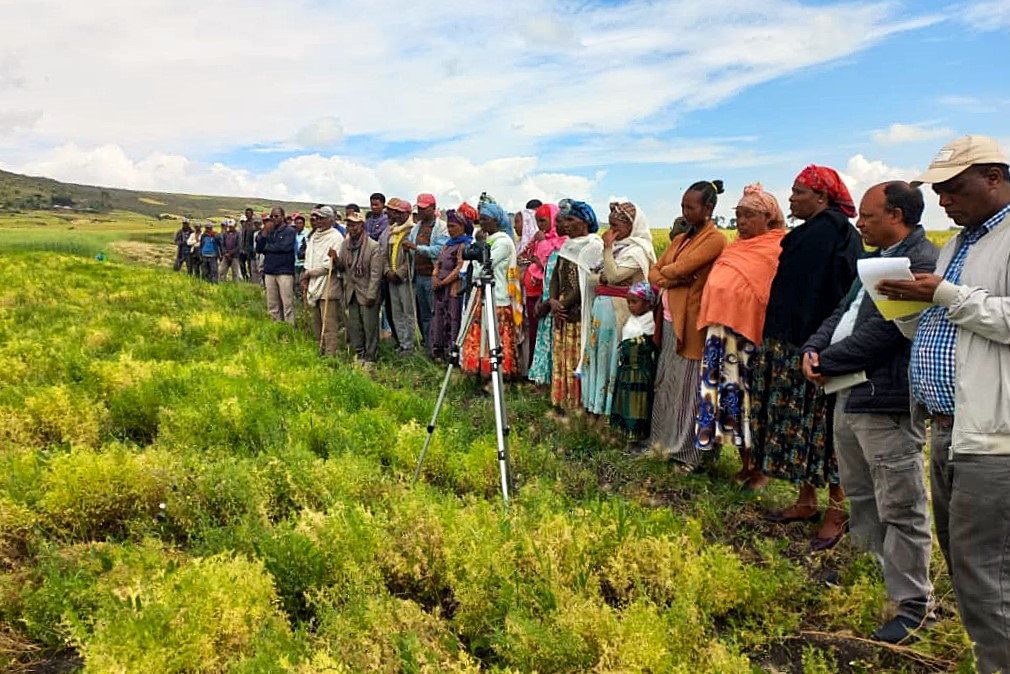
The events drew a diverse audience, including local farmers, woreda and kebele-level representatives, researchers from the Debre Zeit Agricultural Research Center (DZARC), officials from the Oromia Bureau of Agriculture (BoA) and SWR Ethiopia RAISE-FS project.
This year’s scaling efforts engaged 60 farmers across four kebeles, with a growing number expressing interest in future participation. The focus of these efforts was on scaling up the Furi and Baredu lentil varieties, complemented by comprehensive production packages and capacity-building training for farmers. These varieties were selected after successful validation and demonstration trials conducted over the past two years. The participatory approach, involving local farmers in evaluating which varieties perform better under local environmental conditions, raised trust and aligned with farmers’ preferences, thus increasing the likelihood of wider adoption.
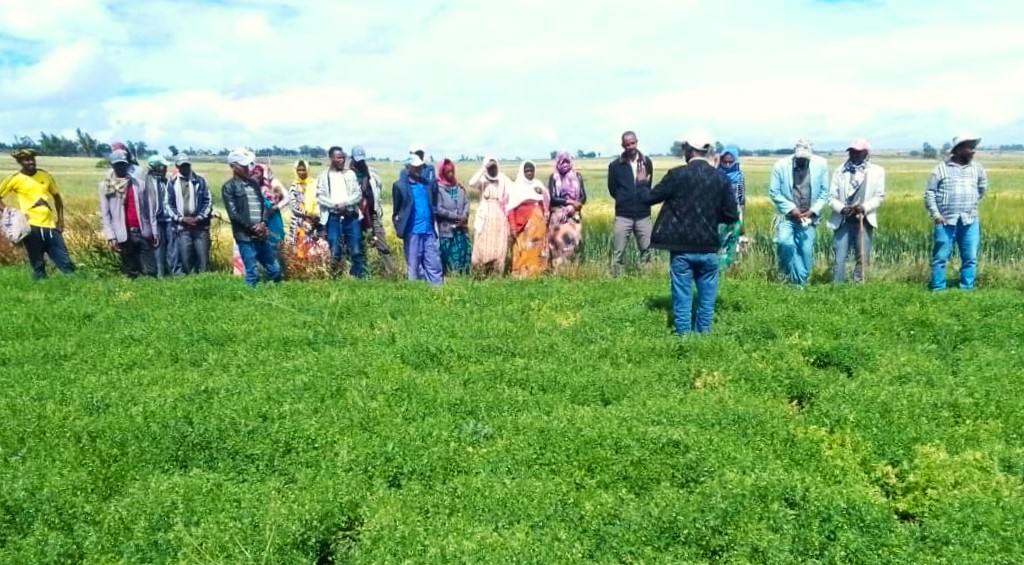
During the field day, farmers shared their perspectives on the resurgence of lentil production, expressing enthusiasm over the positive outcomes observed from recent trials and demonstrations. Representatives from Oromia BoA and the SWR-Ethiopia RAISE-FS project praised the farmers’ dedication and pledged ongoing support to sustain this momentum.
The events also facilitated open discussions addressing both achievements and challenges, notably the shortage of improved seed varieties to meet increasing demand. To address these challenges, participants suggested that coordinated efforts from government bodies and agricultural research institutions would be crucial, particularly focusing on seed multiplication to enhance availability. Increased availability of these improved lentil varieties will enable the scaling of production, allowing more farmers to benefit from improved varieties, thus contributing to the transformation of local food systems.
Furthermore, participants acknowledged that disease management remains a critical challenge for sustainable lentil production. They proposed a targeted approach to integrated disease management—encompassing cultural practices, regular field scouting, and enhanced agronomic techniques—as pivotal in reducing disease incidence. Additionally, long-term research should prioritize developing lentil varieties with durable disease resistance to ensure resilient and productive crops, thereby confirming the viability of lentil farming for local farmers.
 raise-fs.org