
Farmers in Wolmera woreda have long been grappling with challenges in accessing quality faba bean seeds, a critical issue that has significantly impacted their productivity and food security in the area. Faba beans, a staple crop in the area, play a vital role in both local diets and as a source of income for farming households. However, the ongoing seed accessibility problem threatens to undermine the livelihoods of thousands of families. Efforts to address the problem have been initiated by Holeta Agricultural Research Centre, SWR Ethiopia RAISE-FS project and Wolmera woreda agriculture office. The initiative emphasized group-based approaches, which have proven effective in improving seed production efficiency, fostering knowledge sharing, and promoting collaboration among farmers.
On November 17, 2024, two kebeles in Wolmera woreda—Bekaka Qorre Eddo and Burkisami Gaba Robi—hosted a field day that brought together stakeholders from various sectors. Organized by the Holeta Agricultural Research Centre (HARC), the SWR Ethiopia RAISE-FS Project, and the Wolmera woreda Agricultural Office, the primary focus of the event was to present practical solutions to long-standing issues in faba bean seed production. The event showcased the faba bean innovation bundle being implemented that ls designed to address improved faba bean seed shortages in the area.
Host farmers witnessed their success in applying the faba bean seed production applying a bundle of innovations, including improved faba bean varieties, Integrated Pest Management (IPM), Integrated Soil Fertility Management (ISFM), quality seed production practices, and seed marketing strategies. Non-host farmers observed these changes firsthand, expressing keen interest in adopting these methods for themselves.
Mr. Dida Gari, Wolmera woreda administrator, highlighted the persistent seed shortages affecting faba bean production and praised host farmers for their dedication, urging them to share benefits with their fellow farmers. He stressed the importance of collaboration among leaders, experts, and farmers to scale the innovations to improve livelihoods farm households in the area. Dr. Mussa Jarso, a researcher from Holeta ARC, encouraged participants to view faba bean seed production as a viable business opportunity, citing the success of 60 farmers across four kebeles and emphasizing the need for knowledge sharing and community adoption. Meanwhile, Dr. Karta K. Kalsa, EIAR’s Seed Specialist, praised the group-based seed production model for mitigating seed shortages and committed to providing Early Generation Seed (EGS). He envisioned Wolmera becoming a sustainable hub for faba bean seed production, serving as an example for other regions in Ethiopia.
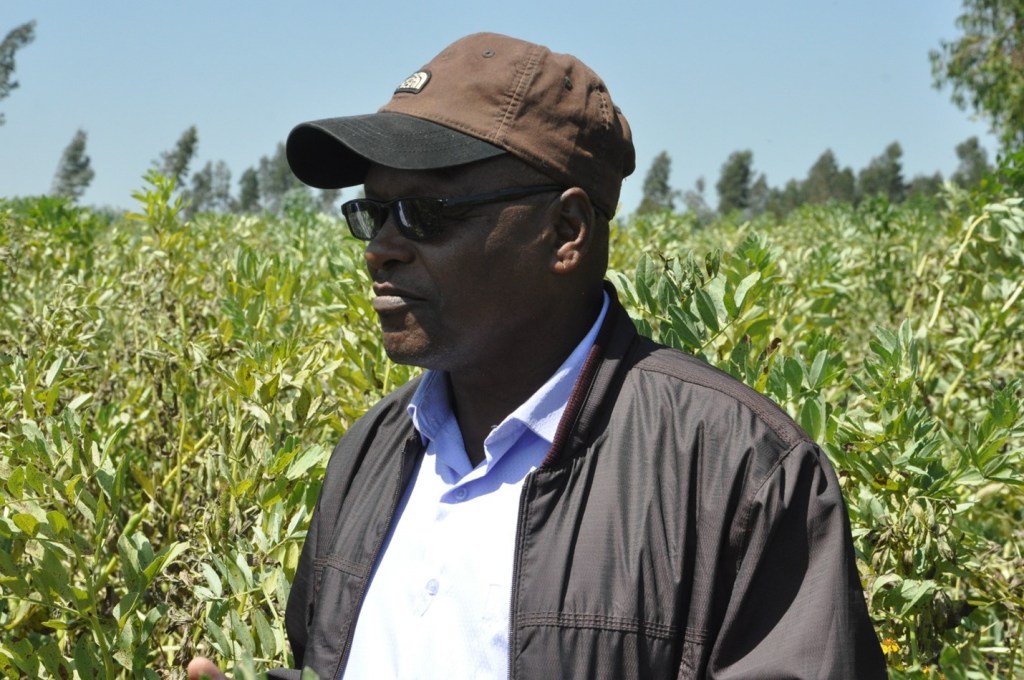
The field day underscored the broader implications of these innovations for agricultural sustainability. By promoting cluster-based seed production, improving access to quality seeds, and strengthening the seed supply system, the initiative is paving the way for increased productivity and profitability in faba bean farming. Collaboration among farmers, researchers, and policymakers showcased how systemic challenges like seed shortages can be effectively addressed.
The field day concluded with a productive group discussion outlining key next steps. Participants emphasized the importance of ensuring a sustainable supply of faba bean seeds and scaling the adoption of the faba bean innovations both within and beyond the woreda. Priorities include supporting seed-producing farmers in forming cooperatives, engaging cooperative agencies and regulatory bodies to formalize seed production into a structured and profitable enterprise, and establishing strong market linkages.
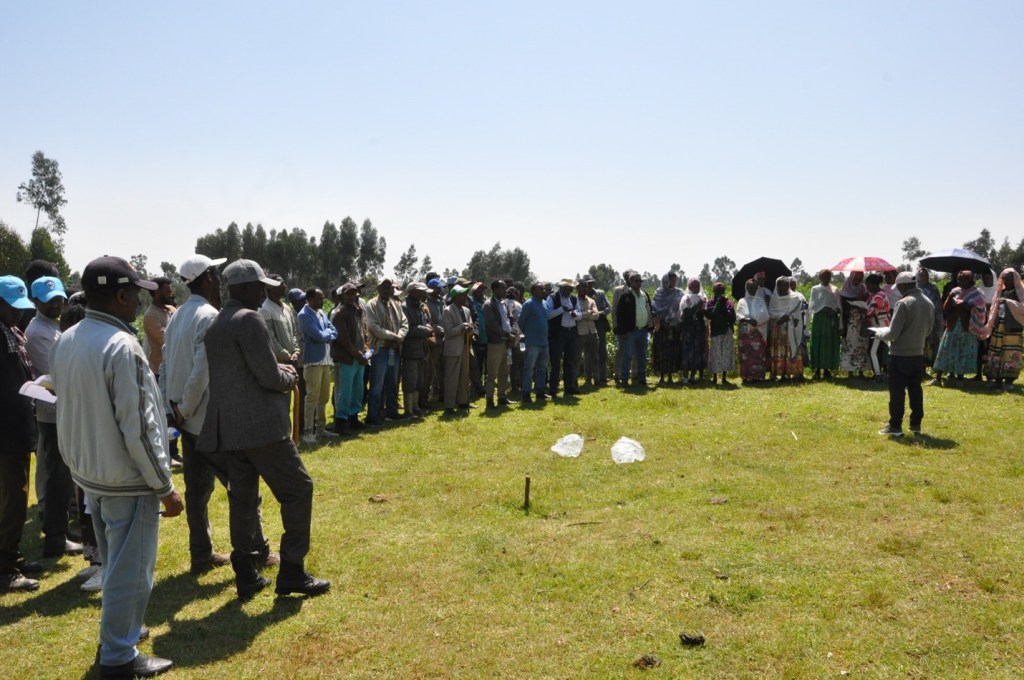
The field day brought together a diverse group of participants, including host farmers practicing cluster farming for faba bean seed production, non-host learner farmers, agricultural experts from HARC, representatives from the Ethiopian Institute of Agricultural Research (EIAR), woreda administrators, kebele officials, development agents (DAs), and other key stakeholders. This collaborative gathering highlighted the collective effort required to tackle systemic challenges in agriculture.
The event underscored the critical role of partnerships in scaling agricultural innovations. To ensure wider scaling of the innovation bundle the collaboration among stakeholders should be strengthened and all stakeholders need to maintain the momentum they have shown in the faba bean innovation at Wolmera woreda.
 raise-fs.org