
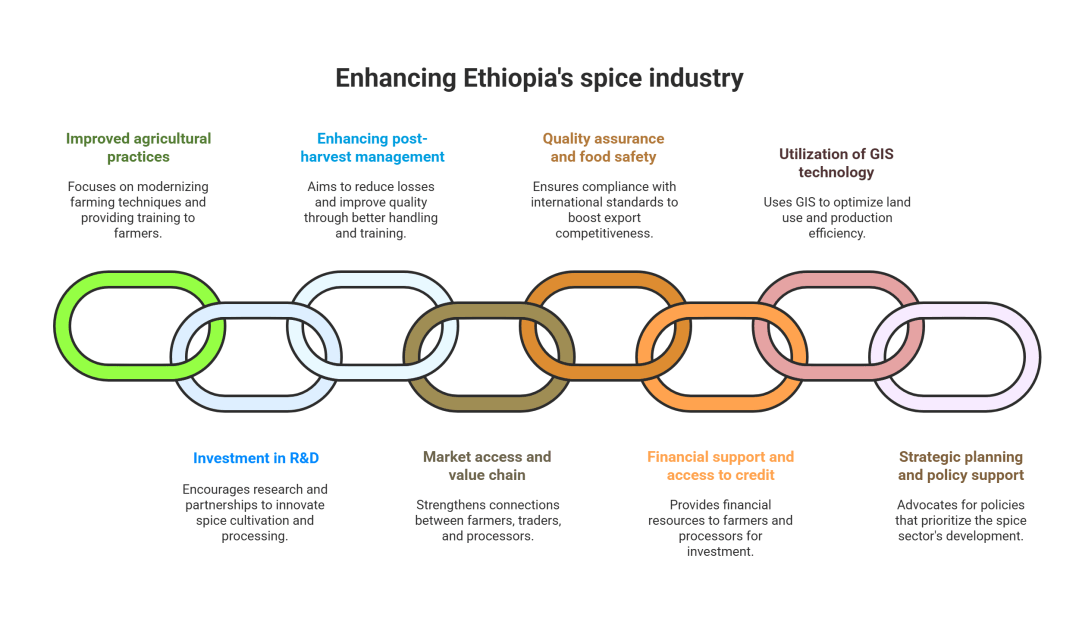
Ethiopia, a land known for its rich cultural heritage and diverse agriculture, holds an untapped treasure trove in its spice sector. According to a recent working paper by RAISE-FS (link), the country has over 50 spice varieties registered for the major 10 types of spices, including korarima, cumin, pepper, and fenugreek. Despite Ethiopia’s favourable agroecological conditions and the significant role of smallholder farmers in spice production, the sector remains underdeveloped, contributing only minimally to the national economy.
With Ethiopia’s population rapidly growing and urbanization on the rise, domestic demand for spices has surged. However, the country is still importing spices worth over $800,000 annually to meet this demand. This reliance on imports highlights a crucial gap in the local spice value chain—one that presents a golden opportunity for growth.
The RAISE-FS working paper sheds light on the immense potential to transform Ethiopia’s spice sector. By enhancing production, adding value through processing, and boosting exports, Ethiopia could not only reduce its dependency on imports but also position itself as a competitive player in the global spice market.
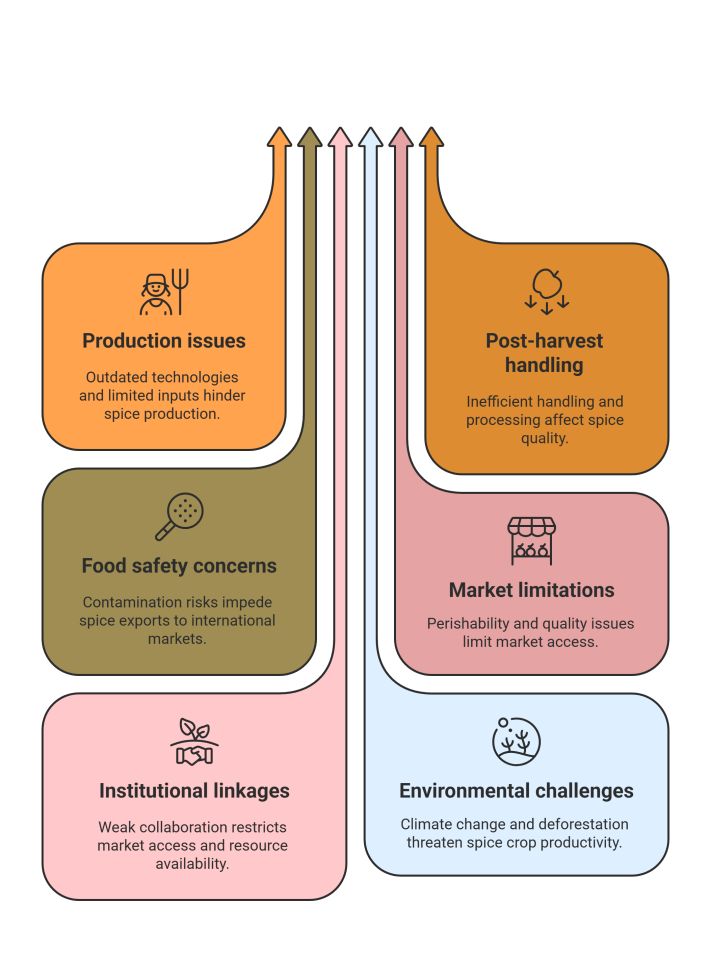
Key insights from the study
The paper provides a comprehensive analysis of the socioeconomic and market factors influencing the spice sector. It also outlines evidence-based strategies aimed at promoting the production and marketing of Ethiopia’s major spices. Among these are innovative approaches to improving yields, creating value-added products, and strengthening market linkages.
One of the standout features of the study is its agroecological suitability analysis, which includes detailed maps highlighting areas ideal for cultivating key spices. The report focuses on ten main spices with high potential for development: cardamom, black cumin, white cumin, black pepper, coriander, fenugreek, ginger, hot pepper, korarima, and turmeric. These insights provide a roadmap for stakeholders—farmers, investors, policymakers, and exporters—to make informed decisions that could unlock the sector’s full potential.
Looking ahead: Building a thriving spice industry
The findings from this working paper come at a critical time for Ethiopia. With strategic investment and collaboration among value chain actors, the country has an opportunity to transform its spice sector into a thriving industry. This would not only boost rural livelihoods but also contribute significantly to national economic growth.
 raise-fs.org