How a participatory approach helped communities and experts reflect, learn, and transform together
Between June 8th and 14th, RAISE-FS teams from four regions convened in Gumer woreda, located in the Central Ethiopia Region, to mark the conclusion of a year-long pilot of the Social Analysis and Action (SAA) approach. This gathering was not merely a wrap-up event; it was a profound opportunity for reflection, learning, and transformation. Across the kebeles of Denber and Aselecha, where the SAA process had been unfolding, the visit became a space for community members and facilitators to revisit their shared journey and uncover powerful stories of change.
Practicing empowering data collection
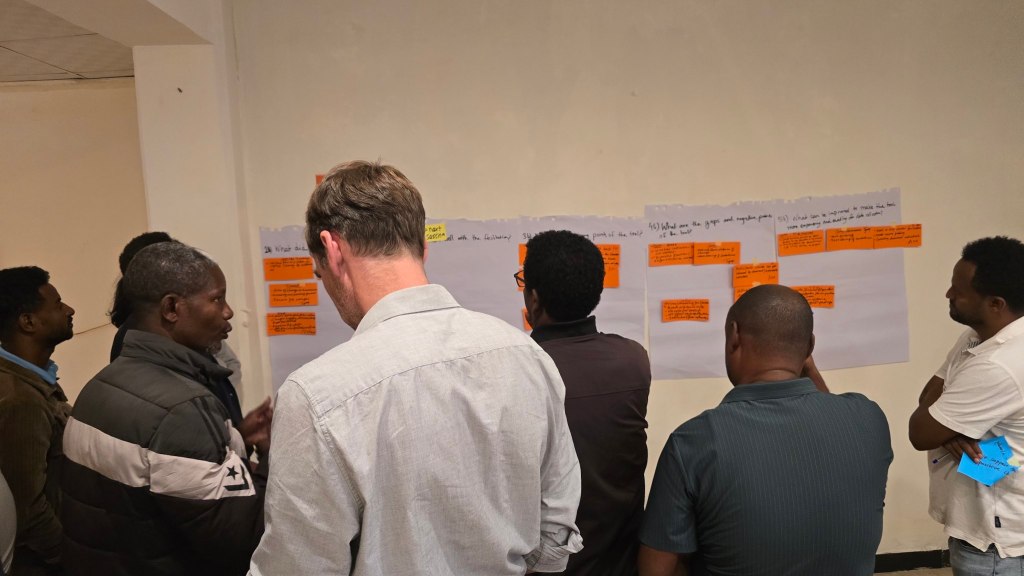
The week began with an immersive exploration of SAA tools designed to empower rather than extract. Through interactive sessions, participants practiced facilitation techniques, learned active listening skills, and engaged in simulations that fostered honest dialogue. These tools were intentionally participatory and visual, ensuring accessibility and replicability using locally available materials.
Throughout the week, several creative tools were used to uncover rich stories of change:
The interactive timeline: this tool helped participants reflect on how they felt at different stages of the SAA journey—from their very first day of engagement, to moments of realization, and how they perceive their current situation.
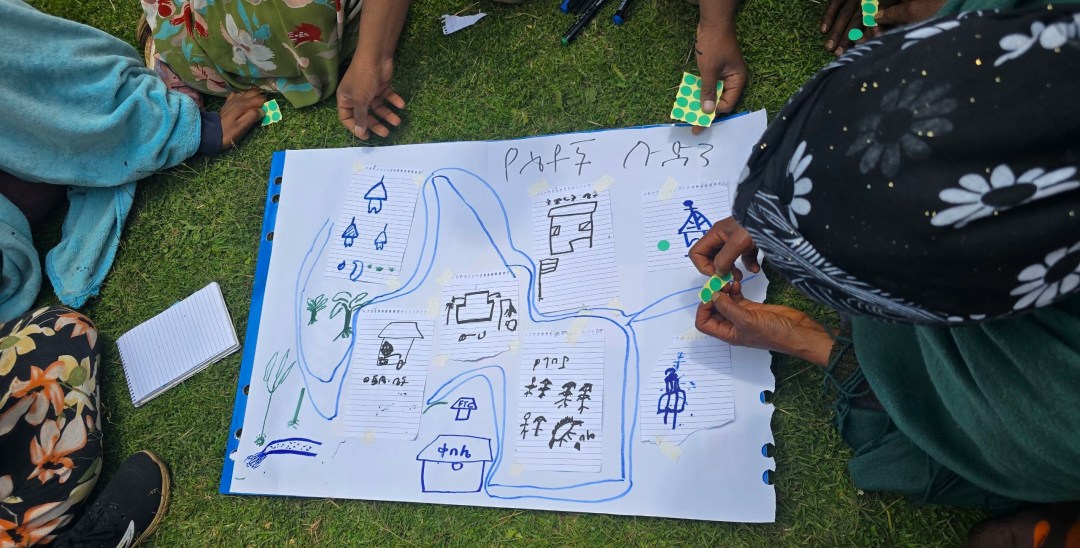
- The community mapping tool: these invited men and women to illustrate how they interpret change across different spaces such as the home, market, school, and water point.
- The basket tool: with this, participants voted on the types and depth of change experienced at individual, relational, and structural levels, using local symbols and visuals to guide discussion.
- Community visioning and pledging: during this final activity, participants shared gender-related goals for their families and communities and made personal commitments to help realize these goals.
Each day in the field offered regional participants the chance to facilitate sessions, gaining confidence in applying these tools. Community members shared compelling stories of transformation, including men taking on roles traditionally seen as women’s work and women gaining greater influence over household decision-making. At the same time, deeper discussions revealed ongoing challenges such as unequal inheritance rights—highlighting the complexity of change.
Each evening, the team reconvened to reflect on the day’s activities. These debriefs allowed them to identify lessons learned, adjust tools or facilitation approaches, and ensure responsiveness to community contexts. This iterative process of learning and adapting helped refine the approach throughout the week.
On the fourth day, influential community members—including newly elected SAA team leaders—joined core groups for a joint dialogue focused on sustaining gender transformation. Participants shared their personal commitments to support ongoing change efforts within their communities.
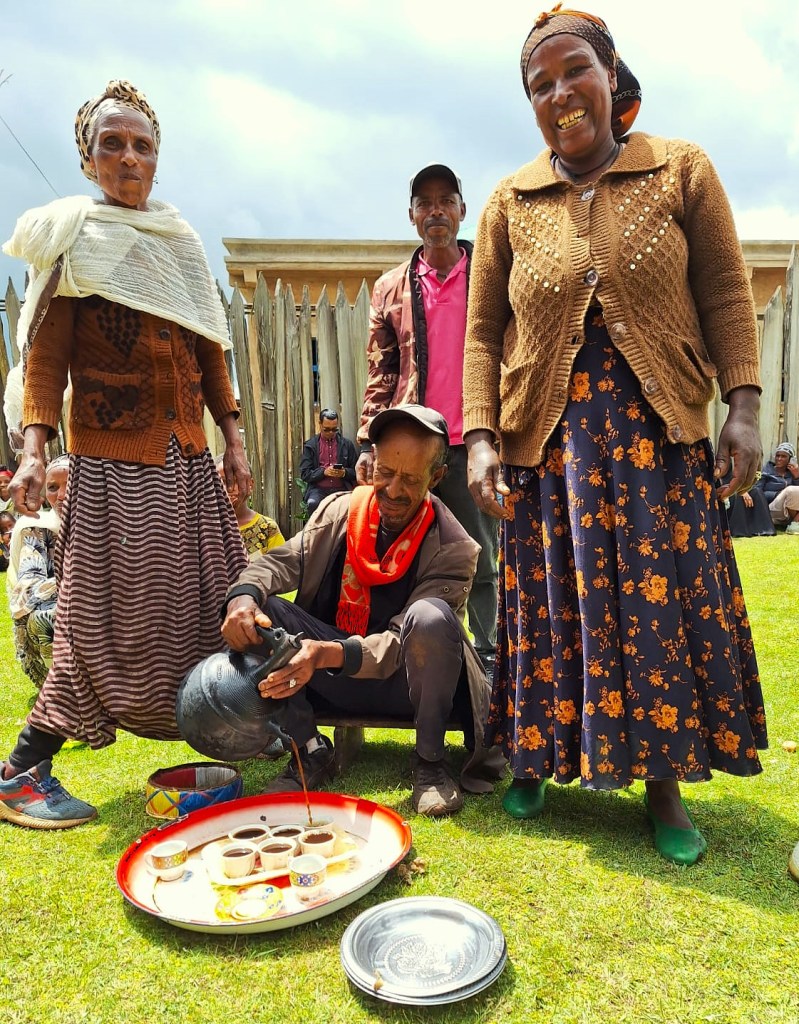
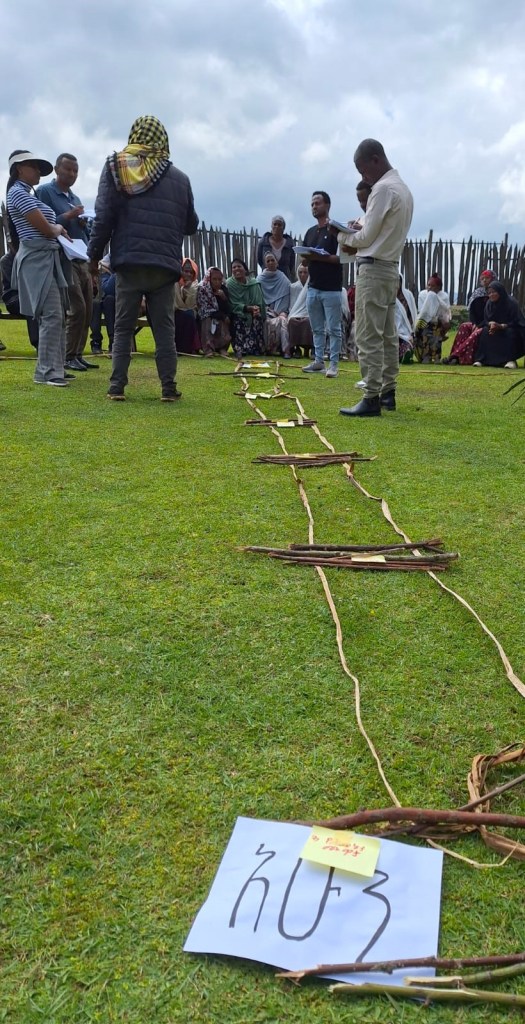
The final day was dedicated to reviewing the week’s experiences. Teams assessed the effectiveness of the tools, reflected on facilitation techniques, and tailored rollout plans for their respective regions. What began as a pilot initiative evolved into something far more profound—a shared space for learning and transformation that empowered both communities and researchers alike.
This participatory approach marked a significant departure from conventional research methods. As one facilitator shared, “This helped me understand what it truly means to listen, not just collect answers.” The experience in Gumer vividly demonstrated the power of inclusive dialogue to inspire change and set the stage for deeper, more sustainable impact. This same transformative approach will now be contextualized and replicated across the Amhara, Oromia, and Tigray regions, paving the way for even more co-created narratives of shifting norms.
 raise-fs.org