
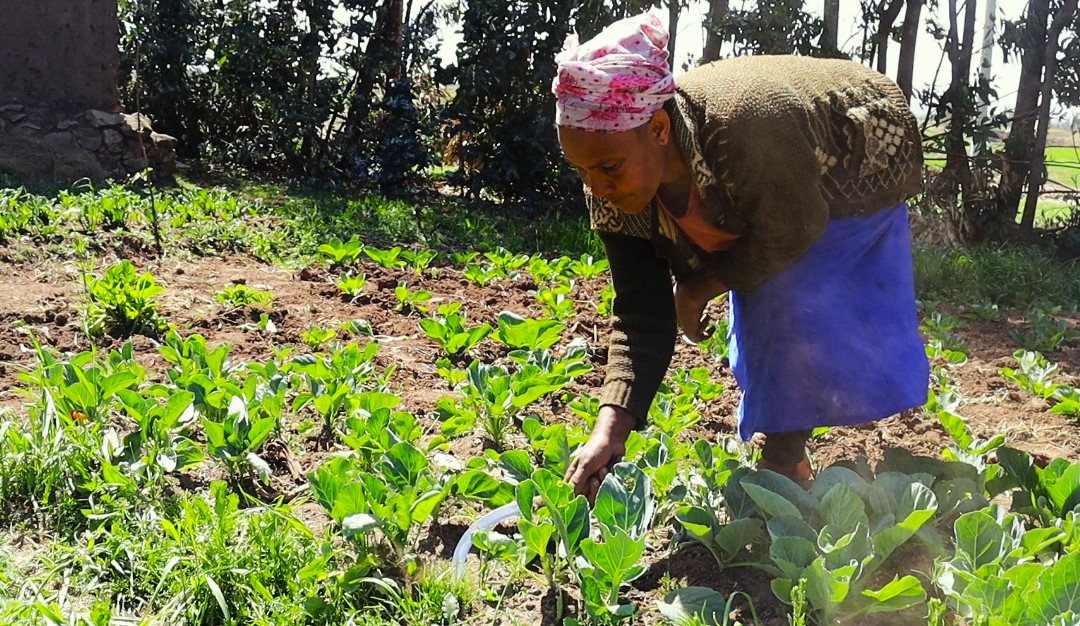
SWR Ethiopia’s RAISE-FS project is making strides in dietary diversity and improved nutrition, with a focus on empowering communities to grow safe and nutritious food by promoting home gardens and Social and Behavioural Change Communication (SBCC) interventions using the Ethiopian Food Based Dietary Guideline (EFBDG). In Angot, one of the food-insecure woredas in the North Wollo Zone of the Amhara region, early observations from a recent survey signal positive changes in household nutrition and dietary diversity.
Tayech’s promising journey
Tayech Melaku, who lives in Angot woreda, Eshet Amba kebele, is one of the participants who received training on vegetable year-round production and SBCC intervention through the RAISE-FS project and Sirinka Agricultural Research Centre (SARC). Tayech with her spouse received start-up vegetable seeds, training and continuous advisory services. Additionally, she was provided with monthly key messages promoting healthy dietary practices. The impact of this intervention has been very significant, yielding remarkable results for Tayech and her household.

“I sold about 9,000 ETB last year (2024), beyond what I consumed and shared with my relatives, I eat vegetables almost every day with shiro and kik, and I provide them when my family members come to visit.”
With the money that she gets from the sale of the surplus vegetables, Tayech purchased foods that were not available at home to ensure a more balanced diet such as peas, beans, and grass pea for shiro, while maintaining a garden with crops for the rainy season and seedlings for the next. “I am very happy with what I am doing, and I want others to have this chance too,” she adds.
The SBCC training sessions included monthly discussions on key health messages, assignments with reflection opportunities, and practical training on incorporating diverse food groups into meals within the local context. “We were taught to eat a variety of foods even in small amounts for better health,” she explains. “Now, instead of buying vegetables which are expensive, I grow them in my garden and share with my family and neighbours.”
The food patterns of Tayech’s family have changed as a result of her newfound understanding. She said, “Previously, we did not intentionally eat vegetables. We now eat them regularly, and I always encourage my neighbours to do the same”. Her garden has not only improved her family’s nutrition but also strengthened community ties as she shares her produce with others. “When a guest comes, I collect vegetables from my garden, cook with shiro, and feel happy serving them,” she added.
Tayech’s success is not limited to her garden. She consults with her husband on how to use the income she gets from her vegetable sales. Together, they save weekly earnings in Tseday Bank-Microfinance and purchase grains for yearly shiro preparation. She said, “We collaboratively work with my husband” emphasizing the collaborative decision-making in her household. Even without future seed support from the Sirinka ARC, Tayech is adamant about moving forward to sustain her progress independently. “They showed us how to do it once, and I will keep producing by buying seeds myself,” she affirmed.
Tayech’s story highlights key lessons for sustainable and scalable home gardening, emphasizing the importance of improving the vegetable seed system for affordable, quality seeds, empowering farmers and communities with knowledge on vegetable production and consumption, and utilizing SBCC strategies to influence social norms, provide clear information, and promote healthy eating habits for better health and well-being.
 raise-fs.org