
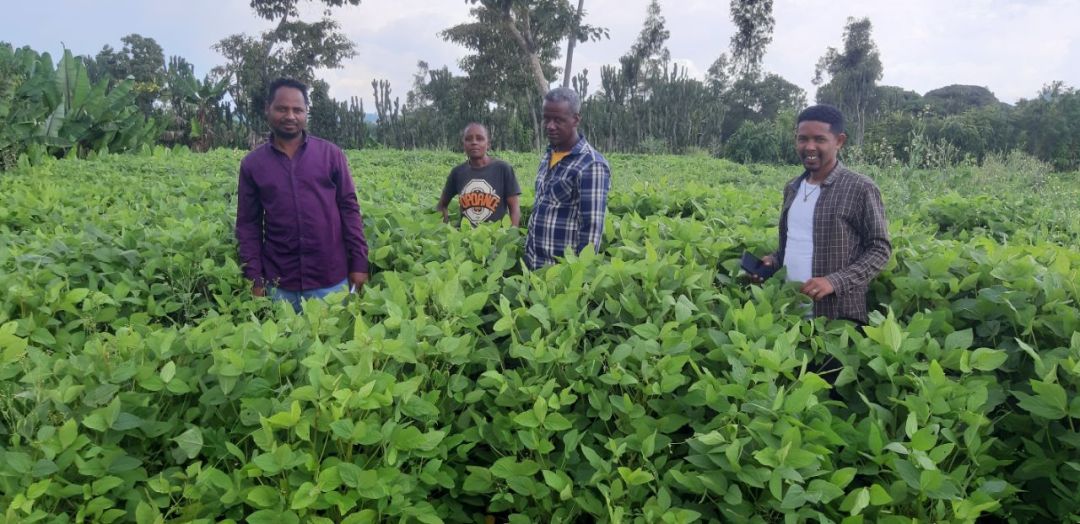
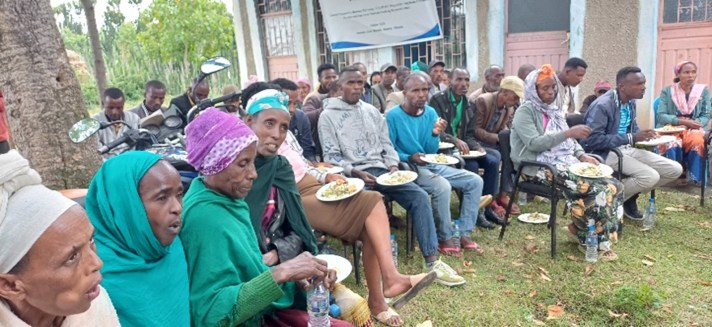
In a significant effort to enhance soybean consumption and promote its integration into local diets, a cooking demonstration was recently conducted in the Sidama region of southern Ethiopia. This event, organized by the SWR Ethiopia RAISE-FS project in collaboration with Hawassa University, took place in the Hawassa Zuria district and brought together over 160 participants. Attendees included farmers, agricultural experts, development agents (DAs), and health extension workers.
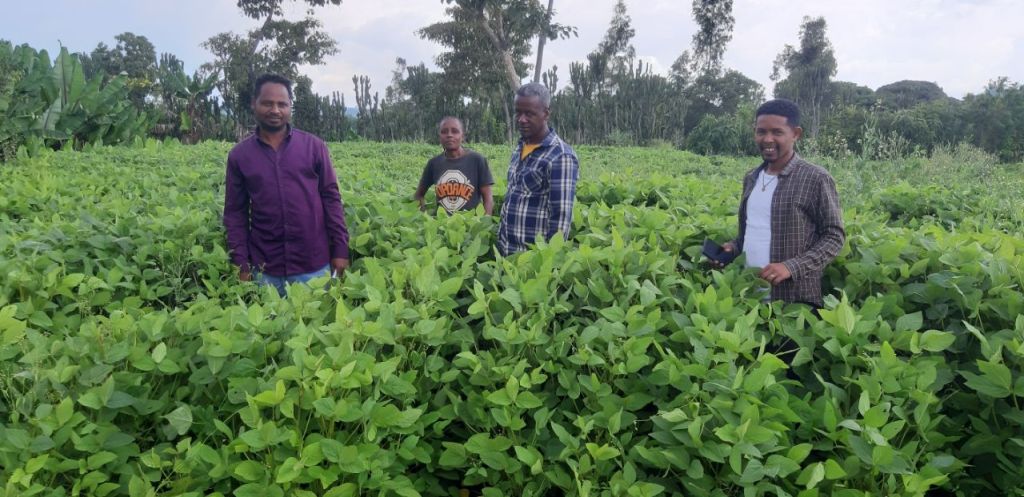
Over the last four years, the SWR Ethiopia RAISE-FS project, in collaboration with Hawassa University, has been actively engaged in testing, validating, and demonstrating soybean innovations in the Sidama region and other parts of Ethiopia. To promote adoption and ensure a sustainable impact on the agricultural sector of the region, the initiative has focused on building the capacity of farmers and agricultural experts. This has included raising awareness about the nutritional benefits of soybeans, providing basic nutrition training based on Ethiopia’s Food-Based Dietary Guidelines, and introducing diverse recipes and practical cooking techniques using soybeans. The demonstrations of cooking methods and recipes have been designed to equip participants with practical skills to prepare soybean-based dishes, thereby facilitating the broader adoption and scaling up of soybean innovations across the region.
To ensure inclusiveness and gender balance, the training maintained an equal gender distribution among the trainers—50% female and 50% male. This approach not only encouraged equal participation but also highlighted the vital role women play in food preparation and nutrition education within communities.
The training utilized Ethiopia’s food-based dietary guidelines as a primary teaching resource, ensuring that participants could align their cooking practices with national nutritional standards.
Practical soybean-based recipes preparation and demonstration sessions
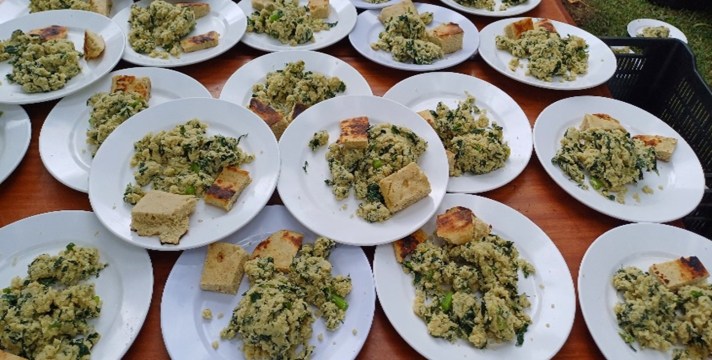
During the cooking demonstration, three nutritious recipes were showcased:
- Soybean porridge: a blend of 30% soybean flour and 70% maize flour, with a touch of kale for added nutrition.
- Flat bread (Kita): prepared using 30% soybean flour and 70% maize flour.
- Traditional bread: made with a mixture of soybean, maize, and wheat flours.
For all three recipes, a blend of 30% soybean flour and 70% maize flour was used. The porridge recipe included a small addition of kale to enhance its nutritional value, while wheat flour was incorporated into the bread recipe to maintain its traditional texture.
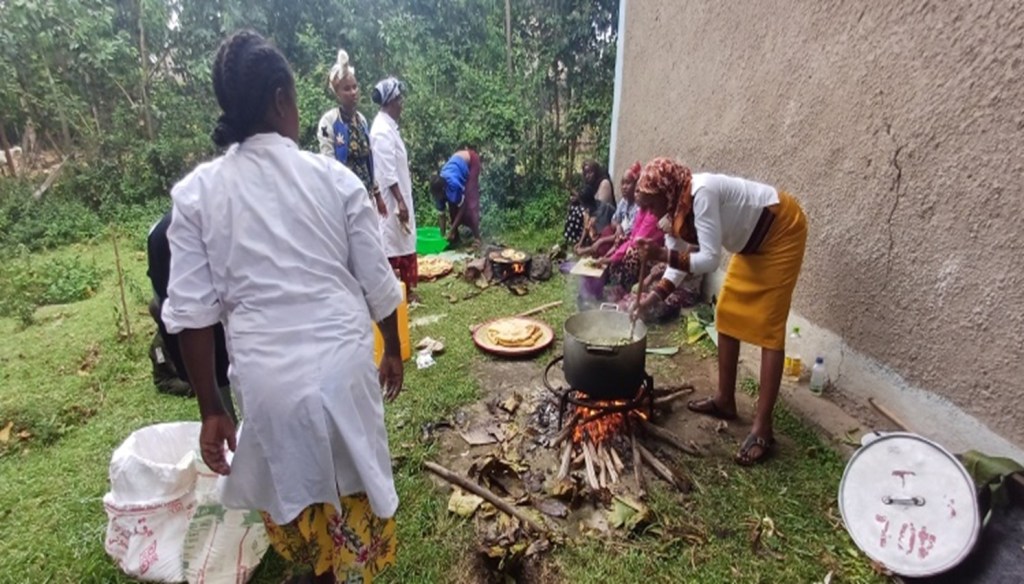

The demonstrations were conducted with active involvement from female trainers, including farmers and health extension workers. Participants had the opportunity to observe, practice, and taste these recipes.
The cooking session featured full engagement from female trainers, including farmers and health extension workers, who led the demonstrations with enthusiasm and expertise. Participants were actively involved in the practical sessions, preparing the recipes themselves under the guidance of trainers.
Interactive feedback and tasting session
Following the cooking demonstration, participants had the opportunity to taste the prepared dishes. The tasting session sparked lively discussions as attendees shared their impressions of the recipes. A feedback and reflection session allowed participants to raise questions and provide suggestions on sustainability and the integration of soybean into local diets.

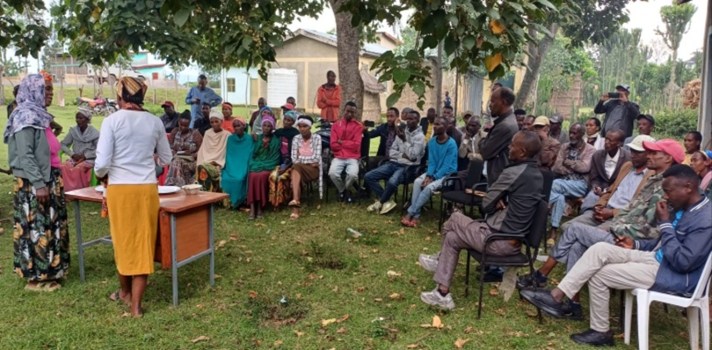
Key takeaways from the feedback session included:
- Acknowledgment of the nutritional and health benefits of soybean consumption.
- Recognition of health extension workers’ role in promoting sustainable dietary practices.
- Encouragement to integrate soybean recipes into daily diets for improved health outcomes.
The feedback emphasized the need for continued support to ensure that soybean recipes become a sustainable part of the community’s diet.
Looking ahead
This cooking demonstration marks another significant step toward breaking bottlenecks in soybean consumption and scale up of soybean in the Sidama region. As participants return to their communities with newfound skills, it is hoped that these efforts will inspire broader adoption of soybean recipes, contributing to improved dietary diversity and nutrition across southern Ethiopia.
 raise-fs.org