
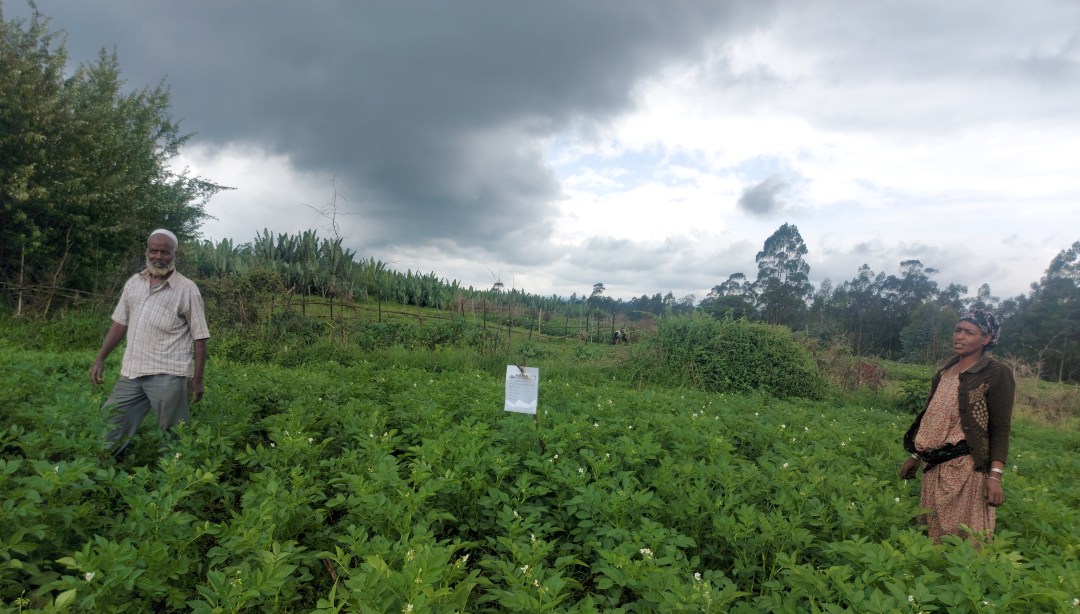
The findings of our recent living income study conducted in three woredas of Southern Ethiopia shows an interesting stories. The results of the study have shed light on a significant disparity between the actual income of smallholder farmers and the living income benchmark.
The data indicates that a substantial portion of the total income is attributed to crop production, while income from livestock remains relatively low. Moreover, the study highlights the importance of remittances as a significant contributor to household income in specific woredas.
These findings underscore the existence of a notable living income gap across all three woredas. It is evident that there is a pressing need to enhance the actual income of smallholder farmers in order to address and reduce this disparity.
The implications of these findings are profound, and they call for concerted efforts to improve the livelihoods of smallholder farmers in Southern Ethiopia. By addressing the factors contributing to the income gap, we can work towards ensuring that smallholder farmers receive a fair and sustainable income.
It is our hope that these findings will serve as a catalyst for meaningful action and policy interventions aimed at bridging the living income gap and improving the overall well-being of smallholder farmers in the region. Read more here
 raise-fs.org